You're watching...
Face ID Tools Pose New Risks
Details
-
Description
Security expert on privacy issues related to facial recognition technology
- Duration 4:08
- Date Aug 3, 2011
You're watching...
Security expert on privacy issues related to facial recognition technology
Also in this playlist...
Auto-advance: ON
Auto-advanceThis transcript is automatically generated
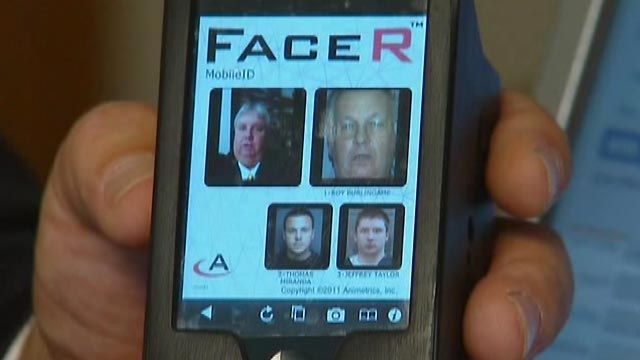
Welcome back to -- -- dot com live I'm Jonathan Hunt if you use FaceBook a -- All Google you'll knows that -- they are increasingly using facial recognition abilities but does that pose.
Privacy risks for all of us -- joined now by ginger McColl epic open government council.
From a DC bureau good morning -- you'll -- often and I guess it is here on the East Coast.
Good to have you win this how does how exactly does this sort of facial recognition technology.
Threaten our privacy.
So.
The researchers have found that actually using a picture of a person and information that's publicly available on social networks and other.
Internet sources they could identify up to five social -- is five digits of the Social Security number.
Did but how how -- this this is.
The study done by Carnegie Mellon University.
How would -- studies all also is able turn it successfully predict that that seems extraordinary to be just from facial recognition.
Yes so over the past few years of FaceBook and other social networks have pushed more and more user information out there into the public realm.
In this instance what the researchers -- -- profile pictures now of those profile pictures up until about a year and a half ago were protected -- information when you.
Posted up your profile picture you could.
Set your out your privacy level so that only your friends can -- that picture and now that picture has been pushed out into the public realm FaceBook made a policy choice decided to changes policy.
So that now user's profile pictures have to be publicly available you can't protect them.
And that sort of information the profile picture along with the other information that's been pushed out there into the public realm.
Such as location.
Birthplace hometown birth state those sorts of things can be used to -- identified people.
But -- presumably does there's some benefit -- facial recognition technology there's a reason why was developed.
In this instance FaceBook actually has developed its own facial recognition technology.
It developed that technology -- for months and possibly even years.
Tracking who was being tagged -- what photos.
-- basing that making an underlying database.
That then allows them to when you post a picture up on FaceBook book.
Suggest attack for that picture suggest a person's name who could be in that picture.
And they say that it's for ease of use -- you don't have to waste time tagging people.
But the issue is that they did this without any sort of user consent they never ask users if they want to to participate in the development of this technology.
If they wanted to have their information stored in this underlying database if they wanted to have their photos automatically -- So what do you think it uses should do about it this.
So the solution for this problem is really.
It it's it's kind of a mixed solution first you need stronger privacy.
Legislation.
Do you need to a stronger FTC enforcement when users -- when companies like FaceBook violate users' expectations and use their information in ways not contemplated by the terms of service.
And users need to create pressure on these company is.
In order to make the company -- more privacy protective.
And one way of doing that is by looking around on the web finding a social networking service.
That is more privacy protective.
Or -- it you know pressuring FaceBook telling the company that you're unhappy with its practices.
But there's no practical way in which the individual FaceBook use.
Can prevent this technology being used all that FaceBook page.
You can change your settings at this point -- you can opt out from having your name suggested.
But you can't opt out from that initial database collection the information in the database it is already there it was collected without user consent.
Which is why we at -- we're pushing for enforcement.
By the FTC about this because there was no way that users could know what was happening here there was no way that they could say.
I don't want my information put in this database I don't want my information used this way.
All right it's a fascinating subject to a good warning to -- -- ginger McCall an epic open government thanks very much for being with us from DC today didn't -- Thank you very much for having me.