You're watching...
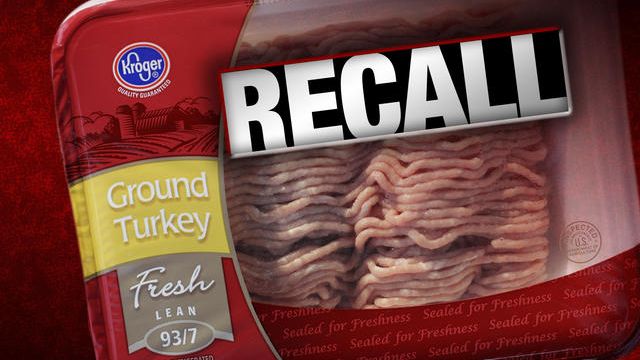
Turkey Recall Safety
Details
-
Description
Dr. Cynara Coomer talks about protecting ourselves against salmonella and what to look out for during this turkey recall
- Duration 4:03
- Date Aug 5, 2011
You're watching...
Dr. Cynara Coomer talks about protecting ourselves against salmonella and what to look out for during this turkey recall
Also in this playlist...
Auto-advance: ON
Auto-advanceThis transcript is automatically generated
Welcome back to foxnews.com live I'm Patti -- brown and -- as you know there is a big Salmonella concern right now there have been 78 cases across the country one death and it is considered resistant to some of the commonly prescribed medications it's a big concern and there's now.
In a recall of ground Turkey so for all the latest developments on this joining us right here on the set his doctors America -- of -- Fox News medical eighteen thank you so much for being with us thank you can't so yesterday it came out -- believe that they're going to Cargill is -- recalling up 38 million pounds of fresh and frozen.
Turkey products.
These.
Have a lot of different.
Labels on them they were all produced at their plant in Springdale Arkansas.
Between February and August so that's huge time -- there we do have information on our website by the way about the specific.
And code numbers and brand names but some that they say was.
Actually sold to -- different food services it's not labeled at all.
So first of all -- going to be able to stop this now with this recall.
Why is certainly gonna make a huge help find.
By having people not purchase these products to use at home.
Obviously there's so going to be some concern for commercially bought -- Or if you're going into.
Cafeterias and things like that that they -- for foods have -- isn't that don't have the code on them and have been identified so obviously it's going to be some concerns.
So I think it's really up to the responsibility of the people that are preparing the foods.
Whether you're at home or whether you are the chef for a cook and at the facility to really make sure that any poultry products especially -- and the chickens.
-- -- thoroughly and that means cooking them up to an internal temperature of greater than -- 165 degrees.
Aaron and that's very important enough for people to realize that if they're not sure about the source of -- meat and they're not comfortable throwing out as large amounts of food with every purchase you can cook it with a -- to 165.
But what that doesn't protect you against though is.
Other problems that occur from the handling of the -- -- very important to keep the surface is clear and wash your hands exactly have -- be very careful about cross contamination so poultry chicken Turkey any product like that should be used.
On a separate board separate cutting boards and then wash your hands after you use that after you -- work with them and then going to the next.
You know whatever -- your your cooking but it's very careful to Begin to not cross -- -- foods.
And in fact the that is a problem as well in the factories when they're making these products ground Turkey meat some ground chicken.
Is that that that's how these Salmonella continues to grow is by cross contamination.
So we mentioned 78 cases one death.
And out of the 78 cases 38% of them.
Have been hospitalized.
This is a very high number is due to the fact that does this strain is resistant to some of the antibiotics.
It is a very high numbered much Karen -- would normally see with that -- normal Salmonella poisoning or any of us food poisoning for that matter except possibly -- life.
And this is a problem that we're seeing what as we see more and more outbreaks from Salmonella E.
Coli -- staff.
Infections.
Is that -- -- is becoming more and more resistant because they mutate every single time that they that.
They're replicating.
They they Begin to mutate and become resistant to antibiotics.
Also as were using more antibiotics in the -- trees.
As they're growing that may also be another source of why these bacteria becoming resistant.
So we have to be very careful with.
How we're treating.
Be the kind bacteria could be could be currents of bacteria that we're seeing right now.
-- it right now is.
The sensitive to Cipro and -- back -- Which -- two very common antibiotics but if it becomes resistant to those it is going to be a major problem.
And that problem being increased capitalizations which -- increased costs and evident in addition to that also fatalities.