This transcript is automatically generated
Yeah.
Hello welcome to help talk I'm Dr.
Manny.
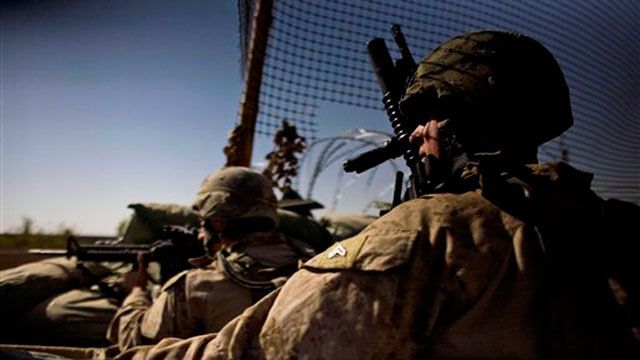
-- the conflict in the Middle East continues thousands of US soldiers return from Iraq and Afghanistan only to face a struggle.
All of reentering their former lives military suicide rates are on the rise.
An estimated one in five military personnel are being diagnosed with post traumatic stress disorder.
Back to Harry Crawford psychiatrist and co author of the new book I've always sit with my back to the wall.
Has treated more than 6000 PT is the veterans and says.
There is a way to get these soldiers back on their tracks.
Welcome to program back but again -- I want to show everybody the book this is -- great -- by the way you know somebody in the military or somebody to suffering from.
-- from an extra actually got to get this book.
Because.
I think that this is a big problem.
It's a huge problem Dr.
Manny and you've mentioned I've been evaluated -- 6000 deaths over 3000 from Vietnam and 3000 from Iraq and Afghanistan.
One of the quotes from the book.
-- by a lady who said.
My husband John went off to war.
Somebody masquerading.
As John -- back.
And and that's what PT SD does to people it changes them.
And and it changes of some time in ways they don't even understate it.
You know and I and I think that again I'm not a military expert but I think that the experiences that these.
Young men and women that are fighting for a country are facing.
It is a little bit different.
-- what many other soldiers perhaps in the past are facing today.
It if you're right it's different in several ways -- this this is the first war in modern history of warfare where people kept.
Being redeployed.
To the same combat here even in Vietnam and they were there 1213 months -- than they were gone.
Here they keep going back that's one of the differences a second difference is fighting an enemy that doesn't value -- Now President Obama recently has said that that he's looking for an exit strategy to -- and the war in Iraq in a timely fashion.
Shall.
Do you think that this is gonna make the problem oh is going to be less of a problem because these soldiers coming back or is this something that people get.
No matter how much time they spend in -- -- environment.
I wish I thought.
It would lessen the problem I'm afraid -- go in and my fears Dr.
Manny is.
That I have seen 3000 Vietnam vets and one of their problems -- -- After it was all over.
Many of them looked and said.
What did we do that fall -- And I hope that's not the case with this war in these veterans right now -- let's get a little more specific.
Recent city showed that anti psychotic medicines -- -- really don't do very good job intriguing -- He has the so.
You know you do have some solutions that you recommend some specific therapies tell me about -- We used to recover method are means to you got to recognize what's going on many people.
Had been doing what they've been doing the anger the year and ability not wanting to socialite sitting with their back against -- wall so long.
They just believe that ten Hawaii in the don't realize that's part of PT SD so people have to educate themselves about PT SD they have to come up with the treatment strategy and that's not as easy as it sounds.
That -- -- Begin to view live there.
-- life in a different way of cutting power themselves with that with the support system.
Many many -- with PT SD isolate themselves exactly the wrong thing to do they need this system.
Support and then and then finally that -- -- be able to view their life and in different in a way in redefine.
What their life is all about people can't recover from PT -- Now -- families of course get affected by.
Soldiers coming home.
But not only that they get affected but they could also be part of the solution many ways you have to treat the families to.
Absolutely but but many family members don't understand yet.
It you know they just -- -- their their husband their wives their spouse is different.
And they don't understand this is due to PT SD they just think I don't know what happened to him but they sure are different now and I don't like.
What can families do -- mean what specific tips can you give family members' wives.
Sons and daughters -- -- I but what I don't wanted to do which is say everybody needs to read the book but I wish they would because of what we hear from -- members is.
Now this is the first time I've -- understood why He or she behaves this way.
I just thought they were weird after awhile and I love them.
And I've stayed with many of the Vietnam lives have stayed with her husband's 3040 years never understood -- -- sit with their back again.
It's the wall.
-- dog thank you so much remember.
Please get this book there -- thousands of soldiers men women coming back from battle.
They need you know they may not have posttraumatic stress disorder but certainly anybody who has been in that kind of environment.
Does have some emotional an emotional baggage that they have to deal with and and perhaps a book like this could help out and and let's bring into your doctor maybe they need to -- -- we sure hope so thank you thank you so much I did you have any health questions you can email me your -- said doctor may have foxnews.com thanks for watching for Fox News I'm document.