You're watching...
'West Memphis Three' Free After 18 Years
Details
-
Description
Judge releases men convicted in Arkansas scouts' deaths in 1993
- Duration 7:44
- Date Aug 19, 2011
You're watching...
Judge releases men convicted in Arkansas scouts' deaths in 1993
Also in this playlist...
Auto-advance: ON
Auto-advanceThis transcript is automatically generated
-- -- and Arkansas convicted of killing three young boys and dumping the bodies and -- -- now free.
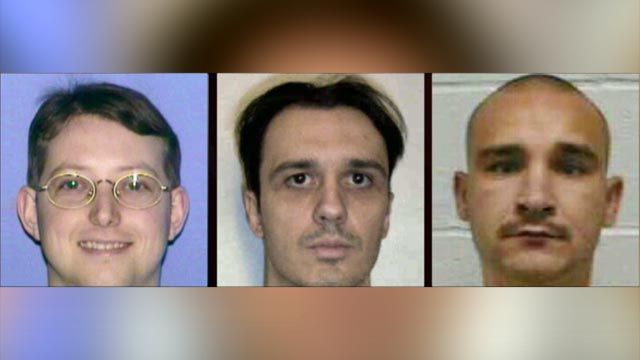
A judge accepting a plea deal to release the man known as the West Memphis three.
After they spent eighteen years behind bars in one of most controversial legal cases in the State's history.
A jury found a man guilty of murdering the eight year old boys back in 1993.
In what prosecutors at the time -- called some sort of a satanic ritual.
Investigators say the men drowned two of the boys and mutilated the third before throwing their naked bodies in a drainage ditch.
But supporters of the three have been fighting for years to get them released claiming that new DNA evidence could exonerate them.
John -- revenues now on -- of and how these guys -- of winning their freedom.
Well Greg they had been gaining support from everyone from celebrities to our forensics experts pointing to that new DNA evidence potentially showing some holes in the original case.
In court today they use what's called.
And Alford plea this is -- a legal maneuver where the defendants.
Essentially assert their innocence but admit that prosecutors -- sufficient evidence to likely.
Convict them here's what the prosecution said about this deal listen if this.
Judge granted a -- trial.
-- when we walked out of that -- trowel maybe a year from now the end of the defendants most likely.
I mean we would do the best we could put on evidence that most likely these defendants.
The site -- Could very easily have been acquitted.
Now under this plea bargain -- the three defendants Jason Baldwin -- tackles.
And Jesse miss -- will be placed on ten years' probation.
But they are otherwise completely free -- -- How -- the victims' families reacting to this.
A year there's really been mixed reaction you have the adoptive father of Christopher byers.
One of the victims who says He believes that the three men are innocent and then you have Steve branch who carries the same name as his son who was murdered.
Back in 93 saying that he's uncomfortable.
With the idea of the Alford plea and then even for the three men who were freed from prison today it's bittersweet lesson.
There's not yeah.
-- -- -- -- -- -- Can we had to come here you know thing things of course.
Okay let's go told it.
You.
Know that's not just.
They're -- Really learn -- And that was Jason bald win co defendant Damian at -- says that the three will continue.
Their own investigations.
To prove their innocence only now.
They'll be able to do it outside.
Of a prison cell -- I'm Jonathan -- Atlanta Jonathan thanks very much.
Spring back our legal panel -- here prosecutor and a -- nickel Ozzie and defense attorneys camera holder.
-- and restore you -- full disclosure right dug deeply into this case and covered -- way back when eighteen years ago or so forth.
And I I did I always had sort of doubts or reservations.
About the convictions.
What do you think about this.
This kind of strange legal maneuver.
Which basically takes Damian at -- off death row and -- in and the other two facing life terms -- Freeman took.
Right well I think it's splitting the baby really the prosecutors they don't lose the case.
But they -- the guys two to admit to.
You not their guilt but to say that they believe that the state would find him guilty and then the guys they get to go free it's already been eighteen years.
This -- in this case I think great shows how great the American judicial system it is.
These are guys have been fighting for their an offense they were put to death right away.
There was no DNA of linking any of them to the crime whatsoever.
And you know now they get to -- that it.
I don't know you know they're they're mixed reactions is just one of those cases where both people.
-- -- -- See you're you're -- very very fine prosecutor and would you bring a case like this especially death penalty case if the principal evidence is twofold one based on a confession of -- guys borderline mentally retarded 1972.
Who were cancer immediately and second of ball.
Based really on sort of hearsay evidence other people claiming that they heard the three defendants talking.
About the crime would you bring a death penalty case like this.
You know I think that's probably oversimplified because when you hear that I mean of course the first reaction is no that's not enough -- however.
You know.
You don't know all the -- is now I am not in anyway saying that this is the wrong thing -- sometimes offense trees and prosecutors agree and I agree with cameras and basically everything she said here.
You know that you have this evidence as you just put it -- which you know what we look at her like you know that's kinda sketchy or at least it could be.
But we they didn't have the type of science at that time in -- they do now so I am sure that the prosecutors here now.
Thought long and hard before they made this decision yet they're still saying if they're not out there looking for any other killers that that leads me to believe that they still think these are the three.
Men that were responsible for this crime that also though does not.
Mean that they believe that the evidence was enough or is the -- that they could try it again so that is why this really kind of came together the way it did they weren't willing to give it up and say they -- innocent and I think that's you know his screaming through this there's not by way of silent that they didn't think that but He never let.
Camera after the convictions HBO -- did a documentary by a couple of really find filmmakers.
And in two sequels that followed that it really galvanized public support and forced I think a lot of people involved in this case to take a second.
Stronger look at it does this demonstrate perhaps.
The power of of media and the film.
Absolutely but the sad thing is great that.
There are so many people who are behind bars who are -- -- or who are fighting for their innocence and were begging for DNA testing or what ever.
Whatever the facts are that evidence they need.
And so I think that we really need to as a society.
Look at wrongful convictions and the importance of really making sure that the people who are -- -- Nader who are accused of crimes.
Our I had given proper legal counsel and the resource says to fight for their innocence again.
You know and -- see over the last question here you know -- times.
And the innocence project has been very -- has accomplished this with people -- falsely -- wrongfully convicted -- -- years behind bars.
And they DNA evidence suddenly exonerates them.
They are compensated.
By the legal system.
That's not gonna happen here is it because these guys ended up and -- read a guilty plea.
You're right you know and that's also something that I'm sure they all thought about you know in cases yes they walked out the door which is their primary objective but what they also lost.
Was as you said to -- -- -- benefit.
If they had been found that they had not -- not guilty they were innocent and just been let out in the convictions vacated altogether so.
You know they decided that better for them to know that there they didn't have to wait and see what would happen and -- trial and hope.
They want hedge their bets and they walked out the door their freedom that was more important to them obviously -- the money in this case but yet that's out of the box well.
You -- were two -- the best and thanks for being with us today is always fun talk to be its camera holder and a C and the laws you could see --