You're watching...
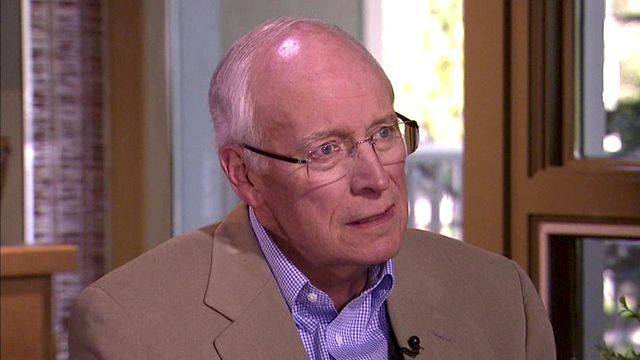
Dick Cheney on 'Hannity'
Details
-
Description
Exclusive: Former vice president on his new book "In My Time"
- Duration 8:33
- Date Aug 30, 2011
You're watching...
Exclusive: Former vice president on his new book "In My Time"
Also in this playlist...
Auto-advance: ON
Auto-advanceThis transcript is automatically generated
And welcome to special edition of Hannity Vice President Dick Cheney He served for eight years alongside president George W.
Bush in the White House.
-- Vice President Cheney along with his daughter -- are recounting his long career politics in the brand new book in my time -- personal and political memoir.
I travel to the beautiful state of Wyoming to sit down with the former vice president vice president so good to see if -- and its future.
Welcome you want with it but you know what it's beautiful here now I am now -- know why you have a lot of this great state.
Dick Cheney in my time with Liz Cheney by the way.
At personal and political memoir.
You -- working on this for a long time we have we started out on -- Spent two full years basically -- started after I left office at -- Materials notes oral -- things like that over the years.
But in terms of actually working on the book -- contracts then the last two years now.
You know 11 of the things that keep coming up on -- -- a lot of people are concerned obviously.
You had a heart attack in 1978.
It quadruple bypass.
In the course of the election that up with five heart attacks.
Recently had a very tough struggle -- I guess they have new technology mechanical heart pump.
And I read that you don't have a pulse that's kind.
Is that true well there's polls there but it's very weak and the pump it.
It's called glad ventricular assist device.
And it's time that cleared -- In the latter stages of heart failure it's then that them over here now it's -- work in -- they fan how do you feel now.
You know.
And this is some visible what it struck me because it came up a lot during the book even when President Bush was asking you to be here his vice president.
You know you brought up the issues of your heart and since the age of 37 you've had to deal with.
That at least in the back your mind can't that's going to be difficult psychologically.
Well let it.
It would be if you worried about an everyday.
He can't let yourself -- -- -- in my case was -- had that first heart attack.
In the middlemen first campaign for congress.
And found myself for the emergency room -- memorial hospital 37 years old and all of a sudden.
Heart attack does that mean give up my political careers campaign over and so forth.
And I asked the doctor taken care again and Rick Davis it's going to be -- good lifelong friend.
If I had it for -- the campaign makes it look -- hard work never killed anybody.
He wanted to do it go do it worsened -- -- spend your life doing something don't want it.
Took that advice sort of cross that bridge back in 1978.
And I've always operated on the basis.
Obviously -- the things it did not an intelligent and do you don't smoke take care yourself watch which He.
But.
I've been able.
Partly because the technologies stated in my indices to.
Have my entire political careers taking place after that first architects of its amazing how far they've come in all of these things so -- -- you are feeling better so.
Fifteen months ago I was very sick -- To -- much better shape thanks to the technology.
Is great doctors that's great news.
He missed the day -- day He missed the involvement do you miss being vice president what did you like most about the job what did you dislike the most.
Well I I loved the job it was.
It was great fun to go back after all those years.
And settled in in the White House.
In an office there in the west way right next to the one and occupied twenty years before as White House chief of staff.
-- when I went back as vice president.
I was the oldest guy analyst who have been one of the youngest back and Nixon administration had first gone.
And it had the opportunity after service in the congress for ten years.
Through desert storm the Defense Department and so forth.
-- time with Ford.
To have the perspective that experience.
Was very valuable for me.
But it was great to have the opportunity to combat sort of sit there and look back on that experience.
And deal with the issues we have to deal of course there.
President Bush had -- him.
Huge.
Huge set of issues within months of our return all of the sudden collectors.
And -- in the -- War on terror and and he's totally dominated everything we did for the next seven years wasn't anything you -- planned on.
Before you arrived -- many respects.
I felt the -- experiences I had before service on the House Intelligence Committee much time sectors finance -- a big part intelligence community.
All of those things.
Stood me in good stead.
When we the global war on terror that set of concerns we had face after.
You talk about one of the saddest days in your life.
Is the hunting accident when your friend you describe -- in detail.
As I was reading this you you always had a medical team is as.
Part of your staff that would follow you wherever you went right and you.
You talked about it very open about it and you know.
-- -- -- -- -- -- -- Well it was I was.
One of the things I love to do.
Was to hunt quail and south Texas.
And -- -- Armstrong -- ever longtime friends of ours and a it was on such -- when.
A it's my fault that accidentally.
Shot.
Didn't know that one remind them compatriots can but side is this late in the day the sun started.
And visibility was a moment but -- bird flies Specter fired.
And fortunately -- 28 gauge of -- -- idea but obviously it was devastating.
And a in terms of hit him the upper body He had protective goggles on some of those guys were injured but.
Harry Whittington was the gentleman that's running.
His -- could not of them.
Kinder.
The -- He was more worried about me in the press flat it was bound to develop an -- about autism situation.
Good thing was that we had had my medical crew with me that they were always with me there were more likely to get.
Business.
Going to help a -- situation.
And working the -- But.
They did remarkable job immediately on the scene and we always had an ambulance motorcade.
Voted in the ambulance.
Taken hospital in Corpus Christi.
And -- fully recovered.
But really -- things the when I was sick last year.
In the intensive care unit for five weeks and so -- I got a lot of letters from people around the country.
But one of the very nicest most thoughtful ones -- merry way to -- A remarkable massive.
And he's he's used to great gentleman and we've.
Managed -- Get through all of that although late night jokes of comedians and so forth.
Including President Bush talked about as an English.
I've provided a lot of lot of material for the gridiron dinner and it for Jay Leno and and a place music joke on the stump to the reason that Alan Colmes what Hannity and -- was because I gave him -- birthday present.
Which was an all expense paid hunting trip with you.
Any case never talked to me again.
I know you've heard of all the we -- reconcile some pretty good it was.
The event itself.
For me was devastating this is one of the most difficult things -- ever had to go through and a but it was my fault them and which -- had happened.
And coming up Vice President Cheney explains why the biggest mistake Kerry Edwards campaign made in 2004.
Was making his wife -- Angry that much war.