You're watching...

Walking to Beat Ovarian Cancer

Details

  • Description

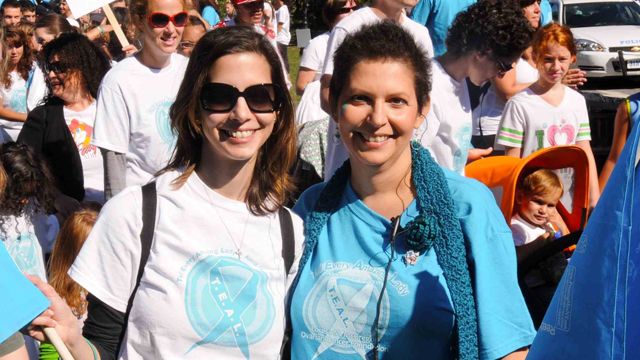
    When Louisa McGregor was diagnosed with ovarian cancer in 2007, she and her sister, Pamela Esposito-Amery started a foundation to raise awareness abou...

  • Duration 6:36
  • Date

Clips

Also in this playlist...

Editor's Picks

Auto-advance: ON

Auto-advance

Transcript

This transcript is automatically generated

Yeah.

Hello welcome to help -- I'm Dr.

-- ovarian cancer is the leading gynecological cancer in the US.

It is often called the silent killer because of the hidden symptoms and lack of awareness.

On a mission to raise that awareness is Pamela Esposito -- executive director.

And co-founder of -- Now you and I men about a little over a year ago with your system.

Was who had ovarian cancer.

And He we are today talking about.

You know again bringing more information or awareness.

This you know deadly disease.

So what is -- You know first is the color that represents and symbolizes ovarian cancer and we started a foundation my sister and I.

I'm not for profit called teel went to -- for tell -- amazing -- about ovarian cancer and those who is and McGregor.

Ovarian cancer foundation -- a long one but.

-- -- is really what we're trying to get that message across about.

You know because that they're do you know that they're really not that many.

Sources I think to again tell them.

About ovarian cancer.

And this is something very important.

So what made you and -- -- decide to do this isn't because you guys did not find enough information about ovarian cancer.

Exactly when it -- it was diagnosed and in the hospital for quite awhile.

We were talking about when she gets out of the hospital well let's go attend one of these walks and he's a very cancer walks thinking that there would be one and we actually had some difficulty finding an awareness walk specifically for ovarian cancer so we just made when -- silence.

-- know it's been it's been ongoing now for three years -- -- -- -- -- just passed.

Years and going strong so I'll tell all the ladies and even men out there.

Two start thinking about joining the walk because I think this is very important.

Organization.

Now let's let's focus and give people some information what are the signs and symptoms of ovarian cancer.

Well it's it's a combination of many different symptoms and the key is something that.

Is persistent and sticks around for awhile where you should see your doctor and those can be anything from.

Frequent urination and -- lost sweet -- pelvic pain.

Loading feeling full.

Some of those there are some of -- they're very nonspecific and I most part.

So from your perspective -- you know having.

Sister who suffered from it.

What are the dangers you think two women.

They don't pay attention to symptoms.

Well I think that the hardest part.

Which we tapping -- little too often is that it's caught in a very late stage it's usually at a at a later stage of diagnosis and a lot of women think that if they go for their annual exam that's good enough and you're not getting -- primary cancer -- -- -- and colleges you put up disturbs you do you -- -- here.

But yeah you're absolutely right there in catches a lot of times not -- look for that right -- there's not checking for a very or anything a very cancer related.

So from the -- say you have learned because I know you very well educated on this thing.

-- website truly reflects that what are some of the ways to detect ovarian cancer.

-- -- -- -- -- -- -- -- -- -- -- -- -- -- -- -- -- -- -- -- -- -- -- -- -- -- -- -- -- -- And also the vaginal.

-- pelvic exam right so with those three things combines they can be used as a tool to help find the detection.

Of it but there's no perfect tests right.

And you know and and the argument and that three tests again you know they vaginal ultrasound.

This CA 125 that you alluded to of course -- -- rectal exam you know a lot of times.

Even with those tests.

Ovarian cancers -- madness and I just hope that more research dollars would go.

Into finding better methodology He will.

So that we can really pick up more -- cancers especially in the early stages because that's that's what can -- Now water some of the most common misconceptions.

That you know.

Are out there in regards to Mary Katz.

I think -- some -- it down.

It's it comes down to awareness and also comes to even when you go to your doctors -- office.

I feel.

Like we said before if someone is getting at perhaps in the pap -- they think that they're getting -- for -- very cancer so.

To me it's it's a little bit of communicating to your -- -- some of signs and symptoms that you know they make it persistent and they might be -- but at least tell your doctor about them.

It seems to me that it could -- be caught a little bit earlier people more persistent and communicating to their doctor.

To try to get these other tests.

I mean I totally agree with you and as a as an obstetrician gynecologist I would tell you.

The biggest misnomer that is out there is -- -- -- from my routine viewing an exam.

And million hopefully you routine you -- -- him for the most part I had going for you routine viewing them because.

And I think that that's where they I think that the consumers.

They.

Getting getting back to what physicians should be looking out for looking at family histories.

Looking at genetic really is and all of that.

As part of preventing diseases you know something that we have to get to that point but in the meantime I think the patient has -- become the advocate.

So let's get back to steal money you raise it goes too.

For the last a couple years we've been able to give over a 100000 dollars to the ovarian cancer research fund in the short period of time.

And there's going to be of the beneficiaries they'll be announcing soon as well and it.

Thank you so much for coming and thank you from keeping the fight.

Thank you for keeping the memory of your sister alive and helping other women out there that struggling with ovarian cancer.

You guys out there.

You know -- I don't typically endorse anything but I have to tell you -- Non for profit.

Comes out of humble beginnings.

Comes out of the just a mission to bring women information supported equal to their website.

Which is very important the web -- is -- Walk dot org and -- and you have a lot of information about.

All right I did you have any questions you can email me here at fox said doctor -- -- foxnews.com.

Until next time -- -- man.