You're watching...
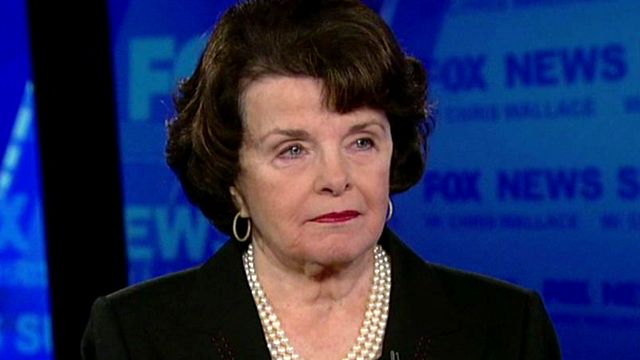
Dianne Feinstein on Alleged Iranian Plot
Details
-
Description
Senate Intelligence Committee chair on 'FNS'
- Duration 10:51
- Date Oct 16, 2011
You're watching...
Senate Intelligence Committee chair on 'FNS'
Also in this playlist...
Auto-advance: ON
Auto-advanceThis transcript is automatically generated
Stunning news this week elements of the Iranian government planned to assassinate the Saudi ambassador here in Washington.
Joining us now to discuss the alleged plot and how the US should respond.
Is the chairman of the Senate Intelligence Committee Dianne Feinstein and senator welcome back to FOX News Sunday -- you were just saying as we just before He went on the air people.
Still don't believe this.
Did.
Can persuade them that this was real and answered two questions -- from -- How high up in the Iranian government did this go and what does -- tell you.
About what's going on in Tehran right.
Well I was first briefed -- the beginning of September.
It sounded doubtful because of the cast of characters and because.
Of the fact that the operative entity was that could force department 400 part of the Iranian revolutionary guard.
The elite unit.
That really is sent out -- ran into various areas that finances terrorism etc.
And I didn't believe it either.
But as it turned out it's very real.
And what it represented was a rather unique effort between our Drug Enforcement Administration FB IC IA -- kind of coming together.
Of agencies to collect intelligence both human and signals and tell.
If it is the single most compelling piece of evidence that this is -- The -- me just finish the case is dead bang I think.
I think some of the signals intelligence candidly is the most compelling.
And second -- Bakhtiar himself.
This is in his painters used car salesman that's right in answers to -- questions.
Essentially fessed up essentially.
Admitted it was real.
And money was transferred.
And -- so it's real all right.
And it and how high up in the government does -- go and what does -- tell you about what's going on in that -- The four puts -- -- couldn't force officials sanctioned by the Treasury Department include.
Cost some.
Solomon on Sola -- who was head of -- force He is known as a very careful manager.
He is reported to be very close to the supreme leader there's no evidence that it reached the supreme leader.
They're certainly which it does is -- -- -- Ayatollah -- you know new.
And the head new.
Now this is an unusual thing Iran reaches out around Iran but to cross to the other side of the world.
And try and attack in this country is an escalation and that's what concerns us and I think that's what concerns the saudis as well.
You say an escalation you also say that we should be on alert for other plots and other countries.
What do you know about well there's no question.
The -- force has been responsible.
Four other operations going back to 1993.
And -- is saris.
With the Argentinean.
Israeli mutual association and that bomb but -- -- an error four days ago in Iraq.
They carried out in operation.
Or financed an operation against our people in Iraq.
So this is -- -- and -- other ongoing plots and in other countries what I said was I think -- well could be.
I don't think this is just an isolated saying that suddenly came up when they have never done these kinds of things before.
They have done these kinds of things before and this is certainly continue -- but an extension and an escalation.
So far all President Obama is talking about is tougher sanctions that we went back and looked at the history that we're not.
Since 1979 the US has issued nineteen executive orders.
And -- southern laws election in Iran since 2006.
The UN has passed five sets of sanctions.
Meanwhile despite all about it Iran continues to pursue a nuclear program it continues to be as we see here.
A state sponsor of terrorism do you believe.
That shot sanctions can work to change Iran's -- here.
I don't think the sanctions.
Have been as complete as -- -- as a should be I I wish they had sanctioned the central bank of Iran and that would affect oil and maybe that's why they didn't do it.
But that makes a big difference is that what you would.
To -- now yes.
And the argument is well we could -- the bank that it and the key there is obviously not we don't do business with the Central Bank but that would mean we would blacklist.
Any foreign country or company that does business for the Central Bank correct.
It can that work without China and Russia being on board.
Well that's another subject and this is why the State Department sent out teams.
To share evidence to shared intelligence to the extent they could.
With all our allies and in particular with the Security Council.
Of the United Nations we actually were briefed by one of the men that participated.
In that Security Council briefing.
There should be no doubt.
And the evidence is very strong the F by BI believes that case is both strong and good and will result in a conviction.
But you would support sanctioning blacklisted Iran's central bank and any company around the world does business absolutely.
And for other reasons too.
I mean this is just one part.
-- -- Is escalating I believe it's.
Nuclear development Iran is increasingly hostile they have not -- supporting Hezbollah or Hamas or.
-- participating.
In the well bringing.
Missiles and rockets into Lebanon through Damascus.
It's a very dangerous situation and my hope is that there can be some kind of discussion that can be convincing.
For the Iranians to change course absent that.
At one time or another if you project out a number of years were on a collision course.
If we want to avoid it we have to take action to avoid it.
Well I wanna I wanna talk about that retired general Jack -- it was one of the architects of our counter insurgency.
Strategy in Iraq and Afghanistan says the US should take military action areas.
I would start.
With targeting that could source who has been using these proxies to cut conduct actions against us.
I would conduct Covert actions against them and espionage that means kill them.
And take their bases away from them.
Why not go after the could force.
Well that's perhaps more difficult than it said to be.
I think this is a large operation.
It's in the thousands.
Is in the -- branch.
How you go after them where do you how do you do it.
I'd -- I've never seen a planned to do it.
It it probably would escalate into -- war and the question is do we want to go to war with Iran at this time.
My judgment is no we have our hands full.
With the -- With Afghanistan.
With the deteriorating relationship with pockets done.
I mean I think this is not.
Our country should not be looking to go to war I think we should be looking to stop bad behavior short of war.
Like I've got a couple of minutes left -- -- -- about two other hotspots Friday afternoon President Obama announced he's sending a hundred.
US special forces as trainers as advisors.
-- -- Central Africa two to act as I say as trainers against the Lord's Resistance Army several.
Hundred brutal guerrillas there would.
Created tremendous damage over the last couple of decades.
Do you support you -- we got our -- do you support deploying war US troops into another foreign conflict.
Well let me first of all say what it is we passed a resolution during the Bush Administration.
That -- that we respond to this brutality.
And President Bush authorized advisors to go over they were unarmed.
The difference here is that these are still advisors the 100.
But they are armed and they -- cleared to act in self defense.
Now what is the Lord's Resistance Army it is and He brutal militia.
And -- and you've gone -- it's in east central.
African republic -- -- The Congo and it moved through and it rapes and it pillaging and I could and it could cut people apart.
If it we're running out of time.
Why send troops there but we won't send troops to try to and the slaughter in Syria.
Well that's that's a good question.
But I think this is -- I think they're two entirely different circumstances.
One is a reaction.
He is part of the -- -- the other has been on an ongoing move to essentially annihilate people.
Essentially.
Really.
Kill large numbers of people and I think.
This is a small group it's a hundred people they give -- military advice.
To the regional army units in the area we'll see what happens.
-- -- the Obama administration is now scaling back its plans for how many troops we're gonna keep in Iraq.
At the end of 2011.
Fewer than a thousand perhaps a few hundred.
Because we can't work out a deal with the Iraqi Government.
Your reaction.
Well that's right the status of forces agreement expires the end of this year.
We need to have a new status of forces agreement or were there.
Essentially against the will of the government.
And I think we will not continue against the will of the government.
But are you troubled that the idea that we would basically be all out of that -- I'm troubled because of it you know I look at an act Korea the length of time it took to provide stability there.
-- Japan the length of time it took to provide stability there.
And I think people.
They are so anxious for our men and women to come home and I understand that it is also important that the job is completed in a way.
The provides the greatest chances for stability for the country I think that.
Is a key goal for Afghanistan as well as a rock so I am hopeful.
That they will be able to quickly negotiators status of forces agreement absent that yes will have to bring our people home.
Senator Feinstein we're gonna have to leave it there thank you so much for talking with -- -- we'll stay on top of all these stories thank you Chris and happy birthday but that.