This transcript is automatically generated
Yeah.
-- -- health blog I'm Dr.
-- Ever wonder which states are the best for the wars for your health and how does that information play on the health of our nation well today we're gonna find out.
Joining me now is doctor -- cuts -- executive vice president and chief of medical affairs for UnitedHealth Group and member of the board of united health foundation.
Whitman days out from the Foundation's annual health ranking serving I got this -- right here.
So -- welcome to the program thank you let's -- this year to last year as a country.
What are the things of ailments that have increased.
In the -- -- Saturday.
Well this is the 22 year we've been doing this in the news on fortune this year is not good.
That we were making slight progress year over year.
In improving the overall health and -- of the nation.
This year compared to last year we made no progress at all -- stagnated and that's a real problem.
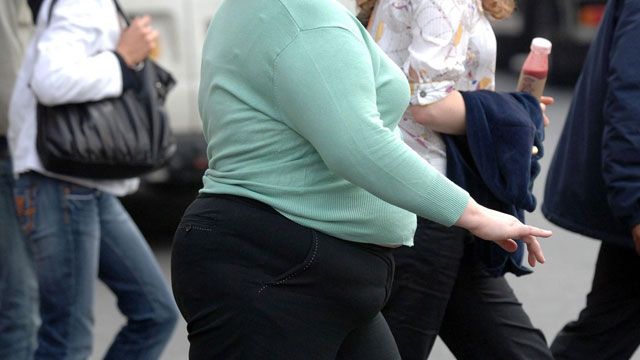
The things that have caused that that I think -- the most worrisome are a significant increase in obesity.
A significant increase in diabetes.
And it's significant increase in the number of children living in poverty which is very closely associated with health status so.
We have some pretty pretty important challenges in front of the nation.
Why isn't the message getting out there why -- is it because -- people you don't care and and I mean I'm trying to understand you know if we had ignore the problem and not really talked about it.
News organizations -- where there's the AMA.
Or any of the congress -- in many medical society viewed -- could argue well you know nobody's told me about it but nobody's talked about diabetes and obesity for the last -- it.
More than three years but I give -- three years -- very solid information.
So why why is in the making an impact in the -- Was there it's it's that you really asking the hard questions and I don't think that we all know all the reasons but we know that they're complex part of it of course is that.
It is the way in which it is our -- And it is whether or not we have access to affordable healthy food choices I think we all know that.
In a recessionary economy.
People are very cautious about how they spend their money.
It is very easy to get access to a one dollar cheeseburger 24 hours a day seven days a week now -- -- more difficult to get access to a one yards.
And my language and this is something of course that I always -- because yes.
When you have the money to spend on quality items you probably are getting better nutrition when you have to.
-- five dollars and the best thing that you can do was get a process cereal and and carton -- and you know some inexpensive sugar that's what you gonna go for because you gotta fill your stomach and that's exactly so the good.
News is though as you mentioned people like -- Obama's initiatives with the partnership for healthy America with the private sector coming in.
And other initiatives we're seeing the food industry starting to address these challenges putting grocery stores.
In in low income neighborhoods instead of having to rely on on fast food and and but Davis.
We're seeing now are people that are looking to try to bring down the cost of -- fruits and vegetables but then that's the second issue comes up.
And that is.
Even when you make food available.
Do Americans know how to cook it and how to prepare and so what you see the the food industry describing is a great concern and so one of the things that.
Through our foundation and another Philanthropic efforts that united.
Health foundation UnitedHealth Group we've been involved with this trying to brain.
People -- into the school systems to teach us shoot a -- And their parents how do you cook healthy food we need more.
Of that but then the third issue and you put -- Green -- as well I think they're not enough Americans who have just decided that they have to care.
It the end of the day if we don't have a will to live.
If we don't have a will to be as healthy as possible then all the other things of course are.
Are are not going to be effective and so we've got to reach out to people have more conversations in our home but also our communities our civic associations churches fraternities and sororities.
Got to mobilize a lot more people to care about this yet I think that kids especially high school that I think they should run the cafeteria and I think they should cook the food -- way to learn.
Exactly the value of intrusion -- let's talk about the states because I've mentioned keys that.
That you also have rank the that the -- he is and and least healthiest states in the union let's start with.
What's that well which one is this the healthiest state in the union right what -- I answer it and I just want to emphasize that one of the things we've learned through America's health rankings is that every state no matter where it is in the rankings has its share of successes.
And no matter where you are the rankings right of your chair of of challenges right though the healthiest state in the this year was Vermont.
Followed closely by New Hampshire.
Connecticut Hawaii.
And then Massachusetts.
And because I know you gonna ask.
The states that are having the biggest challenges and difficulties were at number 46 Alabama -- followed by Arkansas.
Oklahoma.
Louisiana and in the state that is struggling -- Most was Mississippi.
So it.
Just bull by the locations of the -- you can see that there's a little bit of an economic divide right there.
When you look in New England when you look at Connecticut for instance vs some of the southern states you see that the economic divide does play a role in in some.
Help let's go well as a physician there isn't intimate relationship between health and the larger environment in which we we live.
And so there's no question that that there is a relationship had that being said.
It is still possible for states that are in that southeastern quadrant of America that is struggling economically.
Our states are still making progress that we've seen that for example -- Tennessee.
What kind of data did you look at specifically.
I mean you and you look at many things but one of some of the highlights of the -- that you look.
That would make a state let's say being in the 4748.
Ranking.
This is a comprehensive assessment of overall health and -- that uses 23 measures.
And those are things that include our personal behaviors whether we smoke drink alcohol a graduate from high school.
Those kinds of things it looks at the environment in which we live and work occupational fatalities the violent crime rate in the community.
And looks at air pollution and it looks at the number of children in poverty.
It looks at the decisions made by elected and public officials things like.
How much money is spent on public health.
Access to health care immunization rates and -- it looks at the clinical care that's being delivered measures such as preventable hospitalizations.
And access to early.
Prenatal care which is extremely important I know you understand that right and then lastly if you roll all those sort of things up we look at the health outcomes premature death rate.
Diabetes.
The cardiovascular death rate and infant mortality so 23 measures to give us a holistic picture.
And it's a pretty good way of -- of evaluating the overall health in this not only of each of our state but our nation as a whole.
Now this ranking is available to the public -- -- can go online and see it or we would urge them to go on tonight WW dot America's health rankings dot ORG that's all one word America's health rankings.
And we want you to go there look at the data for your state.
Look at the tips that we have around what you might do as an individual or as a citizen to be involved in alternately what we really hope.
Is it you'll get involved at your level of your community recruiting resource is -- church civic association fraternity sorority.
That to focus in on the issues that are most important where you live and where you work above all.
What we need to do as you asked in the very beginning of the segment we know about these problems that issue now is let's take action we've got to do something about.
-- you know we we you know in the medical profession and -- -- in the medical profession to you know we always want patients to get involved.
And we always talk about the partnership between the doctor and patient.
And yes the partnership should be you know the individual.
Clinical scenario that is happening before -- must meet him and in Europe in that relationship but also we want patients to get involved because.
You know if you look at things for us is even in pregnancy and you talk about prenatal care.
You know you.
Prenatal care is the most in one of the most important factors -- a woman can -- the -- especially in the beginning of the pregnancy and still does -- baffles me.
Why somebody would just wait until the middle of a pregnancy to say now I'm going to see the doctor.
You know the sometimes he excuses are you know I -- -- husband now I have insurance whatever the case may -- but even so we have public service we have public clinics.
And you know if you just kind of you know look look up you've been able you know you're gonna find somebody that we'll see you and that's very -- And what you -- and the result of that is that the great tragedy we are 43.
Is a world in infant survival there is no war damning statistic.
Then then that and so we've really got to get at it but again -- -- -- -- I think -- understand as well though is the individual have to get involved.
But if we're in our community and we see someone who's pregnant.
Let's support they have absolutely can -- offer you a ride to the clinic.
What can I do -- not value romanticizing in a society that I wish we had but I hope I hope we get there I think we gonna get -- someday.
But look this is very important information I urge everybody to go to the website -- And and look at your state look at the issues the tips that they offer which are very important united.
Health Care Foundation is when most reputable and and and procedures foundation when it comes to very good.
Analysis.
Of all the problems in America's -- when he comes to helpful.
Thank you so much for coming to the program thank you for your time thank you very issue.
And if you have any health questions you can email me your fox about the many of foxnews.com thanks for watching the Fox News -- document.