This transcript is automatically generated
Yeah.
Hello and welcome to help -- -- doctor single.
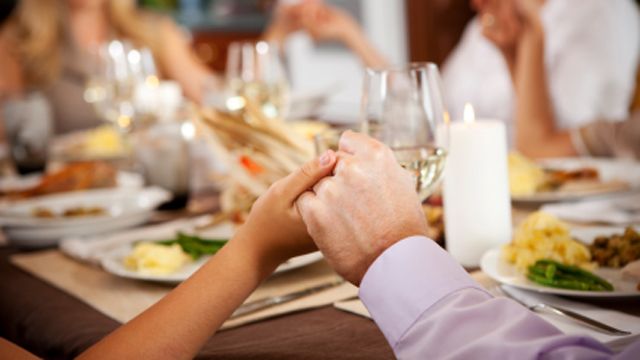
The holiday season is a time of celebration and togetherness with family and friends.
But for people with cancer -- can be the most difficult time of the year.
Patients and their loved ones tend to feel out of touch an additional stress from the disease.
Here to tell us about room -- the resources that can help.
Is -- -- CEO of the lymphoma research foundation and editor in chief of cancer dot net.
Thank you for coming Diane thank you for having a -- so how did you get involved in cancer and cancer families and helping people what I -- doing -- for -- her.
Well I was -- And it's essential -- I went back to school in social work and went to work at the Dana Farber Cancer Institute in Boston and worked there for a number of years working with.
People who have cancer and their families and over the years developed more and more interest in the psychosocial issues.
That people face when they have a cancer diagnosis how they communicate about it having worked out with their fans.
What happens around the holidays -- -- -- of feelings change about cancer during the how well the holidays can be difficult.
No matter what situation -- and holidays have a lot of association with the past with family members with certain rituals that you go through.
And they can also be quite stressful because there's a lot going on a lot of applications.
So -- -- being treated for cancer and maybe feeling tired.
And not filling up to yourself as you might have been.
The whole.
Set of requirements that come with the holidays can be that much more complicated for you how can a person that doesn't have your training or even my training.
Talked to a patient about their limitations in their expectations during the holiday season which is after all the time of expectation.
It is very much time of expectations and -- my recommendation would be -- if you're close to someone.
Who has cancer and this is the holiday season that she would talk directly with them about what they want to do and what they don't want to do.
Do they want to travel to the family members that they've always gone to.
But maybe this here at my little easier to stay home and had -- celebration at home.
-- they want some help with shopping you have to get the balance and he wants someone to feel that there.
You know they don't count anymore and they're not really able to do anything but you also -- set realistic expectations for what about the bucket list is that a real deal or is that just something that a movie hyped up between two great actors.
-- is the real deal to some degree I think we all have things that we like to accomplish our lives if and -- -- being treated for cancer me because things become a little more.
We know and and a little more it's something that you want to concentrate on.
I think when you talk about a bucket list people worry when they have cancer.
Where are they going to be next Christmas where they gonna be the Christmas after that maybe they wanna get something done -- see someone this Christmas because they had fears.
Perhaps realistic perhaps not realistic but they had fears about what the future will hold.
What about some health precautions that people have to take the more likely to get into trouble.
Eating too much not taking proper precautions how do you advise people around the holidays -- different from the rest of the year.
Well when people are being treated for cancer they certainly can be more susceptible to being in crowds to getting culled perhaps having less appetite -- do you want to figure that out do you -- -- travel through airports do you wanna go.
To the family where they're six little kids all of whom have -- all the time.
My own message with all of this is that.
If you being treated for cancer and you have those concerns it's okay to speak up about them.
It's OK to say you know I don't think I really want to do this this year next year hopefully everything that's normal and real resentment.
But I have to pay a little more attention to not getting a call practically a little more attention to conserving my energy so let's change things somewhat this -- -- -- the pattern so can be a little easier for me.
-- and speaking of insensitivity.
What are some of the mistakes that people make when they're going about trying to buy a gift for someone with cancer or someone that thinks they may have cancer.
What should you buy what should you avoid that you should probably by which -- -- before -- don't buy things that are like medical supplies are.
Don't buy just books because somebody's gonna have nowhere where you say but you have you have no idea held extensive medical supplies.
Did you say they would say -- -- -- some of your prescription for you might be good.
You know I would buy presents for someone as you have bought them before they may be the person with the big scheme here -- not going to be skiing this Christmas sunlight stay away from something like that but it usually -- something to Wear perfume or gay people gift certificate for something.
Do what they do people say that.
They've treated sometimes as if they're really different person than balancing one against when you're working with somebody -- -- and you relationship with somebody who's sick.
Is -- I recognize that.
They might not have the same energy and and abilities to do you think that they did before but they're still here there's still witnessed -- still talking they're still participated.
To treat them that.
Let me turn this around what should cancer patients do to make families not feel -- comfortable or not to look too much attention to this.
How does a cancer patient deal with the diagnosis.
And still make the others around more comfortably on my recommendation and being sometimes it's easier to recommend -- to do but to be used to practice possible about what -- -- are.
To say you know.
I am going to -- treatment I'm really optimistic I'm gonna do well but I really just to not up to myself yet so.
Could we be hearing what we -- she dumb could she help could you cook the dinner this year instead of having me do it.
These direct as possible and you also will make people more comfortable or let's say you're gonna see your family and -- -- hair and look different.
I would warn them ahead of time to say you know this -- makes me lose my hair and going to be wearing -- you can notice the difference comfortable with -- you'll get used to it to.
Give them some some -- so that you don't get that oh my goodness look different than everybody gets on come on what's the single most important tip.
Appreciate your -- that someone in your family with cancers come at a Christmas dinner.
What's the single most important thing during try to make them as comfortable as possible think about their situation China would Jackson they can be comfortable.
But change them like they're still the person and still participating don't shut them out because -- -- still pulpit.
Thank you so much for joining me -- emblem I'm going to call you with questions about this with -- -- my patients who were really remarkable person.
Doing great were -- doing God's work I thank you thank you so much for having I appreciate my pleasure.
If -- more resource sources about dealing with cancer at cancer dot net and if you have a health question email Dr.
Manny at foxnews.com.
Until next time I'm doctor -- --