You're watching...

Voter ID Battle

Details

  • Description

    South Carolina Attorney General Alan Wilson reacts

  • Duration 6:31
  • Date

Clips

Also in this playlist...

Editor's Picks

Auto-advance: ON

Auto-advance

Transcript

This transcript is automatically generated

But -- Department of Justice challenging voter identification laws across the country.

Claiming certain state rules that require voters to show ID at the polls are when they're registering to vote.

Can discriminate against minorities.

But today we -- learning many of those state laws got Green -- from Democrats.

Across the board.

One of the states that is under fire from DOJ is South Carolina the attorney general of that state is Alan Wilson.

That is the largest state South Carolina to be singled out by the DOJ and mr.

Wilson is my guess now journalists -- thank you so much for being here let's talk about this letter that you just got from.

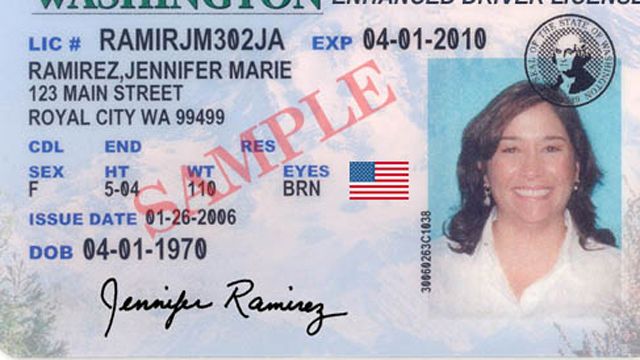
That Department of Justice trying to tell South Carolina that it has no business requiring photo ID.

From folks when they are registering to registering to vote now this letter goes on for seven pages it's from Tom Perez who's the assistant attorney general.

And he claims that this will disenfranchise black voters your new law requiring photo ID when they register to vote.

And that you have no justification for doing it while you've tried to pin it on voter fraud he says you provided no evidence that that's a problem in your state.

That this particular new law would fix your response to mr.

-- Strongly disagree with mr.

-- first off -- want to say how disappointed that we are.

The Department of Justice for.

Striking down a law.

But get offer protections for the citizens citizens of South Carolina but the Supreme Court has upheld for the citizens of Indiana.

-- found a very disappointing but calls is that's what it's a different standard for soft on abuse of citizens of other states.

Secondly the -- original provide for the Department of Justice.

Showed that 239000.

People this is data that -- -- the from the election commission our state.

Should it 239000.

People.

Were registered vote but had no photo ID.

Subsequently we got with our Department of Motor Vehicles they did -- all of -- of that data and found out that 37000.

Of those individuals who registered to vote but had -- -- were deceased.

96000 of them.

Had moved to other states and in fact we have been informed about -- states of those individuals.

Had gotten registration there.

There were other qualifiers that showed that people's names were -- their -- d.'s didn't maps.

The ethics immediately election commission's data because of vote discrepancy in the name.

At the end of the day after the all it was completed.

The -- 239000.

People who didn't have photo IDs but -- registered to vote there were 27000.

And that number is probably far less.

Says the Justice Department basically.

Disregarded.

Effectively that information so I disagree with mr.

-- assertion that it was designed or it was going to infringe upon people's right -- the.

His whole analysis is he takes the number of people who are registered to vote but don't have a photo IDs right now you mentioned that 239000.

So even let's say we you know we we shrink it down -- -- number of 27000 change he says if you run the numbers.

-- there are more African Americans who don't have a photo ID then there are whites.

And so unless you can come up with a special justification as to why you need a photo ID some proof of of significant voter fraud in the state.

You can't.

Passed this law because it's going to disenfranchise more blacks than whites and -- in south Carolina's history that's why the DOJ has this.

Right to -- tell your law as opposed to Indiana.

They say given south Carolina's history you can't do it.

-- a -- that the data is relying on the -- between.

Individuals who were -- oral Caucasian and those who are minority.

Between not having a photo ID and having somebody I think.

The African American populations at 10% yet 10% of I not why they register to vote -- on how to fight ID 4% record one priest one point 6% difference.

Now given that it account.

You know we believe that this is analogous to buying prescription medication.

On -- is no more discriminatory.

To require -- senior citizen -- a white person a black person or any color person.

To provide basic.

Photo identification.

To get prescription medications furthermore -- On in -- law.

The person can show the polling place the day the election.

They can basically sign an affidavit.

Stated they had a reasonable impediment wanted and -- -- photo ID and presumption against the state date date their vote will be counted.

And there was a case several years ago -- local house member was running for reelection.

Lost by seven votes there were -- 170 ballots turned in with an X marked on the line.

Not even -- signature just a simple acts.

Had this law been an effect.

Those individuals would have had to at least check a bomb -- sit fill out brief affidavit saying why they couldn't give their name or why they didn't have a photo -- date.

So I've -- dispute with a just the part of the Justice Department says and I believe that this wall would protect.

Not only -- system that we have in place but individual voters thousand and you only elective office.

It's do you believe that this is a legitimate effort forget whether you believe that it's.

You know justify that it added that it needs to be made that they need to shut down your law but do you believe the motivation by Tom Perez in the DOJ is in fact to preserve.

The legitimate voting rights of African Americans or do you believe.

That there -- goal is to preserve the voting rights of folks who actually may not be.

Registered voter may not actually have the right to vote in your state because they believe it'll help democratic -- Will meg and I'm always hasn't had to get into people's personal thought processes and their attentions people always described intentions to me that are always accurate old when I do something publicly.

So I'm not gonna get into went there and true intentions are.

But what I do know is is that the justices department decision.

To strike down the -- of the voting rights act as preserve the voting rights of 37000 dead people and 96000 people who no longer live in the state are registered elsewhere.

That is the effect of what they've done.

That number is probably even larger when you account and transient college students and other disqualifies you that is the effect of what they've done their intention I can't comment because I'm not them -- -- points out to you in a letter that you can go ahead and challenge this in federal district court if you want it.

Do you want to William we -- we're we're definitely goggle it challenge -- in and federal district court that is that is of but the fact at this point.

General thank you all the -- -- -- thank you Alan -- everybody attorney general South Carolina.

Well coming up the Occupy Movement costing lost.