You're watching...
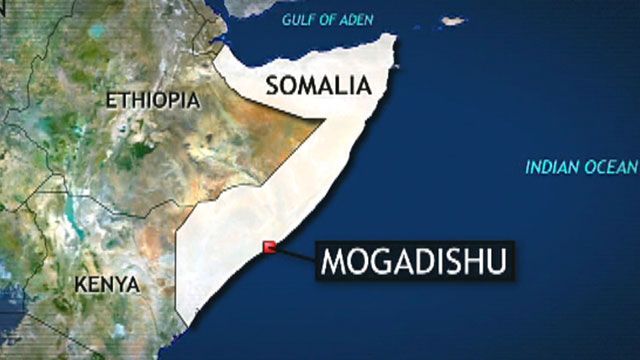
Season of Rape in Somalia
Details
-
Description
Is Female sexuality a real danger to society?
- Duration 4:30
- Date Jan 5, 2012
You're watching...
Is Female sexuality a real danger to society?
Also in this playlist...
Auto-advance: ON
Auto-advanceThis transcript is automatically generated
And welcome back switching gears now we're gonna go over to the Middle East and look at attitudes.
Islamic nations.
Toward women and toward female sexuality and joining us right now we have Middle East analyst but not Shays and -- -- thank you so much for being with us.
So you point out that -- most Islamic countries are under Sharia law.
And that under this law women have half the rights of men.
How does this impinge on their personal freedoms.
Well.
Essentially it basically boils down to the fact that a woman and under Sharia law has.
Half of the rights that a man does.
Women can't travel freely for example they can't -- but they -- for example in the case of the divorce.
Even if they're making more money than the husband -- have custody of the children.
They can dress the way they want to they -- for example.
Leave the house who are married you know whoever they want to it's a very very very tight controlled.
Situation where essentially.
In many cases for example places like Iran.
A woman can be punished and at the same time work.
-- very much up and along parallel lines as a man but unfortunately is not able to make her own choices and have her on.
Be emancipated in the western sense that we know of today.
And the reasoning behind this is that fuels female sexuality.
Is a very powerful force and that is a threat to society it's a temptation to men.
And -- therefore it just has to be swapped yes it's that it's about that it's basically about seduction.
-- -- -- -- -- A woman that and in the case of under Sharia law is it is viewed for example the hair is viewed as.
Something that is a completely.
Tantalizing to a man and therefore it has to be covered.
-- the -- as as as a woman's body and that you know a lot of the countries where -- Brooke Burke has or had jobs.
Or -- outdoors for example.
Those are those are essentially in order to hide the -- of the woman's body so that it doesn't -- A man and as if that weren't bad enough.
The real thing that you want to talk about is the fact that rate has become a tool to distant power.
-- -- It's it's not only for dis empowering women.
Some.
As well as the fact that it's also -- method of control for families and for society on the on the broader scale and that.
For example in them countries like let's say -- on when or in Afghanistan when women are raped.
It's also in order to be able to.
Put the family in a position where socially they cannot stand behind the woman and support her.
It's essentially.
The that the whole -- the situation ends up being that.
The woman has to be shunned by her family and pushed out in order to be able to for the for the family to continue living respectively let's say.
And so there's many many cases.
Recently of these kinds of -- -- the family's house for example stood by.
But then it ends up becoming.
Escalating into a much uglier and much more widespread.
Sort of tribal or local.
Kind of a battle if you will you refer to witness tribal blackmail -- and in Somalia.
-- you say the situation is rampant yes.
In Somalia situation is rampant and and and many other countries where Sharia law.
Continues to be.
You know the the rule essentially.
You know Somalia is in in no way different than for example what we've just seen in Egypt.
Where there's several for example Egyptian writers and journalists.
Recently were were raped as they were.
Arrested by the people who randomly were picking up people on.
And Harrier square so many of those countries into Somalia like I said or the Sudan or poor.
Egypt.
It's it's it's a very very scary situation where a woman is essentially treated as a as a brutally and like a beast like a beast of burden and a sense.