You're watching...
Debate over funding for 9/11 museum
Details
-
Description
Sen. Tom Coburn sounds off
- Duration 5:33
- Date Feb 2, 2012
You're watching...
Sen. Tom Coburn sounds off
Also in this playlist...
Auto-advance: ON
Auto-advanceThis transcript is automatically generated
I did a big debate in congress right now it's happening over funding for the 9/11 museum in New York City legislation before the senate is calling for.
Twenty million dollars a year in federal funding but when senator.
Is putting his foot down and says if there's twenty million dollars to be spent every year there's -- -- twenty million dollars.
Cut elsewhere joining us live to talk about -- senator Tom Coburn he's a member.
I -- the Senate Finance Committee and senator you say you don't have any concerns about the marriage.
This project so what exactly are your concerns about the way that it's being paid for.
Well first of all let me explain it every year I send a letter to every senator saying if you put bill on the floor that's gonna spending money.
Then you need to put with that bill what you want to eliminate the pay for that.
You know the fact that we're fifteen point four trillion dollars in debt and our kids future has been mortgage.
Means that we can't continue doing business as we've done in the past.
So every -- comes before Republican or Democrat no matter what it's for I don't care what it's war.
The one thing that congress just got to start doing is selecting priorities and that this is a priority this museum to -- -- Well we know we have 350 billion dollars a year waste fraud and duplication.
Certainly we can find twenty million dollar somewhere else that we can eliminate the -- There are some other questions that we ought to ask is number one to -- sixty million dollars in grants last year 59 million.
They have 560 million dollars in net assets.
They have pretty good salaries I would suggest.
And there's a lot of New Yorkers who have email me and said we agree with you that there ought to be a priority and if we're gonna do this and the federal government ought to do that.
And then there ought to be a way to pay for it by not charging it to our kids.
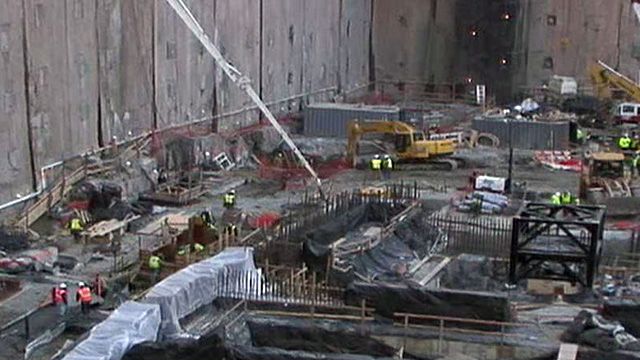
We're seeing color sense that we're seeing some pictures of the memorial and obviously this is very emotional and very personal for so many people we look at some other memorials that we have around the country.
Like the US holocaust memorial for example that gets fifty million dollars.
A year and federal funding and if anyone's guess -- you have the answer whether or not we've cut elsewhere to provide that fifty million dollars so some are wondering why.
Why this project right now it's very personal this -- a time where -- happening in our country people are feeling.
I don't -- it over generalize that feeling in a kind of the sense of loss in this down -- a white pick this topic now.
It's they're not picking a top.
It's every bill that comes to the senate I'm gonna do the same thing wrong.
The fact is is it is there a legitimate role for the federal government that.
The department of library museum science gives out hundreds of millions of grants every year.
They've gotten those -- so the so that they have the capability to get -- -- the question we ought to ask is even -- -- -- as important as this.
Shouldn't we pay for it.
That's not going to pay -- let's talk about that because in your waist but that you put out every year.
It's an interesting report that comes at the end of the year and you give your opinion on different federal projects and items -- federal spending that you say hey wait a minute this is not something that we said you're wasting money on again you -- -- your opinion but you obviously have they haven't.
A compass that helps you make that judgment of whether or not the federal government should be involved how do you know how do you make that decision what do you use as your compass.
Every time I look at those things I I looked and looked at fifteen trillion dollars where the death and then I immediately think about -- kids.
And I'm saying we're -- and this money were not.
Collected -- taxes were barring it from the Chinese.
And we're gonna spend this money on this and what's that gonna do to their future.
So.
I'm fully supporting.
Have -- -- memorial.
-- -- fully supportive of having the museum.
And I'm not really objecting that the federal government should painful part of it.
What I'm objecting to is adding to our -- And not having the courage to say I as a politician want to eliminate this to do this better thing.
Cindy and -- -- we have what what Washington is filled with this people who lacked courage.
Because they're afraid somebody who -- -- this other thing that's highly wasteful will get mad at them if they eliminate their funding.
-- it just a minute talk about political courage and if I if I could I think that is a major scene that we've been really speaking a lot about it you have to talk to some of the New York -- is -- -- like to talk about.
You're proposal here to -- when he million dollars of tax.
Where would you find it you could sit down with senator Schumer and senator Gillibrand where would you say hey listen this -- guys right here we should fight to cut this an annual giving the money did the.
The museum I can tell you when we get 56 programs that teach illiteracy -- financial literacy to people.
Do we have that moral authority as a government who can't even keep our books right can even be efficient and anything that we do.
Do we have the moral authority be teaching anybody financial literacy you can eliminate those programs tomorrow and pay for -- You could get rid of one camp of one kind of 1%.
Of the Medicare fraud and pay for this.
We can't even get a bill to the floor to eliminate Medicare fraud which is a hundred billion dollars a year.
So all I'm saying is America doesn't have a future and less our politicians develop the courage to start making choices about priorities -- the number five about priorities.
We appreciate the time today is an interesting topic and you're hearing you're hitting on something that would like to talk more about so we look -- -- -- you -- -- to thank you so much.