You're watching...

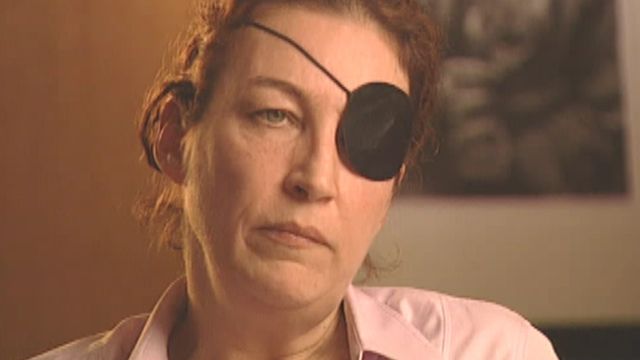
Oliver North's sit-down with Marie Colvin, part 3

Details

  • Description

    March 2004 interview on journalist's life

  • Duration 26:22
  • Date

Clips

Also in this playlist...

Editor's Picks

Auto-advance: ON

Auto-advance

Transcript

This transcript is automatically generated

OF -- you wounded.

And you've been recovering.

In New York.

After this to the doctors were telling you.

We're going to be able to say that.

Wouldn't.

-- the doctors -- -- -- save and first night I was there and it's an attempt is great if they just -- have said listen get who was -- I doctor in the world and and got me there.

Have certainly had the best care average.

Rates for six hours -- You know.

Kind of out of it enhancement drugs and it aftershock and and the first consultation I had was that.

In the register tigers have finished struggling through and it was actually -- it's too close to the brain can.

I remember just it's it's cutting mention -- -- aftershock can.

The question is not site and it looks decide whether they're gonna have to take the -- out or not.

And somehow that was something that made me you know just almost collapse not being shot in the village is somehow getting your.

I removed after was all over it seemed a step too far.

And it didn't happen named leopard on the nine kept but it's.

It was just it was no table.

-- -- I -- rental man now and and they you know it just yet but we're trailing 120 -- -- -- mail from.

You know people hadn't seen in ten years I can't -- for people I've never met.

There was -- -- it also makes you think well.

You know at least when I've written these things someone noticed.

And I -- most.

We're too I -- I remember really well one was from this.

Was smuggled out -- get it I got it when I was recuperating now when I was in hospital.

From this Catholic priest who was in.

Entry blank at it and protecting like me and Plano I'd like we have got along well people who don't pretend.

And he was just.

Irritable.

-- it and nobody cares about what's going on here they haven't cared for the last six years.

You're a journalist you come here you want me that you know take my time out from.

You know working with him which is trying to save people.

Collection -- it's.

Not going to mean anything.

And it -- a lucky -- he actually somehow managed to get smuggled out a letter saying.

You are remembered here as an honest and good person and I just -- tears up.

In a very funny one was down.

I think time difference got it completely wrong but.

Some of the people.

From inside the East Timor camp.

-- I hadn't had contact with they were evacuated to Australian made later made it back to.

East Timor when and the Australian army and Australian and -- between.

Kick from Washington.

And they sentenced to 9 in the morning.

It's just.

And asinine and I made generally about eight and I'm working a little bit go to its fifth.

It was about 8 in the morning and it was a knock on my end hotel door and.

I opened the door and there was.

This waiter there with -- large trolley.

With all the makings for vodka Martinis so the model you know -- bottle of -- Favorites vodka.

Little -- and lemons and I think they just know it's -- and then.

Sent to you by your friends and I opened a card and it was.

You -- paralyzed and -- we know you like vodka Martinis and it was.

Some of the people in East Timor and how expensive it must abandon -- shipped -- -- and somehow managed to get through security.

Hotel room service and then.

Have the makings of vodka martini sense for me and it -- gotten the time difference completely wrong that was faster -- he didn't -- think.

And arrived at 8 in the morning but it was a kind of great it was a great moment.

Would you and your parents still and you're.

My mother and my father died years ago my mother's it still lived -- enough instrument where I grew up.

What what's your -- thing.

I don't recall from around the world phones.

In -- I -- -- was.

Just.

Terrified at the beginning.

She's a teacher and -- in 86 which is the first timers.

Cute that a teacher's convention in Philadelphia.

And turned on the television to see that that city where her to -- was being bombed.

Not happy.

I think now she's she's quite.

-- dramatic about it.

There's no I mean she says she's always been like this and there's no stopping her through.

Kind of have to live with it and resigned resigned.

Why is -- ring.

War.

Reporting on war and conflict so important.

Should good question very difficult to answer.

It is important.

To me.

I think.

One of the reasons is probably a personal and that it does put.

You do see.

In a human being in the most extreme situations possible and.

But to say a certain extent I suppose it's.

Maybe it -- it matters a lot more and it's less complicated.

You -- you can.

Feel that.

You know it somehow if you can if you can write about this if you can get this story out.

You can you can somehow.

You know.

Conveyed.

That the wrongness of it and doesn't mean you know that.

Either one side or the other wrong it's probably the wrong word where once or the other is wrong it just means you -- with really think that this -- -- You know wars that people any decision to go to war and -- and and soldiers -- -- as much as civilians who were caught in the war.

But we live very sheltered lives.

-- in my generation essentially never had to go to war.

That that just really matter to support -- -- disaster situation what are we fighting about it.

Make sure what you know what is being fought about picture you know what's -- -- them make sure it really matters and.

And quite a few of the conflicts and not be the sort of you know set pieces like Iraq where.

You have a and one of the most brutal.

Dictators in the entire world -- a bad person.

A lot of the conflicts like -- just go unnoticed.

You know Chechnya.

East Timor.

You know that the list can go on people's children -- there.

Let's let's say what -- -- it's important to me to -- bear witness to what is happening there and the war affects you know civilian.

-- -- for more than.

Then any any policy decision made somewhere and and and maybe not even noticed.

It's realist and I think that's important.

You know to do -- idea was to get it documented to say this is what's happening and let's think about these people.

And you.

That there are other conflicts to mean that your -- let's take for example one of the most egregious ones under reported.

Certainly Sri Lanka was.

But for your reference that a lot of people wouldn't know about it and yet for -- Probably a million dead.

Almost a report in both the British American press and probably most -- room.

Is is that because.

We in this business it is much is that because.

Those in this business field do their duty.

I think I think -- wonder -- it was a real failure.

And beat it when you say as a journalist.

You can do something what -- we do have accused him for example.

And Bosnia.

-- was.

Stopped by military intervention.

But that in the decision to intervene militarily.

I believe would never have come and -- in the the atrocities that we're going on there were reported that was reported by journalists.

On the ground who took.

He's the kind of risks.

And were killed that you have to take to get that kind of the story -- A -- that he.

I just haven't.

Amazingly -- become a cynic.

Over the years I think that everyone has the sense of injustice and I think if you can exposed.

What's going on as a journalist you can.

Have an effect I think -- wonder was.

An incredible failure.

The parts of many I don't think journalists are the only people to blame but we certainly are partially to blame because we could not go in -- -- reported.

Can -- journalists covering the conflict make things worse.

By being.

What one thinks of course when Randolph Hearst.

Springs instantly -- what should happen if you give me the pictures are given and war.

I -- -- that question would step back for a minute and say.

I certainly don't think I've ever made anything worse I think good journalists.

I didn't mean that you know and in the accusatory okay let's let's go let's back up there no journalists I know.

And you you do get a probably certain type of journalist who covers war.

I mean I'm.

That kind of journalists you're risking corruption risking her life.

I'm -- David A station chief in somewhere like -- now -- can go off any moment.

The.

Duties being to expose what's going on I don't believe that can never make anything worse and I believe that.

Even.

Freedom of the press but the beauty of the press to.

Open a situation to scrutiny.

I think that can only -- could.

I'm not saying I don't but that's you know -- a profession like any profession.

Can have people who are doing things self interest.

I can't think an example -- -- made things worse.

In my personal knowledge but and wouldn't rule it out entirely.

Being being a correspondent in these circumstances -- what was standing.

And I think you've -- -- -- you talked about this is remarkable camaraderie it's formed and people from -- Crucible of combat those.

Descriptions.

And yet.

It's a very insular.

Lifestyle.

For a -- time.

You without.

Kindred spirits particularly if you're covering.

The Sri -- more of the East Timor warrior not surrounded by other anglos.

You're you're basically alone in -- but certainly when you were in Chechnya.

And and your reports from Chechnya or some of the most.

Dramatic that.

Anyone can ever imagine.

You're just feel totally alone.

I.

I don't feel totally -- When I'm on a story like that I get -- is completely personally get very.

Intensely wrapped up and and don't have a minute field you know even if your -- 125 attention to them don't particularly speak much English you're you somehow.

Communicating with this little band of people in and camaraderie is the right word you do you are.

Relying on these people who and another life.

Knew you wouldn't have any thing in common but you're relying on each other and.

It literally is a case of one full step for one call for the wrong time can -- -- -- killed and there's.

You don't need to sign language there's there's there's a camaraderie there.

-- -- You get lonely and I went when I -- -- that can only speak for myself.

Can be sometimes when you're away from that situation and you're so wrapped up and you're trying to -- -- -- report different -- what.

The heck is going on here and when you come out of that and -- that's when I can feel -- -- Or alone.

It's it's the.

The adrenaline down you're -- running on adrenaline.

And also.

War correspondents if we can collect -- that.

Usually like a little sound reduction traveling.

Gypsy family and old.

I work -- -- I prefer working alone.

But I do you know I'm covering any war.

I'm pretty much can I know most of boats usually guys -- -- the guys and and more women these days and.

And so do.

You know I don't agree and it's real stereotype people you know workers went belly up to the -- when -- actually time to spend your days doing that but.

You do.

You -- -- after -- aren't just not talk about the war not talk about which are dangerous.

You tell jokes you there's that kind of camaraderie you talk about anything but.

I almost got killed today but those are people you've probably known over.

1015 years and completely different situations and.

And have some kind of them onto it.

And that's.

And that you know that's an important native of not feeling lonely as it is it harder being -- Because I -- It's different than woman in.

Places in the Middle East.

-- what does that go how can you work there in fact.

It's more difficult as you.

On one hand because you can't go to certain placement on the other hand.

You're basically so weird because they're women I have to be -- just in Tehran must be covered just -- to do anything.

-- so weird that they can't put you in any category C become a sort of third sex because they're you know there's just enough of the sophistication.

That they don't expect to be in the pitching coach thank god but equal you're not a man -- you could actually get away with a lot more casino.

You make your own rules as you go and as long as.

You know it's also observing and completely -- counterproductive.

To insist.

Have as many rights mean I don't ever insist on anything just kind of you know find your way and being a third sex with no rules and actually feel incredibly useful -- Do do you use as we do.

Very often find -- -- but personally just take care of some of them.

Almost administrative details of -- but also many of -- No that's not the border checkpoint go through this is the -- to use second thing it didn't give -- Rolodex of those that.

If you were to go back to Sri Lanka or go back to East Timor go back to Chechnya.

And you may want it to any one of those places.

There's a guy you wanna call -- -- -- someone wanna call there who can help facilitate things.

Yeah I've got my own little.

Kind of network around the world -- Which -- and partly because.

I don't I live in London and I got to these -- either you -- to Baghdad for a couple months or the next place is irrelevant and you can -- -- the same driver in Baghdad for.

Fourteen years now and somehow -- always figures out -- intact and I have no idea why if anyone could figure his intelligence system.

Which consists of no phone or anything like that but he'll always be at the hotel.

And he knows all my places something like that.

What's it going.

He calls me.

-- Mary.

And usually says no problem IQ he's actually the worst drivers in Iraq.

Oh prop blank have to tell lunch today please -- -- me.

-- -- favorite phrases though I killed as many problems.

-- you need.

And I find -- -- fixer.

It's a way of saving saving time.

And it's a way of getting a feel for what's going on.

I don't take them when I go into.

-- war zone for example when I went into.

-- -- across the border from Albania into Kosovo I didn't take my translator.

Because I -- it's enough it's it's -- it's a question of responsibility.

You know I'm taking responsibility for putting myself in a dangerous situation.

This -- gonna come with me because he's gonna make more money for me.

Then he'll make.

And -- year working has Albanian village and he's coming for the money and I don't I don't want that responsibility for someone else's life if he.

He's quite easily could be killed or injured and I feel more comfortable.

I've made a decision to put myself in it and it danger situation.

Because I care mr.

but I won't put anyone else's life and interest are I don't take a fix or -- -- message in this how many languages use it.

Speak English and speak French -- well I've got enough Arabic -- not enough but I got enough Arabic to get along.

You know and in a daily conversation.

Nowhere near enough I use a translator for a political interview -- -- -- interest.

-- -- -- -- is is covering all of these conflicts.

And then I don't know don't mean this pejorative that.

-- covering these conflicts hardened you.

To suffering to -- to let you.

Personally bit.

Your perspective.

And I think.

It has to have.

I don't.

Braveheart I'm not going to be.

Cancer -- it -- self examination.

-- -- We -- still feel.

Very you know personally moved.

And angry at times about situations.

That I.

Gone into.

-- to the extent that.

You can't.

-- Hurt.

By every you know they're dead body or injured person I I suppose at some point you have to say I can't personally say.

Everybody which I think is it's not just being -- but -- the -- human impulse thing there's an injured person there's -- -- -- -- -- just lost his family and I -- the awful things to a certain extent.

You know personal ethical -- should be able to help everybody.

I.

Because I've had to take a step back and say you've got to report on the on the situation and.

And and get this story out and you.

The awful mess.

Many of the situations I've seen people and still does get to me but I do take that step back and things you've got to get that story -- -- -- -- I've never cried.

Well short answer yes I've never cried in.

The situation where you know you you -- you're in a village.

Chechnya for example and.

It's just indescribable people trying to -- out relatives -- I'm -- little girl and our being just incredibly moved by buying.

Now I'm going into a basement and there was an old man who.

Clearly going to die his.

He's gotten.

Shrapnel into his head a very big chunk and you could see his brain.

But he was still breathing.

And his wife he was.

Seven years machinists and -- his wife.

With just was refusing people trying to -- an election and she wouldn't get out of it she just sat there and held his hand -- -- gonna sit -- -- -- -- -- -- That made me cry it's.

I can catch it which it just quiet moments when it kind of sneaks up -- new -- things.

This is an Arab.

Television to get it.

What's it take to be.

Quote great.

-- -- -- he's -- he fit.

What no one here would debate your great work.

And -- can be a great -- personal.

And our great ones I mean my heroine would be.

-- Kilborn.

And not just not because she's a woman I think she's one of me.

I -- take great war correspondent.

-- answered well.

I think I think takes a mix of things I think.

I think you have to you care about people I think you -- To have the.

Bravery but it you know that's always the first thing everyone asking I think it's actually that the least important thing because everything -- went for it.

And you.

At first you have to go back to I think you have to care about what you're doing otherwise.

You simply can't.

Are you wouldn't.

Put yourself in -- situation.

Where you -- risking your life in a story coming in from.

-- -- Our profession -- type looks pretty stupid but.

The combination of -- -- really caring about people having some kind of faith that.

If you right somebody's going to be listening.

Having a sense of humor about yourself for not taking yourself too seriously.

And probably being a bit.

Tricky because you're always in situations you after you.

Get around perhaps not by any obvious route I remember getting through an Iraqi checkpoint -- System.

By showing my AM.

Gym card that had the word health on it.

And I -- the officer Manning the checkpoint was pretending to have English.

I said it was Anderson he's so -- -- show my shine through you sort of have to be flexible exposed and it's a better word from Turkey.

Resource resourceful and -- question.

What's different Aniston are once again.

Fifteen years from now some youngsters from -- this disk or whatever it is.

Box -- put into.

View work they would call to me and look at it and and maybe make a judgment about becoming a journalist.

What what would you want that country -- know.

Really -- and about being.

War course.

Very difficult questions like writing.

Your own obituary.

And someone else will.

I'm supposed to look back at it and say.

I mean.

Being a war correspondent.

Is probably overused phrase but I've never heard a better -- except for -- rough draft of history.

That.

You know I cared enough to go to these places to.

You know try to.

Bear witness and have some kind of and right.

In some way something that would make.

Someone else care as much about it as I did at the time and -- Combination of reporting and writing.

I would hope would.

That that would come threw -- perfect.