You're watching...

Breast implants going high-tech?

Details

  • Description

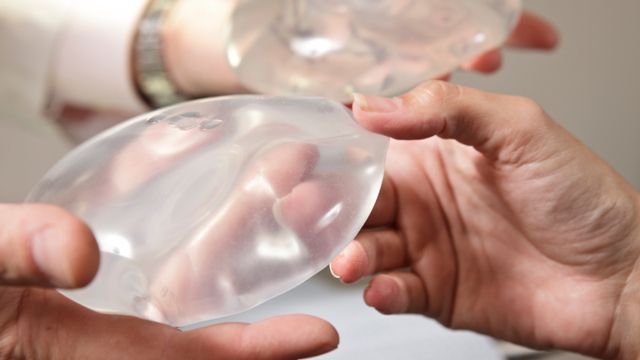
    The recent breast implant scare that affected more than 30,000 women is pushing medical device companies to make their products easier to trace. Dr. M...

  • Duration 7:11
  • Date

Clips

Also in this playlist...

Latest News

Auto-advance: ON

Auto-advance

Transcript

This transcript is automatically generated

Hello all -- the health blog I'm Dr.

Manny.

The reason breast implants scare that affect -- more than 30000 women is pushing medical device companies to make their products easier to Trace.

What way could be using the unique device identifier.

Or.

You DI join me today is Scott Silverman whose company -- -- has developed an FDA approved microshaft.

That could be the solution thank you Scott for coming -- -- Thank you for having us think very exciting stuff I know you always been -- in this technology we have and -- and I think that.

-- recent you know scary Europe where.

Breast implant recall was made and nobody knew what kind of -- -- plan they had I think is pointing to the direction that -- using so many.

Different kinds of implantable if things -- his -- or or or breast augmentation is on things like that that I think you know we need to identify them.

-- tell me about the principle behind micro -- Yeah our product very chip which is one of the products of -- corporation.

Was originally approved by the FDA back in 2004.

To identify and only identify high risk patients in their medical records when they presented in an emergency or clinical situation.

With the evolution of -- health and all of the wireless applications that are now out there today.

And recent patents that we've received to put sensor applications.

On the end of these little chips we believe that our technology today is still the only approved product by the FDA.

That can be used to identify devices within the body.

And this is the chip itself -- idea with medical device identification is that it would go inside of a breast implant.

-- perhaps that a little pocket or asleep that would be sold off.

And could identify the breast implant.

If a woman present set of plastic surgeon's office years down the road someone that she hadn't seen before right in the way the product would work.

Is this scanner.

But in essence he waved over the breast.

In my case over my arm where my chip -- and planet and it would pull up the unique sixteen digit identification number that through a database could immediately say.

That this breast implant was manufactured by Johnson & Johnson.

Was put inside -- this woman on January 1 2007 and Dallas Texas there's never been any recall it's got silicon and not saline.

And it's a good product so as opposed to the -- -- it and I think I mean the material I think that this is a brilliant brilliant thing because as I said.

Nowadays.

People get operations and we still have the problem.

Of getting the information to the next medical facility people relocate they've moved they come from other countries.

And I think we need we need these types of technology.

Now I seen the overwhelming benefit.

Overwhelm a benefit.

Of having this in different.

Incredible devices but.

-- -- -- -- Though this is dangerous.

He may have side effects let's talk about some of those worries well we've been working with medical device manufacturers are ready we in fact our.

In the process of working with a vascular port manufacturer.

That's going to put this inside of their high speed vascular ports to identify added to chemotherapy situation.

And the privacy issues -- personal issues that you're talking about.

Date back 78 years at this point when this product was only a unique identification device period.

Today it's become a diagnostic device a diagnostic device that can identify your medical devices.

Can perhaps take vital signs such as temperature glucose level blood oxygen level from with in the body.

Immediately transmit it outside of the body and an even wirelessly to a third party such as a physician who can monitor.

The devices in your body and vital signs from within your body from a remote location that's really would have health is all about why so sure it sold so again I I think -- -- I think we need to simple -- -- kind of clarify this.

-- the potential uses of the microchip are not only to use it as an identifier.

For whatever implantable issues you've got going.

But also if it does have clinical applications as -- said sugar monitoring.

Blood pressure monitor an internal temperature that could also.

Be utilized in the in the near future because I think that that's the way everything is going to medicine.

We going to be able to really have a and up to date -- way of monitoring these types of things exactly right now.

But but if what I'm talking about the side effects you know any risk of radiation nor any -- risk of infection or anything like that.

Now the original application of the chip that was cleared back in 2004 by the FDA to identify -- patient had this chip being injected.

Those surgical procedure just an injection.

Sub continuously in the upper right arm.

And of course we had to go through all the necessary tests that we went through in order to make sure was compatible with MRIs.

And things to that effect when it goes inside -- device.

The device is the surgical procedure that I taking place.

And the microchip is just a component part of it that really has no relevance as far as whether or not gonna affect your body cause it's in the much larger device itself.

Now a short term what type of devices you think this is going to be -- do you think breast implants will be one area that you do.

-- hot and heavy -- yet well yes is the answer to that question we already have a contract as I said was the with a vascular port manufacture out of Philadelphia.

In order to identify their high speed works at the point of chemotherapy treatments.

And we are in active conversations with all of the US manufacturers.

Of breast implants to address the UDI issue.

That the EU commission has now almost mandated they haven't actually mandated -- -- but probably on location.

Right now there's only two countries in the world that have any type of tracking of breast implants it's Denmark.

And is the United States Denmark has a database that physicians.

Put in the information in a database when a woman received her breast implants and who the manufacturer was.

US.

Actually have serial numbers.

On the breast implants themselves again that the doctor puts into a database.

But if that woman presents five years down the road at a different position and different country and they have no idea right where that -- and yet this is always with.

Absolutely and I think that that's going to be I mean -- And it's I think it's it much cleaner way.

To handle these things because again of the mobility of patience.

And who which ultimately we live in the world the global economy you can be any anywhere in the world.

I have you have an implantable chip was your game plan you know exactly what's going on and when was put in and everything else that you said well I think this is great.

If folks wanna get more information about your company and about these technologies was gonna go -- get a Varitek with a Q court of dot com and you go -- you haven't.

Well listen I think this is wonderful I'm glad they -- you doing this has always you're always ahead of the current well we try to be thank you -- -- bag Q -- Tax -- -- you have any yet held top usually told me about email me your fox.

I've -- coming -- function is not come until next time Bob doctor --