You're watching...
What did Rousseff, Obama discuss during their meeting?
Details
-
Description
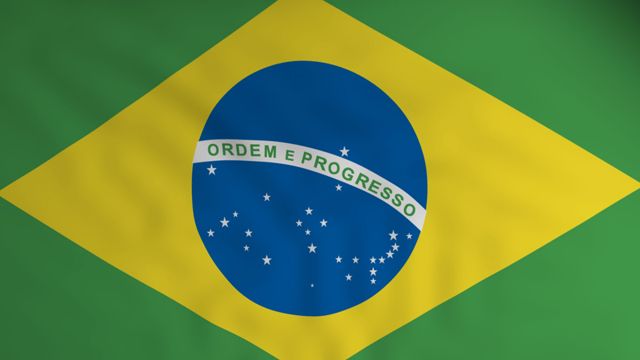
John Danilovich discusses the United States' relationship with Brazil
- Duration 11:29
- Date Mar 29, 2012
You're watching...
John Danilovich discusses the United States' relationship with Brazil
Also in this playlist...
Auto-advance: ON
Auto-advanceThis transcript is automatically generated
You we're now returned to Washington and talk to an old friend of mine ambassador John in the elements.
Who is the United States ambassador to Brazil.
To Costa Rica.
And it before about a very successful international businessmen this summer who also set up what is considered to be.
The greatest achievement my grace for policy achievements of the Bush Administration.
Which is the -- millennium challenge.
And there were thrilled and honored to have you here -- developments.
-- you're in Washington -- -- London here in Washington because you're given a series of speeches on the United States' relationship with Brazil there's some upcoming summit meeting.
Between President Obama and the president there's -- what do you think they're gonna talk about when they sit down -- two week.
Thank you -- it's a pleasure to be on your program.
President Dilma Rousseff of Brazil and President Obama will meet on the ninth and tenth of may at ninth and tenth of April here in Washington.
It's their second meeting together they have a very good rapport and they intend to continue their dialogue on the number of subjects that are of mutual interest.
To both Brazil and the United States bilaterally.
But also internationally on the world stage.
It's important to bear in mind where Brazil is in the second decade of the 21 century it is the sixth largest economy in the world.
Just after France and just below below -- just above the United Kingdom.
It's a world powerhouse economically it's politically stable.
In 1985 -- emerged from two decades of military rule in the last 27 years it's made herculean efforts.
Politically economically and socially.
Politically in 1985 the political institutions work.
We can and feeble -- they had been during the military regime socially the country suffered from great inequality.
Economically there was rampant inflation and chaos and currency confusion today.
Brazil ranks as one of the strongest countries in the world economically.
Politically -- democracy has been consolidated.
Socially they've listed thirty million people out of poverty and now have a vibrant middle class of over half the population over -- 105 million people it's a country to be reckoned with and a country which the United States needs to be fully engaged with.
I'm hoping that the results of these meetings will be substantial.
In the Bush Administration President Bush and President Obama concluded an ethanol agreement which was very important and absolutely critical for energy.
Here it's also important -- -- in Brazil is an energy exporter.
President Obama and president himself have signed a number of dialogues between our two countries.
All of this is very good it's always important to keep talking and keep talking about very positive things about academic exchanges and things of this nature.
What I really hopeful happen however is that they'll bite the bullet on free trade.
Free trade is essential for economic growth and advancement for development.
We have now from the Arctic to the Antarctic on the western boundary of the Western Hemisphere from Canada the United States Mexico NAFTA.
Central America cast it's all the way down the Pacific coast of South America with the exception of Ecuador.
Free trade agreements these are vital for the economic growth of the Western Hemisphere and vital for the relationship.
Between countries and our hemisphere and I'm hoping that the United States and Brazil could move forward in the attempt for a free trade agreement.
He explained in Brazil really has been one of the world's unbelievable success stories in the last thirty years.
How have they done it -- have been I know they've got or element got energy resources but -- Odyssey is a lot more than that.
What have they done in the last thirty years to turn around the situation that as you point out.
In -- middle 1980s was not very good.
It's been a remarkable success story they have benefited from.
Excellent executive leadership.
There were four years of president Enrique Cardoso.
Another four years of president -- we're now into with the -- administration -- Rousseff.
So it's been twenty years of political stability twenty years of consistent sustainable economic growth.
In the Lula administration the president of the central bank and -- realists.
Was very instrumental in establishing the mechanisms for economic growth and for fiscal stability for the control of inflation that's continued.
They also of course benefit from being eight massively rich country in terms of natural resources.
-- the world's largest exporter of -- of beef and chicken of sugar of or issues.
The world's largest exporter of those commodities.
As I mentioned earlier they are net exporters of energy.
They have great reserves of arable land.
Great natural resources Petrobras one of the world's major oil companies is exploring.
Distant offshore it's pre salt deposits and it may well be that.
At this meeting in Washington in April President Obama and president -- could -- -- conclude an agreement with regards to.
American purchase of that oil.
So all of this augur well for Brazil's continued.
Strength in the world market politically they're becoming very important in terms of the efforts they're able to exert on democratic countries as you know Brazil is Portuguese speaking.
And they have a significant influence and -- -- -- Africa and Portuguese speaking Africa as well as in other parts of the world.
So it -- it's -- has really come it's proven itself to be a country.
That is capable of sustainable political and economic.
Development and as we proceed into the 21 century.
In our own hemisphere let alone as mutual players on the world stage it's important for all of us to find ways our two countries to find ways to.
Interact with each other.
Are there any issues that are contentious between -- -- some personnel.
Our relationship has been uneven that hasn't been a consistent relationship that -- have been contentious over the past has been intermittent sometimes absence.
Brazil of course has aspirations as any emerging country does.
Aspirations on the world stage with regards to.
International organizations particularly the United Nations.
They have made no secret about their aspirations for a seat on the united nations Security Council.
They have had.
An approach which is far different than -- of the United States with regards to Iran and that of course has been a contention between us.
And they have a different agenda somewhat -- in the Middle East so yes there are areas of disagreement there areas of contention.
But that's to be understood we have areas of contention with our European partners even with the United Kingdom.
David Cameron was here last week in Washington and of course at a very.
Good meeting with President Obama but there are points of difference between our two countries -- there as there are with all countries who pursue their own interest.
I don't.
-- things I've been struck with in Washington the rise of Brazil on success results and -- in part because as you said very abundant natural resources.
We thought ten or fifteen years ago if you look at Mexico that Mexico was going to be the country because of its oil well.
Because of its resources that Mexico -- seems to have.
Well -- is so.
Fraud with gang violence and and really the equivalent of civil war.
How was Brazil looking -- that situation in Mexico and throughout the region and saying.
And we don't want that to happen here and what are they doing and attempt to mitigate the damage that it might any spillover effect under personnel.
Brazil is certainly a regional power.
It is the largest country in South America in terms of land mass is the largest country in terms of economy.
It is it is a powerhouse for South America but it in the 21 century Brazil's.
Stages larger than South America and although they interact in a number of areas certainly with regards to regional free trade agreements there's -- course -- of course and they are a respected and admired and much copied model of democracy.
And of a cup and of economic investment throughout South America but their performance now is somewhat.
Independent of the hemisphere itself independent of the south of this of the Southern Hemisphere as they embark upon.
A program which is really of international stature.
Not only politically diplomatically on the world stage Brazil has one of the most outstanding.
Foreign service departments in the world is a Margie and the president foreign minister Antonio popular today is an excellent example of outstanding caliber of individuals professionals who advance their country's agenda.
Of course Brazil is very much engaged with other countries and specifically with Brazil with the Mexico.
Mexico has Mexico has a very serious problems which they are trying to confront and and I believe the guerrillas in Brazil and of course the United States is doing all they can -- -- assist our fellow neighbors in the hemisphere in terms of confronting their problems.
Let me switch gears a little bit -- because -- here very long and successful business career where President Bush asked you to set up.
The Millennium Challenge Corp.
You broad business acumen to a foreign policy foreign -- issue can you explain US this is an organization very few people know about.
But it's been phenomenally successful what was so now what is the -- -- chow.
Corporation.
The millennium Telus corporation is a bush initiative I didn't actually set it up.
President Bush -- originally articulated the the outline of the Millennium Challenge Corp.
at the moderate.
Conference in Mexico at the beginning of the last decade it came into existence in 20032004.
The primary.
Points of the program is that is what it is really a business model its based on foreign aid.
-- -- -- with accountability -- that gets results as if it was a business model so.
Are part of the program is that we have the money and the part of the participating countries is that they must adhere to.
A very strict report part of good government and good governments political economic and social standards that allow them to apply for an agreement that compact.
Which is usually in the infrastructure field.
They have to create their own program and they have to implement it.
And as rational and as full of common sense is that sounds these concepts -- revolutionary.
That a fact that a country had to be responsible for its own development.
That had to do it for themselves.
It was awful referred to a Smart aid and grow and -- This was not a hand -- this was not a giveaway program countries had to perform if they didn't perform.
We pulled the plug.
Just as you -- in her own business operation.
We had internal rates of return and although.
We now have a situation where countries are graduating out of the program and where the programs have proven to be successful because they were.
Executed with the disciplined approach to foreign aid this was unusual for the way we have done things over the years.
The United States has always been extremely generous with regards to humanitarian activities to starvation to natural disasters tsunamis and earthquakes.
That was not the mandate of the brief of the Millennium Challenge Corp.
Our mandate was to sustain economic growth and to pull countries out of poverty by their initiative and by their application but with our money.
They had to perform and it has proven to be a successful program and one which is being copied and other parts of the US government and internationally that many other.
Development aid programs throughout the world who -- use the MCC accountability report card or versions of that report card.
As a criteria for giving foreign aid and are insisting upon results.
For their for their taxpayer dollars.
Well I'd say great successor Aaron Gray -- -- and the show on an upbeat note thank you very much investor -- to notice joining us from Washington thank you thank you.
This time --