This transcript is automatically generated
Yeah.
Hello all the -- all -- dot demanding.
The Parkinson's disease foundation says nearly one million Americans.
A living with the condition.
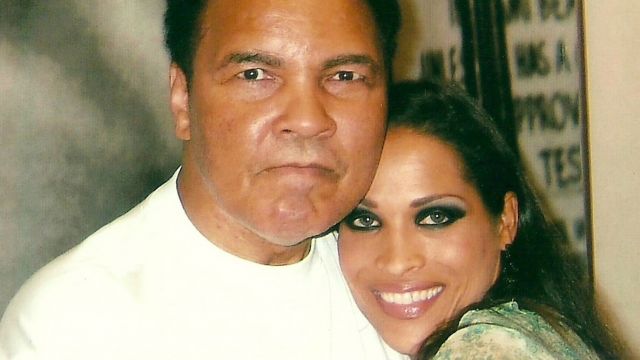
One of those people is legendary boxing champion Mohammed Ali.
One of his daughters Rashied Ali is joining me today to talk about her death struggles and a work to find a cure using stem cells.
Thank you for coming to the program.
I'm so honored because I I love your father I think the whole world -- your father.
And I know that he just 170 and yet he said -- Was diagnose who's with parkinson's but when did it'll start when when when was he diagnosed with Parkinson's disease.
Well he was diagnosed in 84 and he but if you look at the Trevor -- fight which is my dad's last fight 1981 its fight it out -- -- right.
You can see signs of parkinson's -- really I think -- oh yeah yeah.
-- -- like a little more into it now because yeah of course you don't I'm.
You studying in closing in but.
I saw another shuffle walked -- I mean of course he calls one of his boxing term -- -- that literally -- -- a simple walk right.
What was it like for the family I mean this you know this is a man that.
You know one point large and I put any American annually to men women he was indestructible -- yeah -- -- it was every.
But -- I was like for the family.
Well.
It's really nice.
That.
Now we have so many resources and materials and information.
The back in the eighties -- had nothing I really mean literally was embarking on this.
Tragedy can we didn't know what we -- going -- it -- for us and it's complicated disease to stand even even for people trying to explain it yet.
I don't get it yes.
So when when he got the disease in the family was gathered around so the struggle was understanding what other things that you have to adapt.
But now -- -- -- you know it's progressive.
I would -- -- okay it's gonna get worse and I was as a child and my dad was diagnosed I didn't even know what to expect but act kind of what I'm visuals I'm like okay well.
My dad is the same so.
There's nothing wrong with them right but down you know I didn't realize progressive it invoke it works overtime I just -- know what to expect down the road how's he doing now.
Yeah he's really this emotional while he's going to event -- I'll look -- -- -- yeah.
And which -- went into the bottom we're taking good care of him but you know at -- blessed I made that parkinson's on militant people are light on.
If you're lucky to progression is not that fast my dad was lucky and he had parkinson's syndrome.
For a good while and I know he was able to work a little longer night but unfortunately.
That very -- her case.
But I think com.
My dad has always been a healthy person they had and they do with -- that's what those you know send your father was always a purist I mean yeah it.
You know -- kids mobile a number Lago -- hit my biggest advice was have been in an ice cream so.
Cafes that don't take you think that does not flow is not -- not.
But really honestly.
He's a healthy person -- it's always been in Dallas to the fat off the chicken he never really -- you know after many bad things for you on.
But that could have made he had contributed to them so aggression no one really knows.
But nowadays.
The age of seventy.
He is also very focused on his lifestyle like this is and he takes care of themselves -- even now he exercised.
-- but there is very important that people we have or cognitive disorders.
He -- he's in the gym regularly and sunlight so important for him to get up first season is -- and he loves the GM.
And he he does a speed that an end and he loves boxing so he gets in the ring in east bars I mean.
He's not -- -- is used to be don't.
But but but you know listen I only got me a hundred times and I was impressed I -- his gloves on right the other day and -- -- -- -- but he was amazing.
And you says something very important which I'm gonna tie into one of the reasons they had to talk about stem -- is about exercise and studies have shown lately.
That if you X societies.
If you immediately look at that -- -- at the time afterwards.
You parkinson's signs and symptoms do improve.
And I think and here -- go -- Segway that when you exercise you stimulate the stem cells.
-- -- and you I know -- working with a biotechnology company call brainstorm.
Cell Therapeutics.
Yes.
That are doing some work in regards to stem cells and parkinson's tell me about that.
Well I'm gonna add an advisory board member and -- brainstorm Cell Therapeutics for for many years and the main reason is because of their scientific teen.
They have an incredible amount of experience and habits themselves and professor -- and professor Melamed who -- previously with the Michael.
They do an incredible job what they're doing in and I'm so excited because -- -- invading to status -- For a year we've been working on that payless clinical trials and the results now your legs his incredible I mean now -- saying that the best scientific -- Who assists and -- -- that is saying.
Now -- AL last.
Symptoms of these patients.
Are now a lot better but I didn't even -- there -- proving in the degeneration is slow -- right that's.
Amazing now -- What from a scientific point of view.
For somebody stem cells yes.
Are they using adult stem cells are they use no apologist themselves August himself so basically you taking stem cells from the bone -- from the moment of the individuals of that they -- affected.
And you are you re engineering them in such a way differentiating them right -- and planting and re implanting at this site of injury.
That's correct they and and and the good thing is.
The results are amazing I mean.
Many first article -- the trust -- -- obviously if it you can have these incredible results.
For I think the one of the most severe or if not that's to the severest narrow kind of disease there is what kind of promise when they do down the pipeline for other neuro cognitive diseases like multiple sclerosis and parkinson's.
And partisans and -- we gives we just interviewed -- we have package about a little girl that was born with cerebral palsy from birth injury.
And again down and -- they're taking it to the umbilical cord -- the stem cells from the little girl believed they infuse them on the area of the brain.
And many of -- you know she was able to walk -- motor functions improve she have more strength.
And this science is clear stem cells are the cells that repair the human body.
We just have to figure out a way how to make them better -- we have to figure figure a way how to get them where they need to get so that they can.
Re engineer that that side but I totally agree with you.
So I'm all excited.
We're excited to now from you know from a hypothetical there -- some drugs now that are FDA approved for the treatment of parkinson's but.
What do you think dad did the future hopefuls.
Drugs by the FDA approved by mama or.
God given stem cells I'm giving them.
Blow.
-- so look how.
I mean it's not wanting Medicaid right.
We don't know that look -- the side effects of these medications that these patients -- taken away works then right then they listen and and some people may have had something anything some people Nina -- -- the -- -- -- right temporarily right.
Fixes your symptoms and will dissipate them for a short period of time right it's not a cure right right I -- I -- cell therapy is.
I don't like to say that.
The -- word -- doesn't -- -- but it's very promising night.
It's -- what's the keyword.
Yes just the diluted because promise of because honestly it is promised absolutely and but but he's down I think stem cell therapy is our future.
Not 80%.
Of the diseases that reflect not just our country but the world can be treated for instance there not just it would you know cognitive diseases right but you know people who have diabetes heart disease spinal cord injuries if the endless bombing -- -- -- camp so I don't trust and I mean you're at camp I mean you can't.
And again I think that that I -- folks out there basically you have to empower yourself you have to educate yourself you have to go.
What are the can they get more information -- -- -- NIH has an -- -- institute of health they can give you more up to date.
-- -- accurate information for people -- -- -- -- more about getting about the clinical -- also how recommend hospital web sites like Mayo Clinic in Cleveland clinic.
They have up to date very good information for patients and their fans to -- a top.
All right well thank you so much for being here is a great honor and that's great message you bring to everybody thinks afternoon thank you.
I did you have any health questions we'll talk to me about email me here at fox and got committee -- does not come until next time -- document.