You're watching...
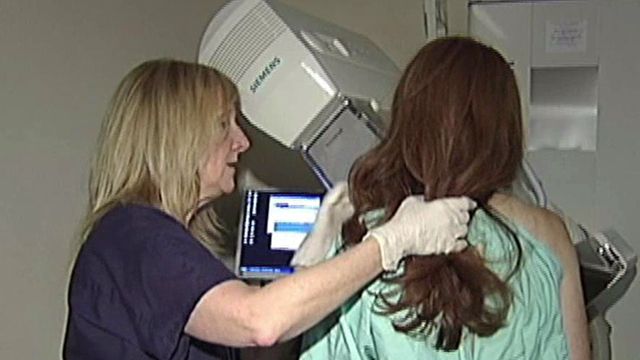
FDA approves device to detect breast cancer
Details
-
Description
Dr. Leigh Vinocur weighs in on ultrasound technology
- Duration 3:08
- Date Apr 12, 2012
You're watching...
Dr. Leigh Vinocur weighs in on ultrasound technology
Also in this playlist...
Auto-advance: ON
Auto-advanceThis transcript is automatically generated
And in the fight against breast cancer and the FDA just approving a widespread use of what's called an automated.
Breast ultrasound.
In May help detect cancer early in some patients but it's not without a little controversy -- -- -- As an adjunct assistant professor at LSU health Shreveport so doc lets first talk about this device is.
It in one of the Wright Betsy described it as a Xerox -- this -- makes you think about it copy machine can you explain.
How this -- opening right lay on top graphic I know now up and really it it it's a 3-D ultrasound so give very good pictures.
And we know.
That mammograms in women that have very dense breasts because -- -- tissue.
Doesn't make it easy for X rays to penetrate.
That they -- about the only detect about 50% of cancers so by adding -- you can raise that to about seven.
80% -- cancer.
So it sends the jets so this is that this is a way that you -- over diagnose meaning that you yes you can detect more.
Tumors but there's no data that suggests that that's actually -- to help save lives.
Well you know that there's always that little bit of controversy in there have been studies that show.
When you add ultrasound.
To mammograms the false positive rate can go up to.
Four times what it is so instead of one and forty women getting a biopsy that turns out to be didn't deny it's like one in ten women and there are some risks to that there's risk for infection from a biopsy and also the anxiety while you're waiting for the results and then if -- scarring and makes the mammogram harder to read.
So that's you know that is one of the controversies but I think if you're a high risk woman -- have a family history you've had breast cancer before.
You have dense breast.
It can be useful.
-- -- come up with talk about a few of these stays in recent weeks because there's been quite a few of them about breast cancer or.
And some of -- have suggested that when that you do detected -- seven times there's no way of knowing whether or not that tumor even if it is cancerous.
What cause you.
Any sort at a health issue at all and it seems so.
-- counter intuitive can you explain that.
Well there are types of these non invasive.
Carcinoma -- -- to where.
Where you might have these cancer cells that are sitting there.
But then might never go on like pre cancerous cells actually that might never -- want to be an invasive cancer.
And and that is something that people have to consider I think the other issue with this -- You know we talked about it maybe a year or two ago the US preventive task force that women forty and under shouldn't have.
Mammograms because of false positive right so I wonder what they're gonna do for that because the women are more likely to have dense breasts are -- -- be the women.
That are forty -- under the.
So there is that if the government says he knew he should be fifteen right there when wonders what your insurance cover it yeah rally at 35 at high risk there's there's definitely -- a conversation to -- had.
I will keep up to date with the technology -- as -- cans moving past a doctor Renault -- nice to have you as always thank you.
My pleasure zones and we'll be right back -- happening.