You're watching...

Does the Taliban pose a major security risk in Afghanistan?

Details

  • Description

    Lt. Col. Tony Shaffer discusses apparent security holes in Afghanistan

  • Duration 6:27
  • Date

Clips

Also in this playlist...

FoxNews.com LIVE

Auto-advance: ON

Auto-advance

Transcript

This transcript is automatically generated

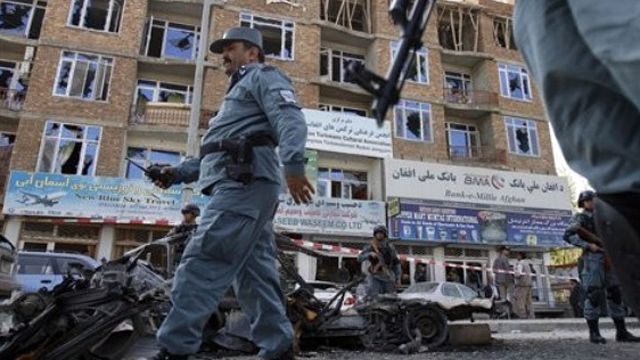
We want to switch gears and go back to the topic of Afghanistan joining us live now from our DC bureau a busy bureau for us today lieutenant colonel Tony -- With the center for advanced defense studies and author of operation dark heart always a pleasure.

Thank you are to have you here on our show you know we we heard earlier from Dominique didn't tally about what's going on in Afghanistan what -- light can you shed.

What your knowledge.

-- there's there's three elephants in the room right now which people don't wanna talk about I've watched the coverage -- -- first off.

Is that the fact that this was you know except talk about the economy network conducting this not the collar -- well.

I started as a lot that the hawk -- network is part of the -- bond -- one of the three big elements thereof.

And more importantly -- controlled by the Pakistan -- and -- have heard one word today but the fact that we know the pakistanis.

A control a key network.

That Khan network was used by us via the Pakistani ISI during the Soviet occupation of Afghanistan.

So -- bit ironic secondly.

The other thing is that the other elephant is that these attacks were done and what was -- -- of the Green Zone.

Downtown -- and these other places which are supposed to quote unquote secured.

So again everybody's not talking about the fact that these things were and -- it done.

Within the strongholds and third and most importantly his intelligence officer.

I'm shocked if there was no early warning so what are we doing with all of these what we call -- -- these long -- surveillance assets.

And other things it tells me that we don't have a good a handle on us as we think we do regarding the penetration.

Of the Afghan.

Army.

And of the Afghan police which obviously that there had to be some level of insight helped to get these folks into the centers so we've got to be concerned about these things I've not heard adequate.

Discussion of these three issues which are clearly elephants in the room.

Now when you -- -- when you said the words early warning waiting get any early warning on this are reminded me of our friend we just talked to Mike Tobin.

Who's talking about getting the warning systems out there during -- tornado watches so what you mean by an early warning in Afghanistan for an attack heart attacks on announced.

They are but the thing is though we have invested huge amounts of money in our intelligence community.

And and this is where why not when I was there I was running the network trying to work you did did to identify.

The insurgency and who the bad guys were more importantly to prevent this -- -- thing from happening.

If those -- those who we operation dark card you'll see that there's a battle in their cold mountain viper who we actually defeat the -- bond.

And their first attempt to come back and Afghanistan actually -- tried offensive we were there ahead of them.

That's good intelligence and now we have -- literally a hundred times more resources devoted and somehow we're less able to predict this.

So this is where we gotta get back on top of -- why also we spending all this money if we don't get adequate early warning about this secondly.

Some of our own cultural.

Concerns have prevented us from actually going to get the -- -- going to be -- is classified.

But the idea here is this we need to understand what's going on at the tribal level at the individual -- level.

So they will tell us what's going on at those tribes are on our side telling us what's going on.

This is what you see results.

Scott -- and continues to join us here on set as well and I want to bring him in.

I'm just ask your thoughts on this I mean -- -- talking about the early warning you know in getting information on tribal level.

You know obviously what we heard from Dominic didn't -- was just a devastating.

In a wide range of this attack.

Was enjoy hearing lieutenant colonels very astute observations and he's been on the ground he knows that's going on.

I would only just that is as he -- as a civilian here in this country that it just points suits me the futility.

Of purely military strategy in Afghanistan and in these attacks came at the height of our so called surge side I would just.

-- lieutenant colonel as we've talked about before that I would hope that.

We've really premises and having a regional summit with all the players Pakistan India always has been -- -- -- -- Pakistan.

Iran and the Taliban were apparently some talks have been going on with seemed eager to have some kind of -- so I would just hope that.

That would be the route we really pursue a diplomatic strategy right.

And lieutenant colonel Tony Schafer again joining us live from DC.

Want to bring you one of our chats that this is -- obviously.

Of great concern many people writing and I want to read you -- chat have you respond before we let them go.

We'll hear here comes is a good question does mr.

-- -- know any resolutions that came out of Istanbul.

How does that affect the region and how much is Iran still in play in Afghanistan can you address that.

Off -- and there's two chapters in my book devoted to this the Iranians have been try to destabilize our effort in Afghanistan believe it or not since 2003.

We actually had the IR GC the the Revolutionary Guards and I ran.

Funding some of the insurgency as early as 2003.

So they're very much a player and I agree with with the idea that we have to have a regional look at this.

The Iranians have a role the pakistanis have a role.

And the idea has refocused on what we need to do to -- to regionally deal with this Afghanistan by a symptom of a larger set of issues.

The Iranians will continue to do things to -- and aside because this is another proxy war for area.

President Karzai's actually even admitted about eight months ago -- taking money from the Iranians.

So we've got to be much more realistic about the fact that the Iranians are not our friends this is another area we need to deal with them directly on if we don't we'll we will see more this sort of thing happening.

I have got one more question for you I hear this comment comes from a Maggie -- six.

The question Tony they seemed not to want -- in Afghanistan so why are we still there.

Good point and you're right we have become a proxy for the Karzai government we need to step out because both.

The colleague Bonnie and the pick their -- and it does go to the Karzai government are mostly -- -- They need to come together we need to be out of that I'm not saying we shouldn't be there this is where we needed -- to withdraw at the same kind of putting the -- forces in.

I argue there are targets they're that we need to deal -- still special operations should be doing and not the conventional forces right now -- on our behind us to be polite.

We did back on the offensive and not make us the issue right now the -- -- it was targeting us and frankly the Karzai government is targeting -- they don't really care.

The problem we need to solve is one of us doing what's best for the American.

Policy national security not what's best for the Afghan people I know it sounds harsh but the Afghan people have to determine their own way forward.

-- only the big thing is -- gonna talk about when I'll be launching attacks United States we need to accept that there are bad guys in Pakistan who would we to focus on Pakistan more than Afghanistan.

Okay lieutenant colonel Tony -- live from the DC bureau with the center for advanced defense studies and -- the author of operation dark heart.

I thank you so much for joining us today for your present -- we look forward to hearing.