You're watching...

What's next for space flight?

Details

  • Description

    Former astronaut Tom Jones explains

  • Duration 4:13
  • Date

Clips

Also in this playlist...

America's News HQ

Auto-advance: ON

Auto-advance

Transcript

This transcript is automatically generated

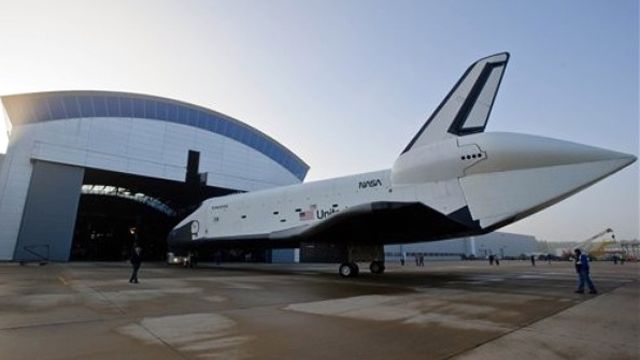
Welcome back everybody well the shuttle discovery bringing Americans to their feet in all one last time the site of this amazing spacecraft.

Getting a ride to its retirement home at the Smithsonian.

National air and space museum annex in Northern Virginia this week had people cheering and -- pulling over in their cars to catch a glimpse of history.

It was quite a show so -- America's space program go from here now that the shuttle missions have been scrubbed.

Joining us now former NASA astronaut Fox News contributor Tom Jones welcome -- to have -- today.

Thank you -- -- for inviting me I know that you were part of the ceremonies.

For this a last look at discovery what were your thoughts as you witnessed history being made.

Well it's an amazing machine it was an amazing event there were many astronauts there.

My hero John Glenn was there who had flown on discovery and up close we at the ceremony and all the public several thousand people who came out Thursday Bradley go up close and see -- spaceship standing outside.

The museum and it reminded me of the last time I walked outside around a space shuttle -- was the last time I came home on Atlanta so.

People are gonna have the same experience at the air and space museum and then in new York and in LA.

I'm getting up close to an American space ship that had a thirty year record of amazing success and work particularly in building the space station I helped build.

It's it's an incredible sight and it -- so many missions as you point out I was very interesting that some give Laura -- wondering why.

The shuttle wasn't scrubbed down and polished to look you know like new but.

NASA made the decision to leave it as is because it shows.

That it has had quite a journey and it shows.

-- -- scars.

And that's the evidence of the work it did on its 39 launches and it shows those stars that shows that it was a working vehicle and that Americans.

We're working in space and developing the space station as a stepping -- to go farther.

So I think what NASA has to do is replace these very visible shuttles now in the museums with.

Very visible spacecraft that are going on to do another generation of work and I think that's what we can accelerate and improve on the current plan.

-- many astronauts have been critical that NASA doesn't seem to have back up plan in place now the shuttle missions have been spent certainly and a finding -- a big part of it.

But do you think that -- can play a vital role going forward.

But it does have a role in our competitiveness in the 21 century and it it needs to extend its.

Welcome.

Two partners in the commercial sector so you know we do have Americans working right now on the space station Don Pettit and Dan Burbank -- the space program goes on.

The first commercial cargo launches at the end of April here with us SpaceX dragon and that's NASA's gambit to.

By cheaper cargo delivery by using commercial companies but I think we need to do better -- is convincing our policy makers and congressman and in the presidency.

That we've got to accelerate the space program and get deep space craft moving forward faster.

Not -- -- when he seventeen defy the -- and deep space ship for the first time that -- 1242015.

Get cruise aboard.

If NASA doesn't have a higher profile.

As it did once with the shuttle's.

It's going to be forgotten it's going to be relegated to the dustbin of history and we need to accelerate that and revive the excitement -- -- -- your film clip about the discovery.

A rival.

Certainly I mean because -- for so many years perhaps century.

It has NASA has captivated the public imagination.

So the challenge now going forward is finding out how we can do that too.

That present America as having the best and the brightest.

Now we need to show our leadership that we do you have today by.

Following up on the shuttle successes and it it is a budget question I think spending half a percent of the federal budget on space is entirely justifiable in terms of the draw it gives us to be scientists and engineers and to the competitiveness in the economy that it gives us and we need it.

Upped that to point 6% of the federal budget to make things happen factors that -- go beyond the space station get out to the nearby asteroids and do some real prospecting for the riches that are out there.

Absolutely have a look forward to that they'll be great to see -- what we get to that point that Tom -- always a pleasure to have you here thank you so much for joining us today.

All the best you're welcome.