You're watching...

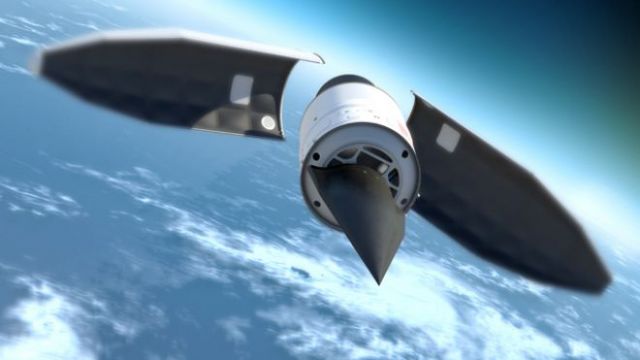
Pentagon's hypersonic test flight over Pacific

Details

  • Description

    'Falcon' travels 13,000 mph; means military could strike anywhere within an hour

  • Duration 3:10
  • Date

Clips

Also in this playlist...

Happening Now

Auto-advance: ON

Auto-advance

Transcript

This transcript is automatically generated

We'll get supersonic.

We are now looking at hypersonic speed as the Pentagon unveils test results.

Of the falcon and aircraft it can travel thirteen thousand miles an hour.

Fast enough to carry out military strikes anywhere in the world in less than an hour.

Still in the testing stages though and not all of the testing has gonzo well joining us now Brian -- and secure world foundation technical advisor.

And former air force space command officer the tests were carried out some months ago O'Brien but we're just getting our first look at the results.

Not entirely a success but not entirely a failure either right.

And no and I have to emphasize is a very difficult problem -- trying to solve.

They're trying to develop a vehicle that can travel let.

Immense speeds through the upper atmosphere with high forces and very high heat and to be able to control that vehicle -- -- -- intended target.

Thousands of miles away.

We're looking at the hurdles yet we're looking at the launch of the -- -- that then releases this thing.

And -- basically glides back to earth with -- rocket assessed at what thirteen thousand miles an hour.

Yes that's right -- the rocket -- that the initial boost.

And then it comes back down and glides through the upper atmosphere.

Using that velocity given by the rockets and then steers and maneuver his way to its final target and the idea is that you use it to hit a target.

At roughly thirteen thousand miles an hour that the the impacted G forces that impact.

Obliterate whatever the target is if you can hit it right.

-- -- happily the whole goal is to be able to attack what are called -- higher value or fleeting targets.

Things that are buried deep in enemy territory or buried deep underground.

Or that are only president for a very short window of time.

So you would -- -- I have time to.

-- -- a conventional attack with a B two flying out of Oklahoma you can instead -- one of these I'm very short notice and it could fly and then attacks that target.

We have a simulation of what mocked twenty looks like which is the kind of speeds that this thing isn't -- there's a fighter jet in this -- -- that.

Thing streaking by there that's the falcon that potentially could cross the country that.

-- twelve times or twenty times I guess the speed of sound that have been cut cross country in twelve minutes is the number I was thinking about.

-- and here is actual video a lot of this is that little contrail way up in the -- that's actual video of this thing being tested.

It basically started to milk -- the skin on the things started to melt and peel away which is what caused the test to be -- -- -- up till that point it'd fly over about nine minutes.

I guess in pretty good shape -- Yes absolutely and that was the success was that they had a few minutes of control.

Hypersonic flight.

Which is only -- really hadn't been done before it's one thing to just -- -- it's another thing to actually be able to control that -- the stable manner.

And that was really successful part of this demonstration you know we'll see if they tried again Brian -- -- formerly with here -- Brian thank you.