You're watching...

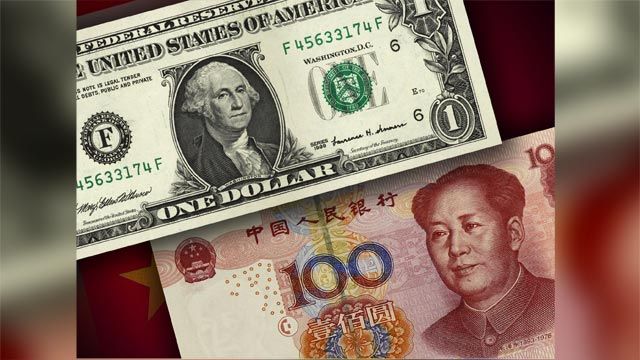
Will China's economy continue to grow?

Details

  • Description

    Michael Pillsbury discusses the Chinese economy

  • Duration 14:22
  • Date

Clips

Also in this playlist...

Latest World

Auto-advance: ON

Auto-advance

Transcript

This transcript is automatically generated

Or like first -- Defense Department itself doctor Michael Pillsbury who is joining us from our Washington studio start your -- very welcome back to Defcon three.

Thank you -- I want to ask you can on the last has since we talked before.

Me embarrassed to be two different competing theories about.

China -- theory says -- on the version collapse that their economy is overheating that there could -- our growth this allowing.

That they've overbuilt their real estate so there's real estate bubble and that basically China as much as we thought.

It was going to be the great nation -- was gonna overtake the United States and a few years' time in fact it's taking a U turn.

This theory says that when NASA asked that China really is an economic superpower.

And not only an economic superpower that can surpass the United States economy but even more worrisome that the China eastern is in that economic prowess -- that game.

Two would translate that into -- military power that they -- building military equipment to challenge us in the South China Sea.

That there are some -- in and out with the Philippines and other countries in the region that talked about the South China Sea is an interior.

Chinese lake.

So wish -- work sort of -- up -- Both of them -- K actually this debate is gonna go on for a long time I think.

It began about fifteen years ago obviously China has not collapsed.

So those two -- in -- rather extreme almost hysterical way used to predict the collapse within a year or two were obviously quite wrong.

China does have enormous internal problems.

But they also have shown rather brilliant adaptive strategy to be able to overcome these problems one by one.

So I'm my own view is that the China as a great power.

The thesis is that correct when.

That we should never underestimate.

The economic and other sort of financial skills of the Chinese Communist Party has shown.

To welcome billionaires.

Into a Communist Party.

We'll see what's happened this is never thought of by the Soviet Union or any other Communist Party.

It's a brilliant idea.

And -- part of what they've done in the last ten years to succeed.

It's simply unthinkable seems to me to Mark -- and to save billionaires are welcome to join and even become leaders in the Communist Party of China that also of course leads to corruption and other problems.

But this is a very innovative Communist regime something the world has never seen before.

And my own a bit and -- on the Chinese economy.

Proving to be quite impressive over the next few years -- to collapse at all.

So you think -- Chinese academy continues to grow but is it an export led.

Economic growth because after all exports are falling off as the world economy serve.

Has its own series of problems that the Chinese are making their.

Economic growth on the back of exports that there are -- to Europe and in the United States.

What happened -- that ability -- to -- all that stuff to us as Barack Obama says we want to sell you stuff while the Chinese.

Have always sold -- staff but were prime -- the last.

The Chinese leadership knows this issue very well they have had an export led strategy as you say from from the beginning -- actually got it from the World Bank.

And from some University of Chicago economists who paid by -- -- relatively conservative columnists like -- Freeman.

They know very well they have to shift now more toward domestic consumption and not put everything.

On.

A massive export drive and they're beginning to change that just in the last few months that -- can shift their strategy more toward domestic led consumption.

So the whole idea.

China somehow heading for the rocks.

Is very much a way of underestimating.

The crafting this if you will the cleverness of the Chinese leadership they tapped right into World Bank IMF.

The best economists in the world discuss their problems.

And then.

Can sometimes make rather bold.

Changes in their economic strategy because they're dedicated they've made this clear in their Communist Party ready itself for a long time.

They're dedicated to becoming the number one economy in the world.

-- -- back can how do they go from an expert driven economy.

To your way as you say domestic.

Market economy and -- the Chinese people have -- -- salary to buy each other's stuff.

You know and if you look at the United States we've and a society we've now we've exported but for the most part we've been internally driven market.

That we knew we makes out we by the staff from the other people in the country -- make this stuff.

Does this time does China have the ability to make -- -- -- it from being export to an internal accounting.

Of course the what their strategy is as to reduce the level of savings increase the level of consumption in China they have an extraordinary savings rate.

By some estimates -- -- up to thirty.

Or 40%.

-- income is saved in relatively non productive.

Rates of return all have to do is change some of that.

Get down toward the the unfortunate American level of savings which is between zero and 5% and and then that simulates an enormous market is -- -- -- to buy their own stuff.

What they're doing isn't there's a variety of ways of doing this one -- stock market purchases.

-- there is any kind of investment vehicle.

They want to show the Chinese public you can make a profit by not saving so much you can be so fearful.

About your social safety net.

To save as high as you having to spend more and frankly one of the most amazing things if anyone who visits China.

Actually sees this as the number of foreign brand names that they by Louis Vuitton bags and Gucci and Armani -- everywhere.

I'd sort of -- first time visitors and now with the Chinese are doing is having their own brands come along the -- were almost as good as -- -- home.

But where half the price and this is one of their -- new ideas in the last couple years I'm continuously amazed at their rate of innovation.

About economic policy that's why sort of look down my news that the trend is gonna collapse of the school this is simply not true.

Okay I didn't think so what's China doing with this economic.

New found economic prowess on one hand.

They're building Napa blue water navy they -- building up their military.

They're also doing things like issuing maps that say the South China Sea is an interior.

Chinese flight.

You know and doesn't do much for the countries that are in the South China Sea like the Philippines Malaysia Indonesia Vietnam Thailand you know what does that make them Chinese bass -- So what's behind the military build up.

Well -- the Chinese have made clear in their own writings that they do not accept the American led.

The world order they say we are sort of an immoral hegemonic.

And we have used to UN Security Council the world court.

The structure first set up in 1945.

With the Yalta Conference they say we dominate the world unfairly.

And China's goal is not to accept that but to benefit from that order and many of the things like the map.

The so called -- in this step -- in the South China Sea.

The refusing to go to the world court over the South China Sea jurisdiction matters these -- -- of -- Chinese view that they have.

Moved into payment -- come into an unfair world order.

Dominated by the Americans and what we're seeing in the last couple years is this new phrase in China called a Chinese man world order.

With -- will be quite different.

Be very fair.

And be led by a virtuous country China better than a sort of immoral immoral to -- a month.

That they claim United States has -- this is how they see the world balance of power shifting in the next.

Ten years -- so.

I don't know what I wedding and what does the world look like -- -- China -- -- her Chinese lab world order well they say everybody's gonna be happy.

They'll be a lot.

-- word transfer of resources to the poor countries of the world.

There'll be a different scent of sovereignty.

-- -- an individual dictator wants to crack down on his own people.

That will not be that concern of the other countries in the world they've got a term called the five principles of peaceful coexistence.

And basically all the five principles are about no country should interfere in any other country.

To help the Dalai Lama or two.

You know to do went -- was done with Libya last year and this so called responsibility to protect.

That is.

Quite a popular now and in the United States this is opposed in China until it is sovereignty in the old west alien system.

Be much more.

Dominant and there will not be the kind of I would Wilson efforts to export democracy or build regional institutions.

We'll get -- get back to the nineteenth century.

When a Chinese scholar told me is the -- -- Chinese lead -- order.

And what is it trying to do evolving American -- at -- home.

It's a big secret many people who would like to know.

Where that money goes it's and -- been some hints recently that they're trying to divest themselves of dollars in my and other currencies.

Have a safer basket.

There -- concern has been that the United States hegemonic.

Will devalue the dollar and what of the phrases they often use is that almost -- three trillion.

Dollars that they have in the reserves.

Represents the blood in -- and sweat and work of the Chinese people for the last thirty years so these Americans devalue the dollar.

Let's say by as much as 20% which is when Chinese nightmare that devalues those three trillion dollars in holdings as one of their main concerns so they want to shift out.

Of dollars slowly.

Yeah you know my old -- and and your colleague Henry Kissinger has set a number of times that.

After the economic crisis of 2008 when he's gone back to China they basically said to him you know look America.

We trusted you to run the world economic system and now -- yeah -- that you can't do that.

And so we've got to reconsider do we want to give you loan you all that money.

To revitalize the American economy to do TARP to do they have the surgery investment or do we want to take our money.

And invested internally in to China because of having given that money do you.

Alleged to you for all of those years and -- you say to the tune of three trillion dollars.

You've taken our investment and you squandered it and you know you're not going to be good for that money that you've given us that we give and you you're not gonna pay us back.

And sell -- where is that debate is that's something that's widely held or is that just a few out liars and the Chinese.

Political system.

No I think -- -- users reporting that quite accurately that is the dominant Chinese view.

And as part of this move toward a Chinese led world order.

They have been very frank around the world to know what I would call.

Any American claim to be particularly Smart -- to be qualified.

To run the world.

Henry Kissinger new book on China actually is extremely.

Accurate and insightful accounts the Chinese.

-- the world order being quite different.

He makes the point in the book about how old concepts from 2000 years ago.

About the warring states geopolitics.

Are behind how China assesses where the world's going.

And they do simply do not see the United States is being entitles them how to be permanent leader of the world.

On the contrary they have been very frank and this -- example of the financial crisis is a good when they've been very frank -- -- the United States is a very flawed.

Almost.

Accidental.

Leader of the world because what happened who worked to.

And -- -- get the impression from some Chinese that they.

I almost can't wait until the transition occurs to a Chinese -- world order.

OK what now -- -- -- -- pictures of the -- North Korean military grade now we know that two weeks ago that that are encouraged the shuttle fired off a missile that they've got the whole world watching and they said it was going to be a long range missile.

And it basically got off the pad and -- right into the ocean now they've had in the last several days they've shown a new.

Long range missile which looks surprisingly.

Like a Chinese version are the Chinese supplying.

North Korea with the ability.

To basically put a nuclear weapon on -- long range wrestle and have and then it would be capable of reaching the United States.

Well it's a great question is extraordinarily sensitive how one answers that kind of question I think the dominant view.

-- to try to excuse China.

They say well these are companies these are sort of rogue companies are companies that that did not get permission from the senior Chinese leadership.

To do this and therefore.

As we have for the last twenty years it's okay to put sanctions on individual companies.

But not to blame.

Or indict the Chinese leadership and this view is under challenge.

In Washington that it's an -- for perhaps naive.

And -- we simply don't know enough about the secretive Chinese leadership.

System to know whether they push you or have or have not given permission for some of these transfers.

To take place.

But I think you find people involved in the intelligence community.

Confessing very frankly and that China is so called hard target.

It's kind of intelligence jargon for a very secretive.

-- did it take security series seriously.

And so it's just impossible to know it was -- a piece of Paper goods that China's president -- say help to North Korean.

Missile program or nuclear weapons program -- -- line or not this is simply beyond the capability of American intelligence to capture that kind of document so you know for speculation.

And -- a sense that perhaps it may be it is.

Sort of a poor country and can keep track of every transaction that occurred even for sensitive things like trucks or missile designs.

Okay well doctor Michael Pillsbury.

Advisor of the US Department of Defense.

As usual giving us the behind the scenes story what's going on in China today thank you very much for joining us we'll have you back again soon.

Thanks.