You're watching...

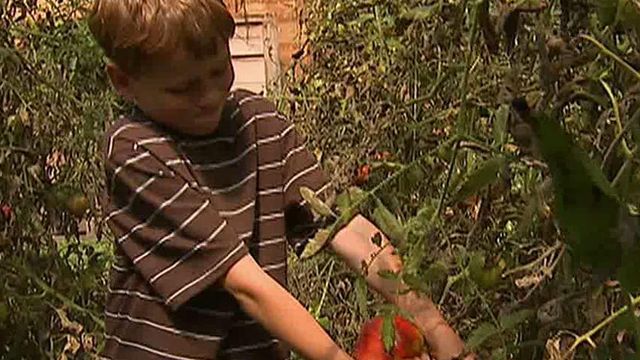
Debate over kids and farming

Details

  • Description

    Are proposed farm regulations federal overreach?

  • Duration 7:00
  • Date

Clips

Also in this playlist...

Powerful Politics

Auto-advance: ON

Auto-advance

Transcript

This transcript is automatically generated

And -- -- right now several senators are trying to put a stop to propose regulations on farm work.

The rules would restrict your children or grandchildren or neighbors from working on a farm or ranch in doing chores like.

Rounding up cattle on horseback or driving a tractor are using a battery -- screwdriver.

The Labor Department says it changes are necessary because current farm practices are really putting -- lives in danger.

Senator Jerry Moran of Kansas has introduced legislation to stop the Labor Department from implementing this regulation we're gonna talk to the senator in just a moment.

The first -- speak with -- Flores Lopez she's the director of the children in the feels campaign.

At the association of farm worker opportunity programs he's also.

Former child farm worker -- let's start there what kind of farmer can -- do -- -- -- As a -- got to do a number of different cops anything Brad asparagus fields to onion fields.

And even corn fields doing some -- plane.

My cabinet -- travel up north I'm doing it in different states like Indiana Michigan Iowa -- -- our kids have been working -- firms for decades and decades so why now why do you think these restrictions are necessary now.

What these rules have not been acting in over forty years just last year.

The Department of Labor update at the house it is orders for non agricultural work so is a natural progression for them to take a look at.

Defiance especially because there are so many -- -- getting hurt and even dying out there and those -- so many kids like how many.

Well at night -- and reports that between 2000 and between 1985 and 2002907.

Kids died on farms so that's a well over a hundred preventable deaths each year is do they compare that to other type of work that kids do you.

Well we do know that agriculture is one of the most dangerous industries it's right there with construction in nineteen that's for average buddy.

And yet we don't allow for children to be out there and those other two industries -- we continue to allow children to be out there in agriculture sense -- regulations like this are slippery slope because even with the best intentions some believe that this could be your real intrusion.

I'm family life what do you say if folks -- -- -- the government should be here or not not on my family farm.

What these rules actually do not -- fact the family farms these rules are meant for kids that are employed on.

Nonpartisan by other players are -- there have to be an employer employee relationship.

-- in order for these rules to apply.

Family farms there's going to be untouched.

Children will still be able to do any -- the Warrick at any time at any age on their parents -- interesting it's an hour wind farm worker who's now a college student Rosie -- was telling the daily caller that her main concern is that.

Four H clubs -- FFA projects.

Would not be the same because -- -- this restriction they would not get the safety training and certification as part of these programs that are really popular in so many states.

What would you say to someone like Rosie who has -- concerns.

We'll -- impact -- and mentioned there have to be an employer employee relationship.

So I would still be able to participate in four H and act that aid just to be able to do things like -- animals.

It's just really the concerning -- regularly -- when it comes to children.

Been employed on a farm.

There are four as Lopez nice -- happy today thank you so much and it's expected.

I never gonna live by the senator Moran who would get -- -- introduced some legislation here to stop the Labor Department from implementing this -- some interesting points -- Norma.

Products senator says it doesn't really -- -- and your your family farm and that some of these programs is still.

Was still happen so what's your issue with this this regulate.

-- proposal.

At Norman I certainly disagree about the consequences of this regulation these proposed regulations and I would tell you that why you introduced me as someone who's introduced legislation that's true.

But we've been trying to engage the Department of Labor for a long time to have a conversation with me and others.

I've invited the secretary to have a a set down and have a conversation about how life really works on farms across the country.

Back in in Kansas and across the nation farming is a family.

Opportunity it's it's that it's the way were organized the norm.

And while -- indicates that it doesn't affect.

Family members that's simply not the case that the Department of Labor has said.

There were to narrow the exemption for family.

For kids who working on their own families farms.

And then because of kind of the pressure that we put on -- civil we're gonna we're gonna take a step back and -- proposed that rule.

Without those issues are still out there and so the department is interest and at least their initial regulations indicate they want to regulate the relationship.

Between -- parent and their child and also you need to know that many family farming operations are with uncles and aunts grandparents.

It's a neighboring farmer it's a way of life and -- more than parents.

Are interested in their own kids safety.

And when you talk about four H and FF -- I don't have any doubt that this regulation doesn't stand for H and FFA.

But those -- the programs that we are currently using to educate young people to get the training necessary.

To allow them to work on farms they and we're replacing that with the Department of Labor.

For -- and at that they know a lot more about family farming operations -- the US department late.

-- -- -- -- the Labor Department.

I had to get a little bit more information on that we're awaiting some of their responses.

To our questions -- think the real intent here is senator -- it seems like you have some doubts what we know.

At least superficially it is that this is just about keeping our children safe that you seem to have a doubt on that what do you think is the real the real intentional here.

Well only with one exception -- do I think it's something other than trying to keep our children safe I think it's that you know people sit down.

And said what can we do make children safer and this was the solution my point is this is not the solution.

We need to perhaps strengthen local high school agricultural programs.

And incidentally the studies indicate you you can find -- studies -- supposed to support whatever position you want.

But even the study that Norma mentioned.

Indicate -- covered a wider right people over 21 were included net study people who had committed suicide were included in the deaths.

Individuals that were harmed in that recreational activities not in employment settings are included.

So -- -- in my view those numbers don't indicate the magnitude of the problem we want every child to be safe.

And my again my point is who better than the local -- -- instructor the poor -- leader and especially mom and dad.

To help make those decisions and if we don't teach kids about safety now and give them some experience say at age fifteen.

When there under these rules -- it eligible to come to work a few years later.

They will not have had the experience is necessary to grow into the job the average age of a farmer in the United States is that nearly sixty.

I'm taking -- -- our opportunity.

We look for to have you back -- -- talk more about it against its proposed regulation at this time we found data out on injuries.

And -- for children only go back to their early 1990s so.

You're you're right in pointing out -- send.

Challenges to the context of some of the statistics that are being used to -- -- -- to have you back to talk about the senator thank you very much thank you for the opportunity it's him.