You're watching...

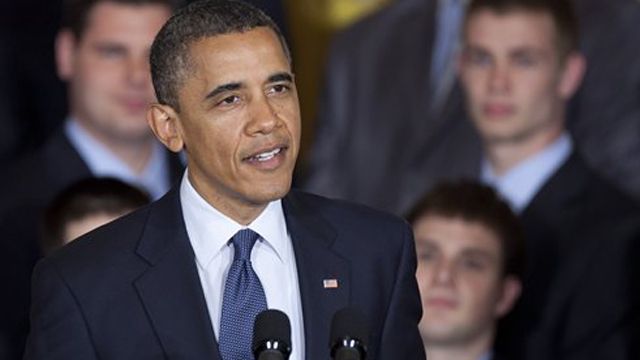
How Obama and Lincoln are not alike

Details

  • Description

    Former Attorney General Michael Mukasey explains

  • Duration 5:46
  • Date

Clips

Also in this playlist...

Powerful Politics

Auto-advance: ON

Auto-advance

Transcript

This transcript is automatically generated

And the use of so called enhanced interrogation techniques by the United States of America I know some have argued.

The brutal methods like waterboarding.

Were necessary to keep us safe.

I could not disagree more -- enormous effect.

We will close Guantanamo prison.

Which is damaged our national security interest and become a tremendous recruiting tool for -- Qaeda -- strongly believe that.

The steps that we've taken to prevent these kinds of -- terror interrogation techniques.

Will make us stronger over the long term.

And welcome back to the special edition of Hannity and tonight I am joined by a studio audience of national security experts Navy SEALs congressman in many more.

And as you just heard the president is not afraid to brag about his opposition to enhanced interrogation or -- Now the irony is that those are the very same policies that allowed our intelligence community community to locate bin Laden.

And my next -- took to the op Ed pages of the Wall Street Journal this week to remind the president that Abraham Lincoln never spike the football after the civil war.

Think it's a very valid point here with more on this is former attorney general of the United States.

Who presided over a number of very high profile terror trials as a federal judge Michael look crazy how Oreo.

-- -- -- -- -- -- -- -- -- -- -- -- -- -- -- -- -- -- -- -- -- First of all the thing that bothered me which is not been talked about much in the media.

Is the president had a fall -- if this didn't work out you had a CY hey -- that memo I thought was was very significant explain this.

Well there was a memo from.

Leon Panetta.

That described the authority that was given in the craven.

And it was to proceed according to the risks only according to the -- that have been outlined to the president and if -- encounter anything else they had a check back.

And you better believe that if anything else -- encountered.

And the mission it fails then the blame would have fallen on -- and that's what that's about so in other words this -- Here the president's now everything worked out in this case but he had put in place.

AC YA.

That if it went wrong -- and would have been the fall back that was a highly lawyers' memo.

Wow so you're saying this was designed to protect the president politically.

I think this going to be more that comes tumbling out about.

That escapade but so -- that memo is enough you went through a little bit of of history here and you talked about.

General Eisenhower and -- talked about Abraham Lincoln and you talked about.

Their handling of very delicate military situations that they faced.

Well I chose Abraham Lincoln not on my own but because President Obama said that was the person he wanted to and -- So I figured it was.

Presumably just to go to Abraham Lincoln thing the night have -- -- surrendered Lincoln delivered what turned out to be his last speech from the window of the White House.

He.

Rejected taking any credit for put it on general grant and the troops and then talk mostly about the problems of reconstruction.

And in favor of black suffered yet they did the opposite he stood up for general George.

-- he earlier in his career back that up from McClellan and four of his Defense Secretary who were being blamed dissident general the blame should be mind.

You know that the definition of the one definition of a great leader is somebody who takes less credit than he should and takes more blame than he should.

And that's not -- we've got no else talked about Dwight Eisenhower.

Dwight Eisenhower before the Normandy invasion.

Wrote out a message that was to be given in the event the invasion failed and in the event the Germans threw us off the beaches.

What it said was.

I pick the place where we landed.

The troops the navy.

The Yemen did their best and the most dollar us if any -- if anybody deserves blame it's me and how many troops -- we lose what 78000.

Men when they -- the beaches of Normandy right now lot of people lot of loss and -- he had prepared to actually take complain about the not correct and a week that we took today than any give praise after write a week later when it became clear that it was a success he wrote another message.

Giving all the credit to the troops the only time you mention himself was at the end when he said.

I'm proud of what about your time as attorney general and at the US district court judge your opinions because obviously.

Mr.

Rodriguez would not have been able to engage in enhanced interrogation without the approval of the Justice Department the White House the president -- -- on down.

Your thoughts as you hear President Obama refer to this is torture.

-- It coming from somebody who is a lawyer.

It blows my mind.

Because torture is not a figure of speech it's not a cocktail party expression there's -- torture statute that defines torture.

As severe.

Physical or mental pain -- suffering.

Severe mental pain or suffering is to -- into racial terms -- a last a long time and that physical pain has to be severe.

The go LC memos that Rodriguez mentioned.

Describe in detail why waterboarding and all the other techniques are not -- you don't that this does she say this for political reasons and your -- I'm not a mind reader arm I don't know whether -- -- it for aesthetic reasons -- make.

Other people feel good or to enhance.

His own state of mind.

That's you gotta ask him that.

All I know is -- I -- I would like to but he won't come on this program which I cannot understand for the life of me but all right -- thank you so much for being with us we really appreciate great piece in the journal -- -- having.

And coming up you'll hear directly from march to.