You're watching...

'Torture Memo' Author Protected

Details

  • Description

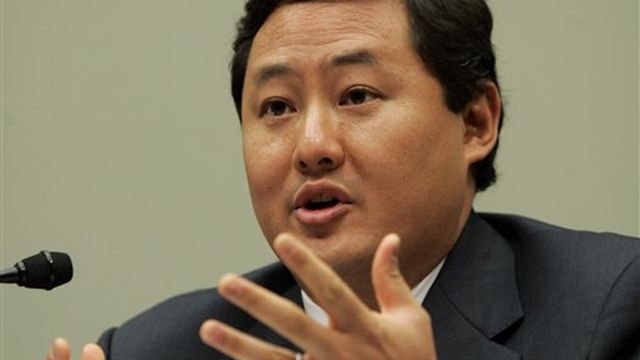
    Alan speaks with former Justice Department lawyer John Yoo about the 9th Circuit Court's decision to dismiss Jose Padilla's lawsuit against him.

  • Duration 9:32
  • Date

Clips

Also in this playlist...

Latest News

Auto-advance: ON

Auto-advance

Transcript

This transcript is automatically generated

-- welcome back -- -- microphone professor John -- professor of law at the University of California Berkeley.

His latest political -- globalization international law the US constitution and the new world order professor you thank you coming on the program tonight.

-- -- -- -- -- -- -- -- -- -- -- -- -- -- -- -- -- -- -- -- -- -- -- -- -- -- -- Phrase is that a wrong way to to frame it.

Well I don't like that title.

Torture memo I don't deny that I worked on these documents which some people called torture memos and some people don't.

They make it sound like there -- some kind of manual on how to torture people and I think.

You know what we're doing was trying he draw lines -- that the government wouldn't.

The ninth circuit as you know the which you've called I never able of the most liberal court in the country yet yet -- Yuba pass here -- -- vindicated.

Well I think I felt the law was on our side and unity effect -- piece in the Wall Street Journal trying to explain that.

Com I wouldn't want to -- to be different for President Obama administration to -- think.

We should all convicted terrorists or there -- least it's two people the government turn to the decisions -- make about terrorism policy but.

That's probably into the ninth circuit is you know for expanding the -- you never know what they're gonna do no matter what the laws.

There's not a good idea would you want an ideological court there was always predictable.

But but but I don't think it's so ideological court -- was predictable that -- is.

A court that follow the law and if there's you know the -- pretty clear I don't think the courts throughout the country should come out and.

A lot of the follow an ideology.

But the idea of the president not have a problem with Obama doing -- yeah him saying that anybody can be -- enemy combatant.

And then denied -- right to an attorney is Padilla was kept from his attorney for a couple years is that appropriate.

I think that's what you do when you have an enemy now you can have -- arguments about whether.

You feel there's a war.

On if you don't think there's a war then I think you're right -- never.

-- they authorized one though they get -- your.

I was in Iraq -- -- is no declaration of Gore's call for by the constitution about it the war powers of.

They what they did says well what are that does allow -- to -- what's called an authorization.

Which we have used now since 1945 instead of preparation than they did you know September.

Speaking to vote one they did congress did pass an authorization.

Entry Courtis says we have a part of the authorization each of the power to -- members of enemy including if they happen to be Americans they decide that back and 2004.

In the case -- -- vs.

Yes I would tell by the way the ninth circuit didn't say that Padilla wasn't tortured what they -- was at the time.

The your memo came out and the bush decision decided upon a -- Torture had not yet been defined as what it is now.

Well it's a little different not even I think what they citizen in back to 2001.

And 2002.

Well we the Bush Administration to face this question and there were no court decisions there was no interpretation of this anti torture statute so -- but it wasn't clear.

But -- -- -- -- the same thing and there was no definition but he says he faced prolonged isolation deprivation of light exposure to prolonged periods of light and darkness.

Periodicals objected -- light and darkness for periods of excess of 24 hours.

Variations in temperature sleep adjustment threats of physical abuse death threats psychotropic drugs is any of that shaking -- hijacking and I shuttling in men and many are calling for our here.

You know I think you know -- -- -- -- -- thank you know that much about history I don't think that ever happened to him a problem with these kind of lost -- Is that you have to take at face value get through the -- have to accept at face value.

That everything.

Some of what could be as saying it's true.

And -- then ask well even if it's all true.

Do we still -- the lawsuit took it never go to the factory -- basically ninety to detect if all that's true there's still no lawsuit -- I don't think.

That that happened to Padilla that was an involved -- -- -- the united decision you -- -- like he could claim he was but like I don't the united wasn't involved and you know how we're gonna treat -- We are going to highly evolved.

You usually you think is live -- sorry may you may say studies at that.

-- can I was involved in what could -- detain him as an enemy combatant rather than as a criminal suspects.

And the you know I'm not pretending I didn't and you know I think -- -- -- -- -- so he could be -- in fact the Supreme Court later upheld that but.

All these claims he is that he was abused and maybe break.

In South Carolina I just don't think it's true but you know you have to the quartet but you know have to say we accepted -- true for purposes of these lawsuits which.

Mean he kind of gets a free pass -- accusing everybody everything he could think of.

-- stimulus -- -- forcible interrogation methods were torture only if they caused.

The same level of pain as organ failure impairment of bodily function or even death -- that -- Acura.

Police -- it for so this is for.

Enemy combatants outside the country or not Americans and that's -- with the law was about.

Wasn't about to be at all that's one thing he said which we never got a chance to point out was.

Padilla is claiming that applied to hand and if you just look at the face of those memos they have nothing to do with -- they're not about Padilla they're not about Americans are certainly not about -- -- -- -- Yes there are only Atlanta enemy -- -- outside the United States who were not US citizens.

Right and then.

In that quote you gave what we really that was it has to be a level of pain and suffering like.

Those but not limited to those and and later in the memo we -- -- everything we could find where the courts.

And I think and -- court the other countries what they had found to be torture not a -- -- a list of everything.

And I got a question whether -- to treat anybody like that of their American or in this country you're not print the Geneva convention.

Because we don't treat people like that for fear that our own detainees to be treated that way that's where we have a Geneva convention.

Young -- bought that is most typical question I don't think it is a legal question I think it's a policy question and I don't want to be too legalistic and try to escape.

The issue but I think.

That's the most important reason whether to aggressively interrogate people are not and I think that the -- doesn't want to tell you what to do for example.

We you know you could say and I think the best policy might be.

To treat them like criminal suspects can get them Miranda warnings and lawyers and just put him in federal prison than what you what Obama they -- -- when he first came into office.

That's not the lot of them Mickey do that that might just be -- good decision.

We had better success though in the civil courts and we've had or criminal courts.

-- in the United States we've had in some of the military breaks for exit.

Well we haven't had you know right as you know right now is just the very first military trials -- very personal precautions only got a chance to start now could have been so tied up and litigation which -- have to confess I never anticipated back in 20012002.

That it would take ten years.

-- when a tornado there had also this issue waterboarding which keeps coming up we hanged Japanese soldiers for waterboarding after World War II so how is it.

Torture then but not torture now.

I think if you look carefully.

What the Japanese did and what we're talking about.

And be aggressive interrogation methods they are very different -- different -- kind I would say you know weakened.

Make up these interrogation methods where we cut them from was the training.

Methods that were used on our own -- twenty -- thousand of our own soldiers officers and so on that we've been using for decades.

Just for training though they know they're not gonna get killed or another known they're not going to be harmed because it -- training exercise but we did.

Hanged Japanese soldiers into the very same thing that we did.

-- the thing I like this because the very same thing I think you know I've read those cases that come from.

How how is it different than how is the waterboarding different.

Then -- now.

Oh if you look at those Japanese decisions are in the cases involving Japanese war crimes they talked about.

Basically killing people with water until their stomachs exploded things like that -- Very different and kind of I think a lot of people just say -- they're the same thing but they're not they're.

Very well it's also psychological torture -- people think they're gonna die they think they're gonna be -- Well that's that's because that's who put the wave memos look at the question -- -- congress strip the statute -- you could have physical torture.

We're getting mental.

Torture and the question is that is waterboarding mental torture because.

I think everyone agreed it doesn't actually have any long lasting effect -- you and I bet that the hard it was a hard question.

I write a -- differently now if you had to do it again.

Would you write the memo differently now -- had to do it again.

You know I wouldn't write an immediate an exact same language but I think who come out in the same place.

Read the -- as we say you know waterboarding is really the toughest thing all the you know nobody talks about the other things that were done.

Most people would agree I think that they don't -- syllable and if you -- amount to say honestly.

That waterboarding is very close so line it's very difficult and this is how we can now and obviously other people people have a -- we knew what we wrote them.

The people.

What might disagree that there will be a lot of disputes like sort of -- the -- differently to make them more -- for.

When we we only about fifteen saying -- event but will that this case be appealed you still have a way to go on this.

Yeah I expect the other side might appeal to the Supreme Court basically -- -- another decision to describe -- and I do thank you so much to lose -- appreciate your time sir.

-- thanks a lot of.