You're watching...
Are evangelicals moving away from culture wars?
Details
-
Description
Author Jonathan Merritt on the diminishing influence the evangelical 'heavyweights' have on younger generations
- Duration 7:57
- Date May 11, 2012
You're watching...
Author Jonathan Merritt on the diminishing influence the evangelical 'heavyweights' have on younger generations
Also in this playlist...
Auto-advance: ON
Auto-advanceThis transcript is automatically generated
Well we are at the crossroads the culture wars.
With a new generation of evangelical Christians who are not embracing the religious right of their parents' generation.
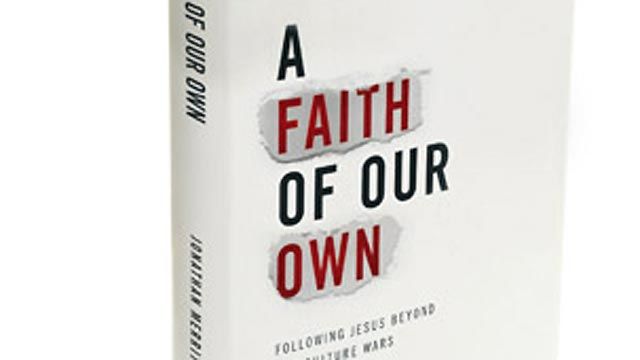
A new book outlines the growing trend in today's society it's called -- of our own it and -- Jonathan Merritt joins handset.
To talk about -- welcome thanks thanks for having me.
So you saying that the influence of the evangelical.
Right the ones we know about the Tony Perkins is the James -- that's kind of waning our is that right.
Yeah but I but what I say in the book is actually believe that evangelical -- I think I think the religious laughed is also.
Equally off putting you know there was a great quote prior writers said that religious left is just a fun house mirror reflection of the religious right I think a lot of young people they see it that -- -- -- -- -- they they they they take similar.
Stances in terms of seeing politics as one of the ways in which today primarily wolf Acton and change culture and and one of the primary ways that now.
They'll get their values out and the public square the religious left takes the same.
Look at at society and culture just from the opposite side of the issues.
-- you know it's interesting because there -- there reading the same book.
But gleaming in completing different things fun at it for instance of the militia so homosexuality -- -- president -- Obama says it -- -- his Christian faith that informed him.
On the issue of homosexuality and yet.
We see that from the religious right at that you know they have a totally different take on on the matter why is it that so many young people young evangelicals are actually.
Much more soft on the issue of homosexuality.
Yeah while the the the answer really is -- in one word relationships and young evangelicals -- eighteen to 35 year old according to your recent Paul are twice as likely to have a close friend.
He's gay or lesbian and so what you're what you're seeing among -- And evangelicals as as they come in contact with these individuals and not just see -- at Christmas time but the hang out.
Out with them on Friday night or go to movies have dinner they're finding that it's much easier to fight a faceless agenda than it is the war against a friend.
It's very interesting because I've I've always kind of fought and it may be you can shed some light on this that a lot of young people.
That even if they're sitting in the pews every week I'm actually more influenced by the secular calls for the MTV generation kind of -- than they are by their own -- and so you know is it possible but that's part of the reason why they are actually more supportive of something like homosexuality.
Whereas in a situation of abortion they're actually becoming more pro life.
Well I think the issue of abortions.
Gives us the answer the answer is is now I don't think it is and this is why I mean you find that the young generation younger generation of evangelicals is actually.
More pro life than their parents.
And were so they're they're not being they're not sort of this pronouncing a wholesale capitulation to a pop popular culture is saying is acceptable.
When I think we're finding is.
Is that they're trying to find a middle ground in terms of their tone and their tactics the way that they're engaging but you still find it a solid majority.
Roughly two thirds of young evangelicals will still say that.
I'm homosexual behaviors are morally wrong that there are inconsistent with the Christian scriptures.
But they're not angry about it -- and so I think they're they're looking for common ground on issues like hospital visitation rights and on inheritance laws and things like that.
Are they are they on.
Whether I'm looking for it you know that.
Do they did they -- they -- they graphs their fate in terms of a broader sense of what it means.
-- like to do they have a web a broader sense of what they're that the Christian faith actually means in terms of manifesting in their real life.
-- -- I've read about this in my column in USA today on Monday that one of the three changes we're seeing among evangelicals is a shift from a narrow agenda to a broader one.
So while there still interest in some of what you call sort of the traditional pop culture war issues like like abortion I mean there they are looking to protect the unborn I mean.
You know of pres Obama talks about the least of these I mean if any group of individuals that's the least of these it has to be unborn children.
But in addition to their advocacy on on issues like abortion.
They now want to have conversations about how to protect the -- an advocate for immigrants and even wage peace.
-- you know important are they tired of politics so it and it seems as though there sort of tired of the political.
Rhetoric that they're seeing out in the public square is is is it just the politics but all that's that's that -- the tired of.
-- it's not that they're tired of politics I think they are tired of the partisanship.
And and what comes with -- partisanship or one of the ships were saying one of the same three shifts is a shift from.
From divisive rhetoric for civil dialogue and in.
So they're tired of the name calling and angry -- rhetoric and the tirades that have come from the Christian community over the last.
Twenty or thirty years and they're ready to have.
Home and and reasoned and thoughtful debates about these same issues that they -- they want to have these conversations.
They just don't wanna have it the way that we've been having it in the past -- -- some examples of their pressing issues and what they're doing about it.
Yeah -- you're you you see a lot when it comes to global advocacy and so.
You know when you look at the one point two billion people who don't have access to safe drinking water this is an issue that's really invigorate Christians.
I think pro life issues are right at the top of that list as well.
I think immigration is an issue and for the same reason I think for the homosexuality issues changing because they're going to school with people who speak different languages primarily.
And and they're looking to find ways to keep families together and to reach out to their friends and men who happened to come from different countries.
You know there are just some others just an issue is that it really kind of percolating in the background -- things that are.
That we don't know yet -- they're gonna bring to the forefront that we should be watching out -- action a five or ten years.
Hi yeah I would say one of those big issues and -- this is a big shift is even among orthodox Christians and I use a orthodox with a little while theologically orthodox Christians like evangelicals and and -- One issue that they are caring about now is protecting the environment and that's an issue that I think.
I think when you when you have this massive split that went on and late 1970s and early eighties it was like the last stole Green -- the -- -- god.
And now they -- -- put those things back together so I think they wanna preserve the creation and and not deplete our natural resources from him but I don't think that they're sort of going all Al Gore so to speak they're not they're not looking for necessarily liberal solutions to these things so I think we're gonna have to really on that issue.
Find some common ground between left and right yeah -- -- that was written like in the 1950s is by David Lynn Martin called the truth and changed and changing said he saw this growing trend.
Of this deal this passion for feelings like if I feel it -- it must be true.
-- And I don't see anything different today among young people I think it's very much part of their sort of agenda I mean do you see -- this and individualism and this fight for what my passion might might might.
My heart says kind of steers them in the right a wrong way.
Yeah I think if that's -- out fantastic point -- actually because -- three -- do we're we're living in a culture where the the pluralism of the culture.
-- the post modernism of the culture and now what we're calling post christianity is really influencing.
This generation.
And when you look at post modernism one of the big things as experience.
And so they're not just looking like the last generation was looking for truth exclusively in the Bible.
But I think that post modernism has influenced this generation in such a way that what they experience is really shaping the way that they think and they see the world.
Was a very interesting book is called a phase of our opponent following Jesus beyond the culture wars and Jonathan Merritt is the the author a wonderful.
-- and words of wisdom here and people praising you and in the beginning of it -- -- the book a lot of heavy hitters.
Actually giving their sense -- approval thank you so much thank you are --