You're watching...

Controversy over conservative blogger's firing

Details

  • Description

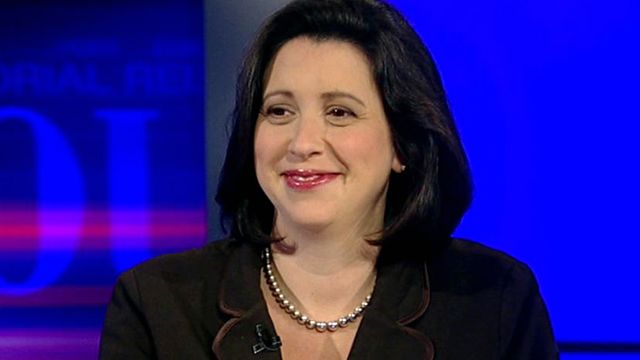
    Former WSJ editor Naomi Schaefer Riley axed by Chronicle of Higher Education for criticizing black studies programs at U.S. colleges

  • Duration 4:43
  • Date

Clips

Also in this playlist...

Latest News

Auto-advance: ON

Auto-advance

Transcript

This transcript is automatically generated

A familiar face to many of our viewers former Wall Street Journal editor Naomi Schaefer Riley was fired this week from her job blogging.

For the Chronicle of Higher Education hired to provide a conservative.

Point of view on current issues and -- dean.

Rally posted an -- last week critical of some black studies programs at US colleges.

She was fired Monday after more than 6500.

People many of them professors.

Signed an online petition seeking her dismissal.

Yeah we Schaefer Riley joins me now welcome back to the program and so -- you must've known that this was going to be controversial when you wrote the blog post were you surprised by the reaction.

Well a lot of the blog posts and -- for the chronicle certainly -- me vitriolic reactions from commentators and things like that I was a little bit surprised that people took the time to 65 -- -- -- the time to sign online petition against me.

And I was actually surprised by the dismissal ultimately that the chronicle caved to this pressure.

Well that one of the criticisms that you didn't read some of the black dissertation black studies dissertation -- you criticized.

You -- yeah obviously you've you've you've.

Wrote what you did based on their titles and descriptions of them but.

Is that a fair criticism.

Well I.

I don't think it is I mean I think that writing it 500 that they the new standard that you have to read an entire dissertation for writing a 500 were blog post on it would be pretty absurd and I think most bloggers and journalists would agree.

That the -- that I wrote was actually in response to a front page but extensive article in the -- -- itself.

Which also interviewed the people in it who wrote the -- occasions and asked them why they wrote it.

You were hired explicitly to be a conservative voice in what is this fundamentally left leaning magazine that.

I mean I was I as you know the chronicle certainly knew what I had written in the past -- published two books of higher education as I bring a conservative viewpoint and and viewer of you know excited to have this as far as I could tell what what it was the first reaction from the editors when the criticism started.

They they asked me to write a response to the critics a couple of days after they realized was garnering a lot of comments.

And I said well -- it seems to -- even a lot of the criticism and getting his personal and I'd rather actually not engage in this because I don't think it's a substantive debate and they encouraged me and I finally accusations of being a racist -- -- of that -- that that -- a racist that I don't have a Ph.D.

and therefore I'm not qualified to comment that I didn't read -- you know the dislocations.

You know -- -- a -- -- of -- we should -- by the way -- you're married to one of our editorial board members Jason.

Yes yes and he is black so there there is a particular irony area.

And end and so I -- I don't really -- engages us I think -- this is not a substantive discussions is a personal debate.

That these people of -- is a personal attack of these people want to make on me.

And and they said okay you'll please please please and I since I wrote back and I explained why these are not substantive criticisms.

And it first the chronicle posted an editor's note saying okay well.

We understand your criticisms readers of -- this is an invitation to debate and that they encourage other people the -- other things.

And and certainly they they had their thumb on the skills -- a lot of ways they they asked the graduate students respond and they had the entire senior faculty of the black studies department.

Where the graduate students were respond.

And all the commentators and after four days chronicled undecided.

That.

I was.

-- -- -- So those four years form four days after the original spots and -- -- the editor Liz McMillan as justification for it was that somehow you hadn't met the standards for.

Even though that had bothered them.

When you had initially hosted or in the immediate aftermath.

At that stayed up their -- for several days is and -- McMillan who had been at the chronicle for ten years was surely aware of their standards.

On top which I of course received you know went up when I receive a copy of their standards it said no such thing about.

You know a week you can't criticize black studies are you must read the dissertation -- prior to criticizing any black studies -- -- so what does this tell you what's the lesson that you draw here about the politics of of academia and intellectual diversity back.

I could say it's a new lesson back -- -- ultimately it's it's basically he'll leveled intolerance lack of you know of the stomach for dealing with any kind of criticism.

And end the the way that they want to get to -- is is is by personal -- they're not willing to engage in substantive debate.

So it either has to be you know you're an outsider you don't have a Ph.D.

and therefore you're not qualified right what basically this.

So.

I mean basically what would you.

It didn't do they have conservatives still with the chronicle there are a couple of them on -- -- power lines still -- one of the bloggers and -- better and I don't I don't somehow with some some subjects are just.

Off limits I I think that's the lesson to future people who -- want to engage in this kind of debate.