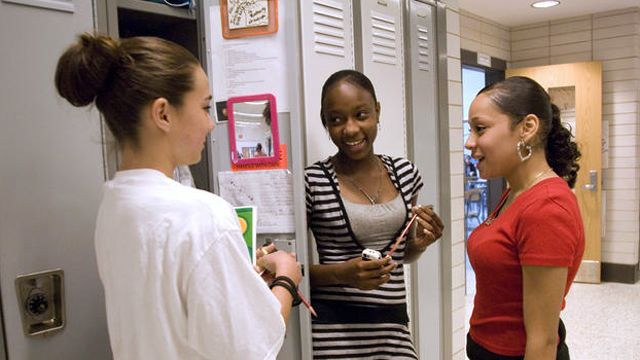
You're watching...
Taking a holistic approach to helping youth
Details
-
Description
Khary Lazarre-White on empowering young Americans to be critical thinkers
- Duration 6:51
- Date May 17, 2012
You're watching...
Khary Lazarre-White on empowering young Americans to be critical thinkers
Also in this playlist...
Auto-advance: ON
Auto-advanceThis transcript is automatically generated
It -- -- with us now is mr.
Carre was RYT is the executive director co-founder of an organization called the brotherhood.
Sister soul.
And it is a leading nonprofit that empowers black and Latino women and men by helping them to become.
Critical thinkers and community leaders good to have you here this morning good morning.
I grew up military and my dad says that your ability to think through a situation that's what we'll send you our success what you're doing.
It's teaching kids how to feel success very early on.
I believe I tell me how the program -- Well provides comprehensive support to young people from the ages of eight to 22.
The idea being that you really need wraparound holistic services for young people to help them build long term stabilize.
Much like your father said to you it's about developing an ethical and moral code how do you -- -- live your life what it mean does it mean to be a man or woman.
What kind of critical decisions we make.
You know why this program what what are you hoping to combat we have some some information we can put up on the screen I know.
94%.
-- to talk through -- -- is necessary.
We've been around for sixteen years -- one -- the leading youth development organizations in the country train educators across the nation on our model but our core work is based here in New York.
It's necessary because unfortunately we have a crisis with education in our country right now the graduation rate in New York -- -- 58%.
And only 34%.
Of black boys are graduating from high school in New York -- Did not realize it was that -- now the numbers on the screen because this is impressive.
For your particular organization -- it's it's making a huge difference in this graduation.
What we try to do is to work with young people over the long -- to ensure that -- able to transform their life and that means educational services that.
Allow for young people to graduate from high school and -- going to come.
All right so big brother and sister the sole graduates look at that 94%.
Of those lines have graduated from high school or at and TV.
-- 88%.
I would imagine is that a great.
Is that I've -- grade average -- that's I think that's a pretty high.
The 88% -- over a sixteen year history so we look at.
And we also look at issues such as teenage pregnancy right now the teenage pregnancy rate in -- 15%.
Where less than 2%.
So we look at what does it mean to really.
Develop the skills to empower oneself and also to have a long term life that removes you from poverty and enables you follow your dreams.
All right and then the next thing as the critical decision making and you caves that an interesting way you look at teenage pregnancy.
It's less than 1% it's among the graduates why is that do you think what what is the different.
I think part of that is how we're able to talk to young people in a very direct way about -- haven't to a sexual health and responsibility.
Trying to treat them as developing young men and young women respecting their intellect as we talk about these issues one of the things we often say is that.
Young people -- one of the most often discussed least heard from constituencies in America young people have been at the forefront of so many movements for social change in our history.
And that where their voices today and so we talk to them so that they can understand -- -- the ramifications of teenage pregnancy so they don't engage in risky sexual.
Yeah I mean it you know it's it's interesting when you have children having children in the level of responsibility -- -- modeling of role models that.
-- -- -- -- -- -- -- -- -- -- -- -- -- -- -- -- -- -- -- -- -- -- -- -- -- -- -- -- -- I'm good how does this compare to how it normally is outside it and your afternoon for brother and sister so we'll call -- -- How does it operate outside having less -- percent is a very low number for team.
Right I think again it's about respecting young people and women come from working in an intense way with them all over the long haul we do in -- -- study in Africa and Latin America.
We -- rights of passage program an after -- care all these wraparound services open up the channels on -- communications with young people about how to live their life which is very important.
All too often these conversations -- not had -- I -- -- -- school early and often are -- as well.
The teenager you -- journalists -- let yet to activate it what I was asking I don't know if you know -- with the national numbers even if you give me an estimate.
I know that there about 2% for -- when parliament is 15% in the studio yourselves roughly 10% while so -- less than two.
All right real quickly before -- let you go.
Employment and moving from poverty this is a huge number look at the alumni from this program.
They're either in rolling college or working full time 95%.
First the ball in this economy that's amazing.
I think that again that speaks to -- -- very quickly one has to do with critical decisions and ensuring that they're either in college -- working full time.
It's also about helping young people understand the systems and understand the inequity that they face so that they can overcome those realities systems of poverty lack of access to jobs and one.
But our schools are doing what they need to do one statistic you may not be aware of is that.
Recent court decision held that the educational level offered to children in New York City a twelfth grade diploma.
Is in fact an eighth grade level education really 70% of our schools do so even our young people who doing what they're supposed to do.
-- being sold false bill of goods told the graduating from high school -- the ready for the economic environment.
You know all too often they are not and so we try to compensate for that by providing comprehensive support system -- young people can overcome the kind of systemic inequalities that that is.
You know -- the king of politics on our live chat Kerry says.
Here's Internet have to merge into the new era of -- that America it has to happen in elementary school -- setting a pace for those who are.
Hire liabilities to be failures in the American institutions across the US what role would you say the Internet -- like -- -- -- -- an explosion in the -- -- -- -- higher education -- the leading universities presently in the United States -- classes online I think there's a great opportunity for innovative education be brought -- our schools.
The problem has to do with the economic and the technical divide in our schools all too often the traditional public schools do not have access to the kind of broad band computer access to young people need.
So it's not just what is so substance online it's also can that substance reach young people in this school.
Did do you look for people in the community to volunteered.
You all the time we have fully staffed by full time staff people where they are to mentor young people -- all too often young people used to folks coming in and out of -- -- we want stable role models.
But in addition we use volunteers mentors professional guidance people people who can be another -- and persons and.
You say this is across the country let's -- their website if we can brotherhood.
-- and -- -- dot org and that's the active website right now people can go there to find out more information about this.
-- -- -- our way is with us he's the executive director and co-founder of this organization making a huge difference in the black it was.
Latino communities here in New York City and across the country sixteen years.
That's a great accomplishment but for being here this thank you for -- thank you okay we're gonna take a quick break we'll be right back.