You're watching...

What does history tell us about the 'occupy' movement?

Details

  • Description

    Author Thai Jones compares events separated by nearly 100 years in his new book

  • Duration 9:12
  • Date

Clips

Also in this playlist...

Editor's Picks

Auto-advance: ON

Auto-advance

Transcript

This transcript is automatically generated

My -- tenth grade history teacher mister Smith said that American history works in cycles.

And we're seeing it now there's a wonderful new book this just brings an error of American history to life.

You know we know about that that would work -- we know about -- forties to thirties to twenties but not many people know.

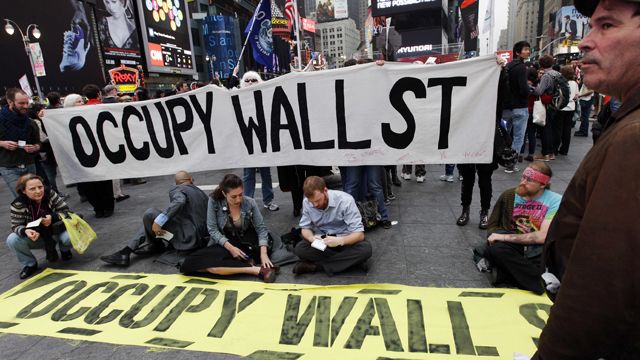
About the -- -- -- -- and before that capital Occupy Wall Street.

Well Ty Jones is with -- he's the author of more powerful than dynamite which really chronicles of time that some would say can be similar to the 1% and -- occupy Washington movement now -- welcome thanks for coming in what a masterful job.

What did you want to write this book and and -- that don't give us the things the sense.

The -- about a forgotten moment in US history and specifically New York City machinery that occurred right before World War I.

Win just like you say 99% as -- one for senators faced off in lower Manhattan.

In a series of it extremely violent confrontations.

And the climax occurs when there's an explosion that killed several of the leading radicals.

And so I sort of stumble upon the story of that explosion.

Wondered why have been forgotten and then sort of gradually unwound the story that includes the city administration as well as the Rockefeller family.

The end did that the radicals and anarchist yourself they wanted to -- bomb John.

And richest man in an American wanted Obama's state.

And he mentioned an explosion it was up in east Harlem which now east Harlem.

Lot of people remember in 1970 the Weather Underground they were building bombs in Greenwich Village the townhouse exploded.

I'm I consider myself -- number of New York history.

Buff and I never heard about the fact that there was this explosion what happened they -- to trying kill -- Rockefeller and was it for these reasons of you know going against the power in the power structure what what -- they believe.

Yes I know that the three men who were responsible for constructing the device were all killed in the explosion so it's impossible to say exactly what happened.

But survivors and people who knew them say that they were in fact planning to go to Terry town in Westchester county and plant the bomb somewhere on the Rockefeller estate.

This had happened about two months after what's known as the Ludlow massacre.

Which was attacked.

Coal mining strikers in Colorado.

And the Rockefeller family -- the coal mining company so that was the specific catalyst that led to this national series of confrontations with the Rockefeller -- Now in Chicago we just had there's an arrest of three so called and -- -- the police accuse -- of building bombs in their apartment and Molotov cocktails.

The defense attorneys say they were set up.

You see similar themes now between you know the protests that we see in the streets may not is perhaps you know deadly.

Thankfully yet as -- as what you chronicle what what similar -- you see in American history between what we see now.

With the protests against Wall Street with what apple FaceBook everyone's been really mad about that.

And then you know must be it -- even goes beyond the Occupy Wall Street protesters.

A lot of middle American you know average Americans say wait a minute -- the system -- Against us look at this eleven teenage kid.

Invest in FaceBook and he just can't get his money -- -- -- wants his money because they it's that it could be shenanigans make.

Yes well there's no question that a lot of the things that we're seeing now have trouble foreign and many of -- seem to have happened in 1914 it was a very similar case where.

Undercover police seem to have provoked us some young -- just in to simulate explosives in us impact just the visual.

And they pleaded that they had been provoked so that -- happen.

You in 1914 like today -- anger against lawsuit went far beyond the sort of hard core and our -- than what made this issue important was not that there were.

A few thousand -- -- in union square which is something that.

Could have happened many times but because there are protests in their slogans.

Rally of fairly broad swath of the population.

Which was then largely turned off by this explosion so as you say the threat of violence is indeed -- a looming problem.

Now when you talk about the radical element in American politics usually think of communism you think the thirties is this the some of the union experiences.

What happened after 1914 when World War I started -- that squelch it or that.

Then just create.

At post 1920s extravagance.

What we saw in the thirties.

It's amazing I mean just look at the headlines over the past few months -- third back in the news in a way that you wouldn't have imagined a decade ago but.

-- before the Russian revolution and artists were the global red menace and then during the Cold War they were serve.

So relevant as sort of the divide between capitalist and Communist became the political conflict of the century.

And now in the sort of post cold world Cold War world an active so once again a major threat so we're seeing the ideas that were relevant to that history.

Come back which suggests that the history itself is there's very similar what do they want now -- mean that is what they want now different of the same as what they wanted.

It's very different.

You know then you had an industrial.

Economy in the United States.

Where it was very visible and easy to identify.

Exploited workers and people who were suffering health problems from industrial accidents.

Today the economy is so much more globalized.

That a lot of those side effects of industry are sort of hidden from American people.

-- that's why doctor piloted movement has this problem of setting -- straight straight set of agendas in 1914.

You knew your enemy was if you're an artist.

He was John.

54 street and it shows how far we've come in terms of a much more complex global system do you see some of the same -- themes.

You know potential villains in -- review.

Now that we saw back then that created this.

Yeah I -- I in my view I think there -- a lot of anger toward Washington expresses reality that the people who are suffering like to say this teenager with FaceBook.

Are not the people who are in power but people who are sort of subject to the whims of the market place.

And back then they wanted an industrial democratic republic which is a different goal than what we wanted because.

Economy has changed -- -- -- what you mean by an industrial democratic republic.

I -- people at the erectus were hoping to have service political system that was largely.

Located in the workplace.

No worker owned factories.

And the workers of those factors would make decisions for themselves and they would.

-- in the municipalities and that was that was division we have -- amazing audience folks who watch fox -- live.

Gentlemen this is all for jury is that the tank and you ask mr.

Jones about the influence of proof of trance crypt.

So I could pocket and the early anti government protest of the last century -- -- he feels the Tea Party and Occupy Wall Street should worry about someone like that in their leadership.

Ranks who was prince of pot can have what was it and we'll what is this wonderful viewers watching us right now mean by that.

That's a great question Chris.

Prince of -- did was -- Russian.

Aristocrats in the nineteenth century who like many Russian aristocrats.

Decide today through his life to overthrowing -- -- And eventually spend years in prison escapes from prison and came to England really live the rest of his life.

One minute to just about the influence of -- pocket and is that.

In many ways.

-- -- -- famous as assassins or as bomb throwers and they did in fact assassinate an unbelievable litany of heads of state including a president of the United States.

That was and McKinley McKinley and they'll -- in buffalo in buffalo up right at the translation job.

So that tactic of assassination heads home from Russia.

A society would know sort of political freedoms whatsoever.

And then it was brought by Russian immigrants and immigrants from Europe to United States.

And so there is there's a a major threat of people transferring tactics or strategy that made sense of one political context.

To a different ones -- -- that is a good question and finally what what do you hope when people.

Get the book read the book what do you hope they take from it from.

The lessons of history of what we went through in 1914 you see them through -- were very well dressed gentlemen.

-- may -- viewers can't see on the top of his hat says Brad or revolution.

And he's standing in union square on fourteenth street where it is.

Theoretical.

Ideological descendants are there right now on the -- It's hard to escape the conclusion that people out.

Unless it -- fighting the same battle that they were fighting a century ago so to me the lesson from that is that.

A lot of the protections that were warm during the Great Depression.

Have been kind of rolled back in that those sorts of protections -- to be fought for constantly.

Well it's a fascinating book wonderful and sometimes too sadly ignored error in American history Ty Jones.

More powerful than dynamite is the book thank you so much thank you for coming here on Fox -- like joining us today.

And before -- go another look back.