You're watching...
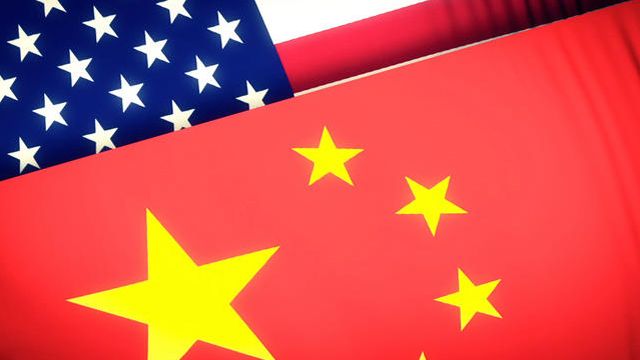
Does a Chinese economic slowdown impact the US?
Details
-
Description
Mary Kissel and Tom Doctoroff debate how tied America is to China
- Duration 9:50
- Date May 31, 2012
You're watching...
Mary Kissel and Tom Doctoroff debate how tied America is to China
Also in this playlist...
Auto-advance: ON
Auto-advanceThis transcript is automatically generated
Hey everybody welcome back -- vendors -- watching -- -- com live we appreciate you coming on today.
First of all we we've been talking a lot about the United States economy -- tough times as we as we started off the show.
China in -- no different role apparently has no plans in fact for a large stimulus steps to counter economic slowdown.
Unlike what we do here in the United States when we need the stimulus to -- Stimulate our economy and and how much it actually dead but what does this mean for the US of China's not gonna do this -- joining me now.
Is Mary -- wall street journal editorial board at Mary -- on them and Twitter but that's rates extremely.
And Tom doctor -- -- of what the Chinese wonder what Chinese wanted is the name of your book.
All right so check the -- -- doing something very different -- the United States there are handling their economic slowdown much differently than we did.
Well no not exactly Julie -- -- in 2008 China basically doubled down with the USA they had a massive fiscal and monetary stimulus.
And frankly I -- that it didn't work but an hour we go again right here we go again it looks like they're gonna have a two trillion dollar yuan stimulus is about.
Three years fifteen billion dollars you're looking it.
Subsidies for certain industries more backing for the state owned enterprises.
Eight you -- in this is basically the -- story all over again it's politically directed credit.
It's going to be wasted stimulus money is exactly the wrong thing for trying to be doing.
One thing I will at the compliment that -- is that.
When the government sends signals that people do respond on the consumer level they take there.
Signals from on high China government still considers itself to be -- -- called.
So I do think that this will be taken as a signal that the government -- gonna let things go down too far.
And that could actually help real estate market and liberate consumer spending to a certain extent would -- This mean for the United States.
Well look the -- if you -- to help team China you wanna competitive China have been trying to become competitive.
It needs to reform its banking sector it passed it to liberalize and open up more foreign direct investment.
It -- it seems to transition.
From a kind of -- murky capitalist economy.
It's based on these sort of short term.
Stimulus measures and very low interest rates to boost exports has to trance transform itself and the more developed economy.
They're not showing signs of doing that some.
What we know China is basically it processing economy right it puts together parts from Korea from Vietnam and Bangladesh it puts together and in exports about so.
Yet China's slowing down is that gonna hurt the United States well it's it's it's slowing down.
In large part as a function of the slowdown in the united -- we spent a lot of money there.
We we spent a -- -- we have a very China is a very important economic relationship for us but it doesn't help the US economy for Timothy Geithner to go to Beijing say.
We want you to appreciate your currency so -- the value -- to the US dollar this is not the point.
The point is China needs to open up and liberalize.
-- -- -- in the early -- -- benefiting -- that liberalization but it has to -- -- The biggest thing China can do to help American economy over the long term is the suppose -- rebalancing of -- from investment consumption.
And this isn't just a question of the people need to feel secure.
In their lives and that requires.
The reform of the welfare system health care.
That steady urbanization that needs to continue happening so that people can feel -- we could locate into the city where the jobs are more productive.
So this isn't happening yet this is very superficial.
Well let's see if -- actually.
If the Chinese consumer what are my options to say.
I can't put my money -- say US stocks very limited options of the Chinese Government is holding interest rates artificially low so I put it in the bank it doesn't make much money you.
-- -- -- -- -- -- Transition has to occur something -- -- it occurred to the Chinese Government needs to start the process is where's the room for growth for the Chinese having is there.
Well they need to liberalize their capital counted to liberalize trade a couple of they're Chinese citizen what.
Do you do I do I think there is room for growth I think that.
There's a lot of room for error when you talk about the fundamental paradigm being urbanization that takes people from the countryside puts them in higher productivity jobs.
And that creates wealth so the key thing is is that urbanization through train.
Gonna keep on going and I think for the next several years it can but it will be increasingly difficult without.
-- shooter right with a live chat why would China want to print OPEC's -- when we have been doing it for fifty years.
Need.
I'm not sure what they mean by that sounds like a nice yeah.
-- let's -- China's been a big consumer raw materials as it grows and that's a good thing.
But -- take this stimulus for example.
It on on Wednesday -- and it's gonna put some twenty billion dollars into the steel industry right China has overcapacity in -- this is more top -- economic management this is this is exactly what China doesn't need -- good what's bad for -- good for us fans who know nothing about what you don't know what do you know when I had a lot of them are probably in America.
We haven't really -- I don't know everything that's a win lose proposition the -- of the economy China are complementary to our own strengths number one and number two.
I think that the consumer is helping a lot of -- right now General Motors sells two million U what's right now.
Starbucks has 1500.
Outlets this is real.
Contribution to the American economy.
So I think that the -- broke to the consumer class is something that is happening.
There are now -- 115 middle class a million middle class Chinese people that's not nothing that's not saying that there is no limitations but it's not nothing.
Okay so that same.
Person who wrote that -- also right that if China has finally.
Oh gosh I lost that China has finally stopped under valuing their currency then we will start to see the trade and labor gaps -- and it -- Didn't it didn't think the Chinese surplus is far less a function of the undervalued -- -- that it is of but super ultra low interest rates that have been in place since 2003.
That encourages.
An investment led boom in exports because it doesn't pay to put your money in the bank -- put your money out into the economy.
I -- I think as -- said.
This is not oh win lose situation.
It's just a fundamental fact of true hate.
Trade wouldn't occur at Morgan mutually beneficial situation that I want to trade -- China more.
I agree with that and that's the fundamental question is when -- -- -- -- rebalance its economy away from the investment model.
And this is gonna require political reform and economic reform which go hand in hand.
So the big question is the new fifth generation of leadership she Jean ping -- -- -- are they gonna be a little bit more open minded for reform and gradual liberalization well he's.
You know let's put some numbers on this last year investment was almost 50%.
Of China's economy 50%.
That and that that's largely because the government the government is not allowing the private sector.
To innovate to compete.
And -- until they do that.
You're gonna see this state led growth and ultimately that's inefficient growth and -- allocation of capital.
You you're you probably know the numbers but I believe I read that the consumer economies only thirty.
4% to an all time low speaking of numbers I mean the the amount of money that the US is in debt to China.
The number right there -- -- your screen I mean it's.
Incredible the amount of money that would that we -- -- what what is the United States do at this point you know we talk about trade we talk about debt we talk about the fact that the Chinese are.
Our in -- themselves than the -- So are Americans some and so is our government and who -- when you see that number on the screen what comes to mind.
Well that's our problem not Chinese primarily once -- got ourselves into debt.
I think there's this fallacy that somehow I mean I did the United States are gonna pay that -- what we did -- say about the -- that we go to Chinese so right here is that the debt is to grow.
In the only way that you grow is to get the government out of the private sector to reduce the burdens on business -- -- to reform our entitlement state.
Now we know that this administration is not going to do that so the only way you're gonna see that change is if we did it change in the White House and we get a change in congress.
A look I have no fear that the Chinese are somehow that got to sell out all that -- they have no other option we're gonna put that money.
India and no -- to -- put in the eurozone know what the United States is lucky we have the world's global currency the most deep and liquid capital markets in the world.
They're stuck with us so -- -- it this is not -- from our our challenges to grow.
And to repay that money in.
Should I can't say that I agree with everything that you -- that's for debate later.
But I do agree fundamentally that the American economy is a solid robust economy with many fundamental strengths and the answer is ultimately for us to.
Roll into future prosperity.
And -- is not a threat to them.
We gotta go but I just at what point do you first -- then you know the United States repaying that money because I.
I think do you really think that's gonna happen.
Again it depends on the administration.
I think we get -- -- I mean yes.
And Obama hot.
Four years ago I mean it this debt has been -- growing for years and years and years now we saw a massive spike in -- past three years and yeah it's an exponential spike and a huge of course it's huge and the -- is just so much you love numbers later.
I don't know we'll have to wait a very complicated idea it they're aliens.
All right Mary -- thank you very much after coming on at Mary -- on Twitter everybody -- doctor -- author of what Chinese want to thank you very much.
To get out of debt and shore but all right thank you so much -- you for coming.