You're watching...

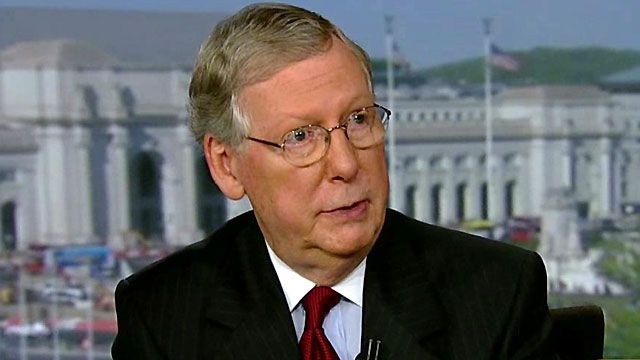
Sen. McConnell talks free speech, campaign finance

Details

  • Description

    Minority leader on 'Special Report'

  • Duration 5:12
  • Date

Clips

Also in this playlist...

Editor's Picks

Auto-advance: ON

Auto-advance

Transcript

This transcript is automatically generated

Senate Republican leader Mitch McConnell -- making a major speech tomorrow about free speech and campaign finance.

Andy is here tonight to give us a preview welcome senator.

Going to be your Chris I'm about to say welcome to FOX News Sunday but I -- that good day here you're not on fox is on -- you say and I it is in this is the point of your speech tomorrow the Obama administration.

Is working to silence critics and to limit.

Free speech protections under the First Amendment explain the -- -- try.

On to do is intimidate donors outside groups that are critical of the administration.

And the campaign is rifled through one donors.

Divorce records.

They've got the IRS the SEC and other agencies going after.

Contributors.

Trying to frighten people and tell them intimidate them out of exercising their rights to participate.

In the American political discourse.

Which is being done these as well lot of different groups and no longer are they all on the political left now it's there's more balance stood and of course the temptation of anybody in power should try to silence your critics.

One final point on this the president -- -- political advisor David Axelrod said yesterday the president he wanted to amend the First Amendment.

For the first time in history.

To make it possible -- the government.

To determine who gets to speak and who doesn't.

Louis when you say it and then the First Amendment -- I think he was talking about trying to find some response to the Citizens United act now concisely and and they understand and they wouldn't actually literally a -- -- -- yes who would know what it would it would -- due to carbon notre out of First Amendment saying it is possible now for the government.

The control political speech Citizens United another campaign finance.

-- decisions are made it clear.

That the government doesn't have the power under the First Amendment to determine.

Not only what we say -- how much we say until they can't control.

The spending.

That -- speech do you think this and I have to call it alleged intimidation.

Goes beyond other presidents other administrations.

-- really quite nixonian and I'm not to get to go back to Richard Nixon found the last time you.

A group of people both through the campaign and through the power of the federal government really trying to harassed and silenced critics.

And I think it'd be called on -- and that's what I'm gonna be talking about tomorrow on a fairly measured -- okay.

Let me take the other side of the argument.

Las Vegas casino owner Sheldon Adelson it's on the front page of the papers today is going to -- is just given a ten million dollar contribution.

Two way pro Romney super pac.

Does it does -- worry you at all that that individual up on the screen there are others like -- you know very very rich individuals can have.

That disproportionate.

And the fact on the political debate in our country well first of all I don't remember of people in this outrage when George Soros on the political -- -- doing a sign saying to promote.

The other side of the argument.

But the Supreme Court is basically said it is impermissible for the government to determine who gets to speak that we all get.

And obviously some people.

You know have more money than others but most people.

Want to belong to organizations that don't want the government telling them what they can say or how much they can say it.

And so it's just not possible for the federal government.

The regulate all of us speech they just keep their hands off of it there are plenty of wealthy people.

On the other side of the equation doing the same thing to promote.

The president and his -- -- -- Democrats have come -- with one short of a constitutional amendment.

One possible -- -- to the Citizens United Supreme Court decision what they called the disclose act and the idea is which would seem pretty Vanilla.

Disclosure.

Require groups to name all the donors.

Who -- contributed just disclose it.

More than 101000 dollars what's wrong with well of course if you contribute to a candidate.

Or to a party -- -- disclose.

But the purpose -- trying to get disclosure -- outside groups is to bring the power the government down on the meant to intimidate them out of process.

And interestingly enough -- this particular bill has -- -- carve out.

That eliminates the provision so they don't -- it labor unions but if if it did apply to everybody what would be wrong way that disclosure.

-- provided the government wasn't gonna harass should be okay but -- just -- as I had mentioned to you earlier in this interview.

We now have an administration that if they can get their hands on the names.

We'll go after the donors and try to frighten them.

And an opera just voting and I had finishing carries -- got time to mention us and avoid -- vs Alabama but not back in 1958.

Where the state of Alabama try to get the donor list of the NAACP.

And the -- so they couldn't do that.

Donors had a had a they have the right to participate.

To causes of their.

Preference.

Without having people harass them.

And that's the danger of disclosure to outside groups.

People who give us -- candidates and the parties are already Fuller disclosure everybody can make whatever they want to.

We're going to be watching his speech tomorrow on thank you for giving us a preview tonight -- do.