You're watching...

What Happens if Health Law is Struck Down?

Details

  • Description

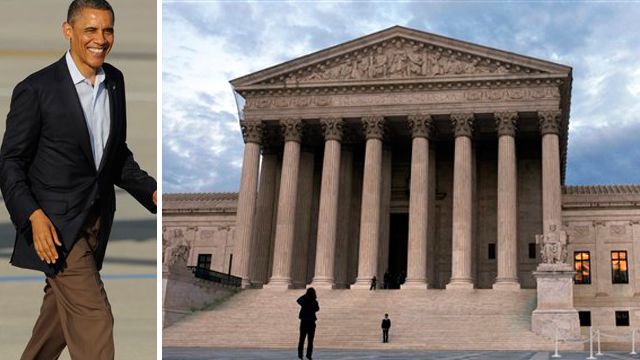
    Chris Stirewalt and Rep. Tonko discuss Obamacare.

  • Duration 10:15
  • Date

Clips

Also in this playlist...

Editor's Picks

Auto-advance: ON

Auto-advance

Transcript

This transcript is automatically generated

Legislatively.

We can't do -- thing.

And we are going to move full speed ahead with implementation that was a democratic congressional official.

Talking to the Associated Press about plans in the Obama administration.

To proceed with the president's when he -- health law even if the Supreme Court strikes down its central provision and this Internet -- power play and I'm Chris Farrell and I am so glad that you making time for us today because we have a lot to talk about.

We want to talk about what happens if the Supreme Court strikes down.

The central provision the mandatory health insurance component of the president's health care -- we're gonna talk about that.

We're gonna talk about what the heck is going on in this standoff that showdown between attorney general Eric Holder and house and senate Republicans.

We're gonna talk about and agriculture bill that is I've gotten back bound up and down down.

By controversy over.

Food stamps and how those are funded and we will also much to the good.

-- joined by Brit Hume the one and only later on in the show but let's get let's get this party started -- And let's just say hi to congressman Paul -- He's from New York he is a Democrat.

And he represents swath of the central part of the state of a very beautiful part of the state welcome back congressman.

Thank you Preston Hollow Internet.

Hello exactly and Internet -- happy to have you with -- today now congressman.

This is something that that you know a lot about in your time both in the state legislature and congress.

About.

Undo sometimes things have to be and god.

And as the Supreme Court gets ready to drop probably Thursday or Monday right now looking like the most likely times as they get ready to drop their decision.

What happens if the Supreme Court does -- invalidate this central.

Component of the law.

If they invalidate the the mandate or -- yes.

Yes certainly that math works far better if we include.

Universality.

Because what you do is want to have rain prevented developments and -- underpinning of support for wellness.

Weeks drives costs and downward.

So I think the clever strategy here is to find a -- or will.

We'll have elements of this plan.

That are.

-- ready universally popular I have heard from many people about the the beauty the joy that comfort that comes.

With allowing your younger adults and families to stay -- -- family coverage.

I knew that preexisting conditions or something that people were tortured by and now have the luxury of health care insurance.

Closing the doughnut hole for pharmaceutical needs is very popular with my district.

Preventative therapies that free checkups.

-- -- allow old screenings that don't require co payments coinsurance deductibles.

Are very popular items and so I think there will be a way to respond to all the dynamics of the real arithmetic here.

Simply because people now know what they have and you're not going to take -- them it's gonna be a battle.

When people try to rebuild that politically.

So that estimates say that there -- the insurance industry was expecting to have a trillion with a T.

Extra dollars in -- through now that's obviously not.

All profit probably very little evidence that -- profit but.

There's been some big profits and -- -- the expectation was under this law and with this mandatory health insurance that there would be about a trillion dollars.

Over the next decade that would flow through and into these insurance companies.

That's a lot of money -- what kind of pay for do you get to.

Replace that money.

Well I'm certain that all the other parties will come to the table and and hammer away.

At the most just and logical solution but keep in mind too that this is a competitive arena and its people shop in the marketplace for their insurance.

There's not going to be a tough competitive so pressure if this mandate is struck down is going to be competitive pressure on these groups.

To be popular to offer.

What was provided for in the Affordable Care Act and it may actually be used.

As a strategy by some of the forces within the insurance arena.

To gain customers to hold customers to provide these coverages and to learn how to absorb that.

Within their framework I think that that's important -- you look at the statistics in my district.

5900.

Young young people are now covered for health care purposes.

That's an important statistic you have twenty -- -- -- children.

And 130000.

Adults.

Who are allowed to have preventative measures rather than paying without.

Co payments coinsurance.

And deductibles that's important -- much -- -- ninety small businesses.

I'm not offered assistance and providing coverage for their employees these are stats these are given dynamics in today's.

World.

That are going to be very difficult to walk away from and so I think the pressure will be it's.

Here in the capital to make certain that there is a pay for that there isn't an ability to work.

Within the context of this framework should make it happen obviously the math here is well served by universality.

And it that is taken away and I am certain.

Reasonable -- minds will come to the table and get it done.

Well there's got to be a first time for everything in Washington congressman.

-- Now -- the expectation.

From the CBO is that if this were to happen if the mandate was removed.

That premiums the first that the first round of increases on insurance premiums be fifteen to 20%.

Would there need to be.

As this went into implementation assuming that there was a meeting of the minds eventually about what to do in the larger sense with -- need to be do you think some stop -- solution short term solution next year.

If that were to happen.

Well of course you know again the benefits of this program are -- -- People are understanding -- now I talked to the senior community.

They love the opportunity to close the doughnut hole because many were drained resource wise financially by that requirement of a doughnut hole.

I'm so I think again the pressure will be on the political system to respond to it.

No one will tolerate including local officials and wraps no one's going to want to see an increase of fifteen to 20% in premiums that is.

Unsustainable.

It's fine -- -- -- just system that will require that we come forward with some sort of mechanism.

That will help with -- because look where the only industrialized nation that does not have universal.

Health -- this was about affordability and it's certainly about accessibility.

And today it's just and find it and un doable situation.

For us in a global marketplace.

To be competitive as a business community without the luxury.

Sound workable health plan.

And that would put the pressure on us to come up with the mechanism whatever that might be in order to hold down those premium charges that that you can't see that sort of rise.

That was never part of this package.

There was always a modest.

Look that we took yet maybe -- one or 2%.

Threshold that people thought was reasonable in order to bring everyone into the equation.

That eventually giant drives down costs because of preventative and wellness concepts that will love I think provide for sustainable outcome.

Congressman you talk about this just doesn't matter so you talk about this law with -- real passion.

You talk about it with real enthusiasm.

And you talk about the bigness of it that this really is day.

A historic shift to in -- -- -- in America and social welfare and how those things are constructed.

Do you think that that is it an imminent attack and approach that the presidential campaign of Barack Obama should embrace because they talk about it in in smaller terms and in different.

Terms.

But the president achieved a great bit of success here in the 111 congress he allowed -- an outcome to.

-- to be produced that was tried over and over again.

And there just wasn't the political will -- the leadership executed to make it happen he achieved a great victory here.

And I think it's incumbent upon us now to respond to what ever the court decision is.

To hold on to the progress that was struck.

-- -- -- -- to address that affordability issues and as most fair and most frank manner as possible and I think certainly.

-- all that happens on this hill there's a way to make that happen.

And we should embrace that in the message of this campaign.

This is about responding to the needs of the thriving middle class and our society that have to be an outcome.

Without a solid stronger middle class there's not a strong America and so we can make that happen.

By putting the beat and -- that dialogue together at a table.

We have our goals -- just an outstanding.

-- successful health care access health care affordability.

And the result being a thriving middle class.

Congressman we appreciate your enthusiasm and we certainly appreciate your time have a wonderful day.

Yes -- -- -- and -- a -- Internet.

All right okay -- very quickly a couple of your chats says Lena Palmer.

Can the president really assume unilateral authority to implement his plans -- that illegal know the answer here is if the Supreme Court got this sucker.

And it goes forward the law stands and basically as I wrote this morning.

In the power play which you can ask for merely the cost of a Twitter follow.

You could basically what happens is now.

It's pointed at the insurance industry.

And here it comes and that and Democrats like congressman Tom -- say.

This is the time to go for a single Payer or a government run option to replace that private sector -- that they tried.

And you never know and -- bad things will happen make sure you fill out -- health care proxy not very sunny attitude this morning there.

Says.

VS NL.

Senior.

And down last word from the always -- saint -- tank says nothing history.