You're watching...

Exclusive: 'An American Son'

Details

  • Description

    Florida Senator Marco Rubio on his memoir

  • Duration 8:35
  • Date

Clips

Also in this playlist...

Powerful Politics

Auto-advance: ON

Auto-advance

Transcript

This transcript is automatically generated

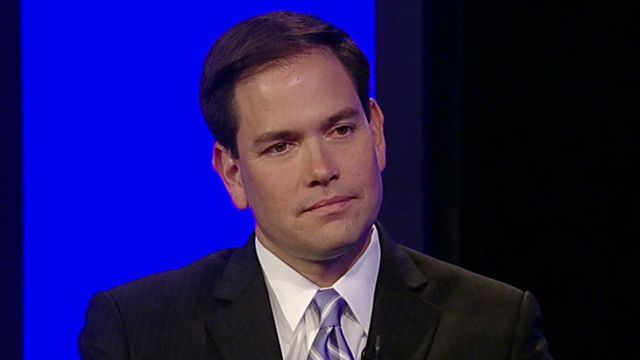
Welcome to the special edition of Hannity and tonight for the hour I will be joined by one of the most talked about elected officials in the country Florida senator Marco Rubio who earlier this week released a brand new autobiography it's called an American son.

-- is here in studio and you'll also hear later from his wife and his kids are seated right there in our studio audience -- first.

We welcome the senator from the great state of Florida Hart senate gonna simply thank you senator rubio.

I've learned so much about you.

In this book and one of the things you really highlight is how difficult your grandparents.

And look that the life that they had the -- for your parents and how fortunate you are and you would even want at one point in the book said.

I'm I'm not have to have the man my grandfather's war my file otherwise you -- -- of one point.

Tell us about their lives well.

First of I think that there's this misconception that the immigrant story is one of instant success and it's not in this country very rarely in fact many instances people come and work all their lives and and I'm barely get ahead more than whether when he got here but but what they do is -- able to leave their kids at every opportunity they didn't have.

Now my parents case when they first got here they were discouraged that for a number of years in -- thought about going back to Cuba.

When initially people thought -- is actually going to be a good thing.

Ultimately had to settle here and accept it and and and accept that this is -- their new life very grateful to this country for that opportunity.

And because of their hard work because of their sacrifices they were able to give me the chance to do all the things that they had to give up on for themselves.

You know it to me was the quintessential American story talked about your mom she wanted to be an actress.

And she had to settle for being a made for most of her working life.

You talk about your father he had other aspirations but he was a bartender for what seventy years or -- broken most of his adult life for big part of his adult life.

Even have a picture in the book about your daddy wanna be a business owner.

Tell us what their goals for you war.

To be whatever it is I wanted to be than ever had a specific job in mind they -- me to have dreams.

And they -- me to pursue those dreams -- -- have a real chance to do it and I think that was true for me and that was also true for my brother and my two sisters.

That's what they want it for us and you know one of the things that book forces you to do when you sit down -- -- Have to research your parents and who they were and where they came from and how their journey here began.

You learn you meet these people -- never met before you meet you realize that your parents were -- your age and when they were your age they have hopes they had dreams just like you did.

And for some parents -- becomes impossible for Mike in the case of my parents the circumstances that they faced coming here in new country -- know anybody to know the language.

Didn't have much of an education.

But the purpose of their life became.

I want my kids to be able to do all the things we weren't able to do whatever their dreams are that's what we wanted to do was never to be a senator -- via.

Actor to be an athlete it was whatever we desired and I and I think that is really a testament to America you talk about that night that you were elected senator.

And you watch your mother.

Walk up the stairs now just before you gave your speech.

Tell everybody about that you know I was her that night was a birthday.

And I thought about what a different place that was from where she was just 34 decades before my mom was born.

And to a family that struggled you know my grandfather actually did okay for a -- overnight he lost his job running one of the railroad stops in Cuba.

And stone and the and -- poverty because he was a disabled man and in a rural Cuba in the 1940s and thirties.

There was no there was no unemployment there was no welfare there was no food stamps what there was as you got up in the morning and you got any work you can find.

In the hopes of getting enough money that data feed your kids.

And he was disabled so that -- a lot of work around for disabled.

Man Bakken and at times you can imagine he struggled.

And I thought about how far -- -- west from where we were that evening where I rose to a very in homes distinguished physician and -- honorable one.

In the greatest nation all of human history and I just thought what a testament that was -- my grandfather my mother.

And to this country.

-- -- it you talked about your father died two months prior to the night you became senator but he said he died believing you would win yes I think well he got to vote in the primary thinking you.

At that point that we are kind of turn the corner on that race and -- like tell people my dad did see what happened that night.

He just didn't see it on television he thought they had better get better seats -- better seats.

And you know and in so many ways again -- my data was I'll tell -- isn't just the show me he would Tivo it every night or DVR.

The Hannity show every night if you thought it was on every night -- -- knowledge you know what I'm gonna be on.

And what -- trying to take away viewers from -- -- -- I'm sure they get that should they get your show where he is now -- to but.

But my point is that you know he wasn't a political guy and he wasn't a bit in terms of someone that loved politics and -- cared about it.

And he certainly never pushed me in that direction.

But he showed its pride in the attention paid especially at the end of his life from my -- talk about -- had a fox on 24 sevenths just in case I came up for thirty seconds.

And in some interview somewhere so I think he was proud of what we accomplished because as a -- where his kids and our parents are proud of what their kids accomplished.

But I I talked in the book.

About when I first ran for office in the city -- west Miami.

And that's a very small -- -- you live the way you run there as you knock on doors and go door to door.

And it was during that time going into the living -- rooms of my neighbors a lot of elderly Cuban Americans.

That I got to know who are really was and who my generation was.

And invariably those conversations turn to when they were -- and the hopes and dreams they once had for themselves and how that was lost to them because of history.

And it became the purpose of their lives to give their children and the grandchildren every chance they didn't have an essence.

What gave their life meaning at the end of their lives what what what was their statement that they mattered that they've been here.

Was what we were not able to do in our own lives or through the lives of their kids.

And I think it was the first time that I really began to understand that my generation of Cuban Americans where the -- of two generations of unfulfilled dream.

Know it's interesting -- as I've been going through Ancestry.Com.

And the things -- my grandfather in 1940 earned 600000 this country came to the country -- the early part of last century.

It's it's fascinating.

You know what you learn about them and how we really stand on their shoulders on the shoulders of our grandparents great grandparents and our parents.

You even told the story interesting background about your grandfather for broadcaster standpoint is that part of his job was to read the news.

-- in a factory where they were rolling cigars so that it would it would keep them working.

They're merely part of the book details my family's history back to the birth of my grandfather and 1899 when the US still basically -- Cuba up until 1902.

My grandfather when he was born to a large rural family there are a lot of kids and that my -- and have a lot of kids to -- work the farm.

But my grandfather was stricken with polio at a very young age so he.

He lost the use of one of his legs you can work the -- so he was the only one of the siblings I got -- -- the school and learn how to read.

And when he lost his job at the railroad station one of the jobs he took up was he go to the cigar factory there would roll cigars.

And they would hire him to sit at the front of the factory and read the newspapers to the workers and then afterwards novels to the workers.

And from that he picked this lifelong first I learned a lot obviously covering history as it was happening in and later reading the classics.

But he also picked up this lifelong passion for reading and for learning which of years later he would share with me on the porch of our home as he smoked.

One of its three day with cigars but I at the open the ports of our home in Las Vegas he would talk to me about history and invariably that turned to politics and and also it was an easy time.

And literally within hours or days he went to work and never stopped working his first job I talk about was.

At a small little cafe just around the corner where the he had found some money or wallet and he turned and and and one of the guys playing dominos there it was owned by some Spaniards accuse them of stealing a wallet.

And the owner chastise the guy and told them don't accuse this kid is an honest kid -- -- -- turned the wallet over do you.

And he -- -- kid you want to jog your bussing tables and helping out and that's where he started to work.

And unfortunately a few months later he got fired for for taking a chocolate bar without asking for for -- -- that.

That they just -- about that is nine years old and instead of being at school he was working and he worked virtually until the time you know -- -- passed away that that.

As a lot of work an amazing story we've got a lot more to come also.

Well -- senator Marco Rubio as we look at how he got his start life and you'll also meet his wife who was here tonight in our studio.

As we continue to get to know this American --