You're watching...
What impact will ruling have on health care? Part 1
Details
-
Description
Doctors speak out on decision
- Duration 8:27
- Date Jun 28, 2012
You're watching...
Doctors speak out on decision
Also in this playlist...
Auto-advance: ON
Auto-advanceThis transcript is automatically generated
And now for the big questions.
The Supreme Court today upheld the controversial core of the president's health care law the mandate.
That requires people to either buy insurance.
Or pay a penalty.
Here now to weigh in on what this means for you -- your doctor.
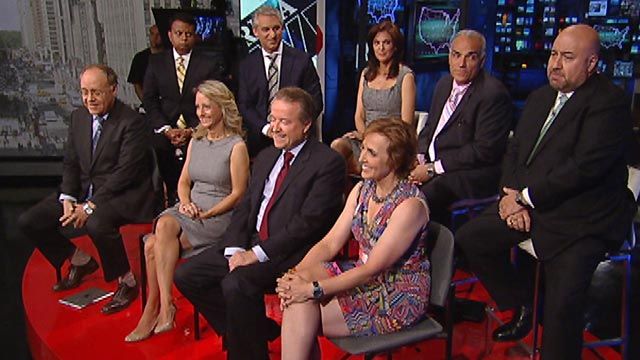
We're gonna talk to a panel of doctors from all different specialties.
Who field.
You know they're sort of split on whether they like this -- they don't like this ruling so we're gonna have both sides represented thereabouts doctor Marc Siegel met member of our fox and medically team let me start with you.
Your reaction.
Well I'm concerned that insurance creates a big interface between the doctor and patient I think most doctors in this country.
Have a lot of patience we're not all seeking new patient and I'm concerned that insurance companies decreased reimbursement -- more regulations you see the more.
That the federal government gets involved.
The more there's a block between the doctor and the patient I think that medicine is an individualized thing I think that the art of medicine -- From one patient to the next and the more guidelines in the -- regulations I have in the way that the more problematic the individual mandate which is was upheld today bothers me.
Because I think that young patients that are not unhealthy will essentially be paying for sick older patients that have more medical -- -- Hollywood thing and that's not a controversial statement that is a factor will be paying high premiums for that and that really bothers me.
I think as a as a medical issue that people are worried right there were it.
Some people are concerned about what does this mean from from me and my doctor Meehan my health care.
Is it gonna change my relationship with my doctor on that point let me let me go to your doctor -- -- cheat on your with Columbia University Medical Center what do you think well.
It's fascinating to listen to the discussions because I -- rest -- my training in the national health service.
And that next week is this.
At a -- across the front -- this is what some people are worried about that we're gonna wind up with socialized medicine you speak to that they topic what really frustrates me is that the system that we have in the UK the national health service is not socialized medicine that we took him back -- -- What we took him back here is people having -- Pay for their insurance and obviously most people -- -- the discussions off about the new issues that come out today but in the UK we have a health caste system.
Where it's free at the point two suspects say that they think labeled as socialized medicine that very very different house cannot zones to.
Actually he is the future for America of the of the British system because remember when this whole thing was being debated Isabel Glenn -- -- you did this and we'll talk with us about the slot.
People would say it lets people what we're headed for the British system we're headed -- the Canadian system if this law a bill becomes law we're gonna be Canada what do you think.
No I don't think that's the case I'm I'm not a faculty member chairman of medicine at a large teaching Haas -- employee position.
And we're we're very interest in increasing access to health care and increasing quality.
And our initial feelings are that this bill is going to do that we also one of lower fixed costs.
We're very very interest did in the uninsured.
Some of our hospitals have 2030% uninsured particularly in New York City here but also a New Jersey where I -- And this is going to remedy that situation yeah.
Question even with those of you who oppose the law is there any question that this is good for the people who do not have health insurance.
Do you agree it's good for the people who don't have health insurance police officer isn't going back to somebody in the back Davis tonight.
The fact that this -- you cannot think of health care in a vacuum because this is all connected to the immigration law they they just -- It has to do with the economy they're all really the to move together -- you have to think -- it -- so if you're going to have patients that come to the emergency room with absolutely no insurance.
I'm to have really.
Horrible -- do diagnosed is they need to casket into the MRIs.
No one in emerges here is gonna look look at and say what creatures do you have other ways we're gonna solve the care they come -- they get the operation David stay in the hospital for two weeks.
And that's one of the reasons why I think we have the best health care system.
In the world today we provide to our -- you have insurance you're not the technology and you have to science and research and medicine.
But this act today will give them access so they we have.
Whatever you wanna call -- Medicaid -- Obama -- whatever it is so they come in and they can take advantage of that so I think.
Are good -- point is well taken to access.
Is available now the next question is what kind of care are we giving them is -- just equality if you are looking for or is it really -- quality.
But the other the other question is -- -- look here are we giving them but I think people who have insurance right now through their employer what -- you are worried about.
Well what happens -- my care now because now suddenly sharing my doctor.
Which of which there is a shortage with millions of other people that I.
That's I don't -- in London I -- look at this as a win for patients and it's time as a country.
That we put patients ahead of politics and this is that first step to ensure that everybody has access to affordable quality pizza I went about so I know you're putting -- that they benefit a lot of things comment that what I've already seen from the ASEAN.
Are people with preexisting conditions who were able for the first time to get care speaking about immigration I had a young lady come to me who in her when she came over as a teenager was diagnosed with hepatitis C in another country could not get treatment.
Until this year when she was able to get insurance and I could help -- take care of that.
As well as other problems I got a phone call yesterday -- the patient -- Michigan who was no longer eligible for Medicaid went to planned parent time diagnosed with cervical cancer how the child.
Is wasn't waiting for what happens today with the Medicaid expansion -- be able to get the surgery she needs that we are expanding the.
The primary care force that is part of this bill that was one of things were very notice about a primary care forcing this is coming doctor Siegel talked about a lot that let's let's be real right.
There's a doctor shortage in this country is -- in primary.
And there's a real question about whether people are gonna be able to get -- access to their primary care physicians that they want Dr.
Manny what say you.
Well I think that doctors got exactly what they deserve what this would this show.
And I say that very sarcastically because you know for the last -- ever.
5060 years doctors have any given away the business of medicine for the government.
I mean when I hear words we gonna be looking at and we are very concerned about well why haven't we done anything about it so.
So yes when a very Smart president comes along you know.
And -- -- politicians come along and in -- bamboozled the American public by promising them things.
Yes we we we give away our independence and that came with the HMOs and they came would more regulation and now doctors got what they desire.
Because -- at the end of the day yes that we're not we we aren't as socialized medicine system now.
It's just going to be more control.
And yes he's happy because he's employed.
I chose that -- The doctoring Kansas he works for a hospital you work I.
Hospital -- by the president's exact I think you're -- you're try to practice that -- everybody we're doing these doctors -- the entire half an -- here so we're gonna get everybody so.
But but you're in private practice do you see a difference between.
Actually heat at the hospital and doctor Siegel the private practitioner.
-- completely because I think just to -- -- and let's get in order to keep this non political let's make a point about access.
Giving someone an insurance card doesn't guarantee them access it's all about whether there -- doctors available to see them.
Is your doctor taking at this insurance and when it comes to emergency rooms there's been several study out studies out -- have said.
The people -- Medicaid tend to use ER's unnecessarily wide and then I have a primary care doctor they may go there with a sniffles and if they're loading up the ER with a -- -- -- -- -- -- -- -- -- no -- and then that isn't that the case today how does a lot of a lot of bad to that spending.
This is that's not the case.
As long waits in Massachusetts there's a 9% increase of ER visits in Massachusetts the number of emergency rooms in this country have decreased by 10% over the past decade.
I think there is a problem with access even if you give insurance to more people.
Here's what I wanna talk about next -- have take a break but what I -- to talk about after the break is there was there was a lot of talk about how.
The actual relationship between my doctor -- -- was gonna change that that the -- we're gonna tell my doctor what tests he or she could.
Prescribed for me and what they couldn't and so on wanna talk about whether that is real.
And whether it now stands as a result in today's ruling will be right back.