You're watching...

Sen. Blumenthal on Health Care Ruling

Details

  • Description

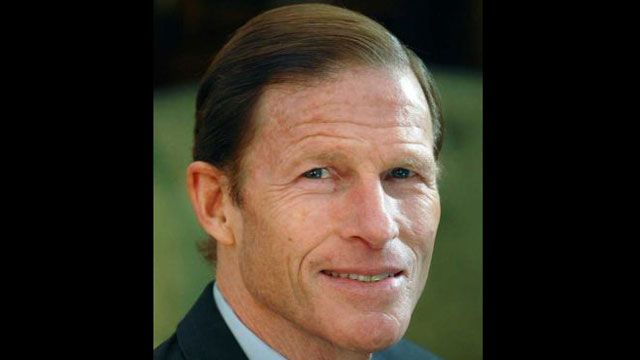
    Sen. Richard Blumenthal (D-CT) joins Alan to responds to the Supreme Court health care ruling.

  • Duration 8:53
  • Date

Clips

Also in this playlist...

Editor's Picks

Auto-advance: ON

Auto-advance

Transcript

This transcript is automatically generated

Senator Richard Blumenthal perfect first the -- -- -- day like today first term in the US senate.

Was a law clerk for justice Harry Blackmun attorney general former attorney general -- -- Connecticut are you surprised by today's ruling senator.

No I was not surprised indeed I predicted it from the time it was filed I declined -- attorney general to join me in that challenged.

Because I thought the -- with constitutional.

And I predicted after leaving the courtroom.

In the oral argument for the court that it would be -- -- mainly because.

It is constitutional but law is that.

The jurisprudence in the cases.

The Supreme Court and excited them in the -- the opinion we're really require.

That the court uphold this law and lots of congress -- pastor presume constitutional.

Court and find.

A basis -- a pull permits required by.

Constitutional proposals -- -- no surprise.

And in fact if you read the opinion and many many have by now it's really very straightforward and compelling written by Chief Justice -- Are you surprised by the division between the the feeling about more than the decision on the commerce clause vs whether or not this is a tax.

You know interest being not completely surprising because.

The that jurisprudence again the case law in this area.

Upholding it as -- tax certainly was much more straightforward.

Then tried to address the commerce clause question but without going into all the technicalities and all the details.

The -- that Justice Roberts brought to it was really very -- concisely and clearly stated.

And the defense obviously.

Had a different point of view but -- Really declined to reach the ground to uphold the law that would've made a constitutional which I think it's wrong.

As a matter of law.

Is an amazing though that Roberts was the swing vote everybody thought he could be Kennedy or that Kennedy and Robert would vote together and it would be a 54 decision.

-- in the other well.

From my days as a law clerk on the screen court and then to mine he arguing for cases before the court I am.

All with the prize and never surprised to be surprise that the words you know the court is unpredictable.

And because these -- -- Tremendous Cadillac.

They don't like him being predictable in the sense of following what the pundits.

Say they're going to do necessarily and so yes I was surprised but.

I thought there would be some surprises in the makeup of the majority and frankly I thought Kennedy would be in the majority.

And my surprise was that he would instead at this center.

I know it's -- read all the tea leaves but is it possible that John Roberts doesn't want the court to be regarded.

As a partisan court he's concerned about legacy.

Very very possible indeed when I left the courtroom on.

The first day of oral argument I had I believe that the Supreme Court will do the right thing follow the.

The existing precedent avoid over reaching and striking down the existing law but also.

It will be concerned about its legacy about its credibility you know the court.

Really has survived with great power because it has been.

Very.

Focus on doing the right thing and being known to do -- right -- so I think yes given Citizens.

United.

Given.

That gore beat bush some of the political path that may be fairly or unfairly.

And the number o'clock or decisions I mean so many of them.

So many 54 decisions and you know the history many controversial decisions is that.

When they strike down a -- they they prefer to have a strong majority and clearly here there was going to be no strong majority favors right now.

And again come back to the fundamental fact here.

That the law was -- we passed by congress people can agree or disagree with that they -- call it tax or penalty but.

-- -- it for what it is.

The court had an obligation to do.

And there -- a lot of people going to be better off because of -- you know the 20000 people -- Connecticut young people -- around the country who will now stay on there.

Parents policies.

People who don't have to be concerned about losing.

Their coverage and served.

-- Pre existing -- -- I think it'll that was not -- -- mandate part that was a different part of the law effectively overturn the mandate and -- we could have been made that the law.

It had there not been -- ability we still have done a great deal toward moving us forward.

And I would -- As I said.

Whether or not the mandate was upheld for upholding those patient protection that was absolutely.

Are critical their core reforms.

And rights that were established by -- you're absolutely right to focus.

On those patient protections which include preventive care for example no deductibles.

And -- pay.

And -- limit set limits lifetime limits on how much you can spend.

No life time caps or limits or annual.

Limits and of course no discrimination based on gender.

A major.

Point.

I know that people make see them as.

This sort of sidebars to the individual mandate story but they are absolutely critical.

We dug into Connecticut senator Richard Blumenthal what does this mean for the states the Medicaid part of this.

-- will -- affect the states because so that's -- -- I think -- the the court did not we're not so -- not so sanguine about correct.

Correct.

But here's the perspective first of all Connecticut has already expanded its Medicaid coverage which means it.

Connecticut will continue to be funded for that expanded.

Coverage which means 53 million dollars a year more for -- And the same is -- of those other states that have expanded their covered in fact expanding the coverage.

It's a great deal for these states because most of the additional cost is funded by the federal government so it's a relatively costly means.

To cover them most at risk people in those states.

They can't be forced expanded -- -- that the -- can't force of.

Exactly right that's the major holding that they can't be forced to expand it even if it's in their interest to be so they can't be cajoled or coerced.

Into expanding our coverage and again I think.

In the context of the whole affordable health health care act it is a relatively.

Minor.

Segment.

Let me ask his -- a heavy on this you know the house voted the contempt for four Eric Holder today both civilly and criminally.

Are you surprised and what does that mean in terms of the word of the ramifications of it.

I think that this.

Depth is really unfortunate.

You know -- political stunts we see them in.

In our line at work unfortunately.

-- you call it political stuff I think it is a political and done.

That has very unfortunate effects and the message it sends about respect.

For the justice system and.

There were offers of cooperation I think those.

To reach solutions should've been fully exhausted should've been fully explored and used before this.

Really tumultuous.

Step.

Was taken and so I regret it as a matter of this system put aside Republican or Democrat.

-- Republican or democratic labels partisan if she's really.

I think are less important here than the ramifications which I think will be unfortunate for the system.

Do you think this is all linked to Republican desire to weaken holder.

And his efforts to go after voter ID -- I'm certainly not going to speculate as to what the motives are.

It clearly it is unfortunate.

Regrettable.

And hopefully.

Short lived to.

I think that the courts will.

Decide to discredit it.

And the decisions that they reached when these issues are referred to those.

-- -- take your time senator you're really -- the senator as much as you did working on a state level.

It every -- a new opportunity and a new adventure and you know it's different I'd love.

Being a state attorney general and enforcing the law and here I have the opportunity -- help make claw.

And that's -- he really.

Really exhilarating and exciting.

Opportunity.

Thanks so much -- I appreciate your time thank you very.