You're watching...
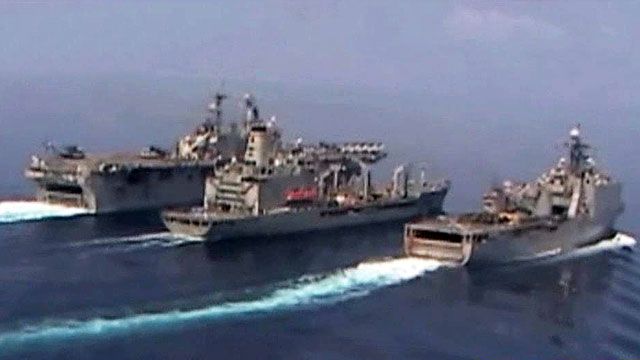
Fallout from fatal incident involving US Navy ship
Details
-
Description
Peter Johnson, Jr. weighs in
- Duration 3:23
- Date Jul 17, 2012
You're watching...
Peter Johnson, Jr. weighs in
Also in this playlist...
Auto-advance: ON
Auto-advanceThis transcript is automatically generated
Shots fired yesterday and high seas from US naval ships in the Persian gulf here's how -- apparently went down.
A small boat fishing vessel perhaps initiate initially turned away from US.
And yes.
-- -- then abruptly headed back despite being given warnings to turn around when those warnings were ignored shots were fired from the naval ship and one person on the small boat was killed the others were injured.
Is this action protected under maritime.
Called in the lawyer Fox's legal analyst Peter Johnson junior -- what do you think.
This is very interest I believe that not only is it protected its legal.
And it's appropriate.
Given what happened with the USS Cole sure -- 2000.
And in the year 2000 we're seventeen sailors were killed in this horrific.
Terroristic attack by a small boat that crushed a forty foot hole.
If it in that vessel so I think the Watford for a lot of our good folks in the navy.
And in the sea lift command is.
Remember that the coal absolute and this is all based on Daniel Webster's.
Nineteenth century.
A discussion of what is appropriate in terms of self.
Defense two words necessity.
And proportionality.
And meaning if it's necessary.
To defend yourself then you have to react in the proportional way from here.
Dish that moved the boat kept on -- a thirty footer or fifty foot boat man with three outboard motors which is similar to somebody -- rainy and crafts that we've seen in the past tour and they fired warning shots and they kept coming and they kill one and injured right -- as a result.
You know the thing about the rapid panic which is over your shoulder it's an -- it's like a gigantic bomb -- it -- is a little -- a bumped up to blow them.
It to kingdom come what what are the rules of engagement say the rules of engagement say.
Give a warning.
The rules of engagement say he should -- the threatening entity in order to give -- an opportunity withdraw.
And then you can use force in self defense if there are no non forceful alternatives.
So.
You know other -- warning nor there at this point -- -- -- -- have a duplication of the coal is this a test.
To see how strong our forces are the other thing after remembers that we've got about a hundred of these ships deployed around the world.
This is actually.
A civilian arm of the federal government there are and it didn't wrap a headache there are not naval.
Officers or sailors aboard.
But for certain security forces that the navy put on.
Too good to arm it and -- to -- maintain that fifty caliber.
Machine -- Force Protection.
So the notion was really repel bull borders remember the cold.
And really kept a face with Daniel Webster's.
-- notions about necessity.
That proportionality.
It's self defense.
It's not an act of war.
Even if it turns out.
That that was only a fishing.
Vessel based upon their conduct and based -- what could have occurred.
There was.
The right decision made based on maritime law they followed all the rules are they did Peter Johnson junior thank you very much for reporting for duty to have a good -- reporting -- -- indeed all right.