You're watching...
Man Who Knew Sikh Temple Shooter Speaks
Details
-
Description
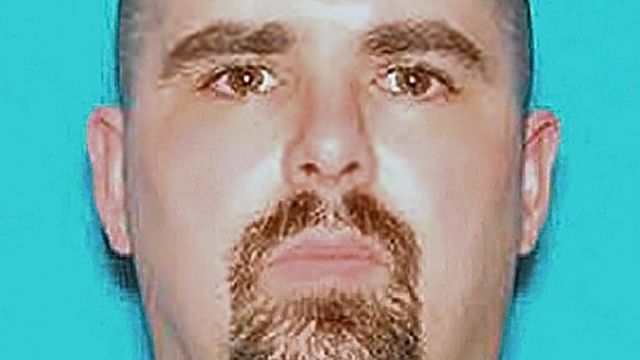
Sociologist Pete Simi, who knew the Sikh temple gunman, discusses the shooter’s history of hate with Alan.
- Duration 10:18
- Date Aug 7, 2012
You're watching...
Sociologist Pete Simi, who knew the Sikh temple gunman, discusses the shooter’s history of hate with Alan.
Also in this playlist...
Auto-advance: ON
Auto-advanceThis transcript is automatically generated
-- helicopter I welcome back to a microphone professor -- -- He is author of American swastika.
Inside the white -- movements.
Hidden spaces of pain and associate professor at University of Nebraska Omaha school of criminology and criminal justice.
And I thank you very much sir for coming on such short notice you only found out earlier today.
That the person who was the gunmen in Wisconsin with someone you knew correct.
Yes it does certainly in the afternoon.
Around 3 o'clock I felt photo on the Southern Poverty Law Center web site.
I didn't have a chance to took all of that media coverage much this morning and saw the photo this afternoon on the Southern Poverty Law Center immediately recognize that it wasn't.
-- still wasn't quite clicking and then when I saw the name and saw where he was from you know it just.
Felt like you know I just felt sick to my stomach.
It.
From here from the years of 2001 to 2003.
I was conducting outfield work.
And with white supremacist groups across the country and during that time.
I was focusing on Southern California.
And I met him as part of my research in Southern California.
He was living with with another person who -- -- that that's part of my research and he would just.
Move to the Southern California in 2001 and when I met him he rode a motorcycle while from the East Coast in -- had.
Joined.
Neo Nazis.
-- music bands and -- you blame in this day and it was real active in the music scene.
Did you actually has lived with them or spend time in his home -- time.
Yeah I during during those two years -- periodically with state.
At the home where he was living and and we you know what go to launch on a regular basis.
United's number of interviews with.
Spent time in around the home kind of observing him and talking with them trying to get understanding of how he got involved in you know what his beliefs or why he -- the things -- did.
Why do you think someone like him and and members of his -- would be open to you.
To have that kind of dialogue.
Well.
Part of it is you know -- there's a real.
Try eating commitment in the belief that -- a lot of folks -- involved in these groups have and so they really -- you found that off and talk about it.
-- it's an opportunity to two you know have somebody come around and says they're interested in learning more about them and and that that provides them you know with the opportunity to talk about it they often feel -- and and victimized by society and bill.
Opportunities like that are pretty appealing to them and it's also potentially in opting for them to recruit and -- there were times with.
-- -- and I felt like you know on some level he was hoping to trying to convert me.
-- -- -- -- your take on him was he angry was he bitter it would how would you characterize his personality.
He was open to having -- -- that there are some folks.
That are very has that once they learn you're doing research stated that you kind of you know -- up and and get pretty leery but he was definitely not one of those.
He was very open to having -- -- he was quite friendly with me.
He was very angry and but that's pretty common for -- you know individuals involved in these groups.
I don't think -- anymore inquiry.
Then the average person involved in these.
The express any kind of bitterness or -- to a particular groups.
You know definitely.
Jewish people he you know recited the standard lines about the idea of Jewish people you know having some kind of -- domination over world affairs.
He talked about that quite a bit a lot of anti black sentiment he felt like non whites in general we're kind of a menace to society.
Those those were you know pretty common -- as part of it is your daily conversation.
You experience that after 9/11.
And so that became prior to 9/11 I don't we're calling things specific.
It was mainly you know about just -- generally about blacks.
Are there any underpinning to these beliefs -- why he would have felt such hostility.
Who -- these group.
Quarterly he told me was when he.
-- that he was familiar with white supremacist groups prior to joining the military.
But that once -- join the military if you don't go in as a racist you're certain to leave this one really and is that.
Direct quote from him.
During the time that I spent -- them.
You felt like.
Basically society.
In general but the military in particular was stacked against whites all you know everything stack the deck stacked against whites.
There's all this affirmative action -- reverse discrimination.
-- all that led him to the conclusion that whites are on the verge of extinction -- there's a -- societal.
War being fought against whites in both whites don't even realize it.
You try to reason with him -- -- just listen and accept what he had to say for the purpose of -- -- -- for -- Research.
The -- the latter.
That's the approach it in part because my own personal safety this preferable -- for the purposes of the research.
You know I antagonizing folks is really not yeah -- -- you did.
Do you think he confuse Muslims and -- I don't know whether that's what happened here I think it's quite possible.
And we do know that after 9/11 there were incidents of hate -- where that happened.
So I I I I think -- it.
You know he generally had a lot of hatred and anger towards just non whites and so it -- for him in the united in the matter.
Which I would professor -- Simi Valley through you've written this book America's swastika inside the white power movement hidden spaces of eight.
And the whole genre of these eight -- There's -- he was involved with for ten years.
-- I guess he's been he's been called a -- -- in a white supremacist.
Could you Parse that for us whats the difference or the of these different brands of -- Yeah more -- I mean if you think about white supremacists -- generic general term and then there are specific types the white supremacist.
And racists or neo Nazi skinheads would be one of those types and we should point out.
For the record that there are skinhead too don't care one way or the other about race and and there are skinheads were actually anti racist.
But for those that are racist you know neo Nazi skinheads they would be a type of white supremacists.
And then other types might be like the Ku Klux Klan or groups that model themselves directly after Nazi Germany like the national socialist movement.
Did he -- he is in this I guess he's a number of white supremacist bands -- skinhead bands.
And where the other members of the bands where they all similar in temperament.
Yeah yeah and he has to he'll do that they can describe it user friendly he was talkative -- a little bit awkward.
He was -- just Southern California when I met him so he was just getting to know people.
He -- a little bit awkward eat drink excessively.
He was you know very angry but.
Really none of those things I would say we're out of the norm for a lot of -- of his peers.
I I guess it's been said that -- -- he drank a lot.
I don't know if he did drugs or not but they said he had trouble forming relationships.
You know the so he's being painted in the -- now.
I guess you're just get up to speed on this because it's a new story and you just recently discovered you knew him but does that sound right in terms of the kind of person you experience.
Yeah -- that sounds pretty accurate the excessive drinking absolutely.
He had a -- -- and during for short period time all law and you know from the 20012003.
Time period.
She was from Germany and she came to US for short periods they broke up and she left.
You like -- that he was building friendships but he was being knew he was still looked at on the periphery.
Did he ever express to you and anything like boy I'd like to.
But do -- or take action against any particular group.
Nothing that -- split that are specific.
-- -- those guys you know -- just part of that culture is a lot of general.
Sentiment about you know seem eager hand.
Things that can be interpreted as.
You know violent in nature and certainly aggressive thoughts and so forth but that's a very.
Very central part of the culture the whole.
I -- Fed's there was a story out tonight that the feds knew of him but didn't have any reason to take action I guess when you look back in retrospect.
There's no way to really predict that any of these people could ever -- anything as horrendous as he allegedly is now.
It's it's next to impossible -- in my opinion.
Prediction it's.
Such a complicated thing and something.
Complex -- this.
Is.
Just since -- so many factors -- so many.
-- to take into consideration.
There's individual level characteristic this group global characteristics of situational factors.
And unfortunately sometimes the right cocktail mixture comes together -- something like this happens but predicting that -- at a time.
His is it like -- said I think it's next.
Is it your sense based on your research at this kind of thing is on the rise in this country the kind of hate groups and we're talking about.
I think -- it's it's persisted that those -- my main point would be that there's definitely been successful persistence of these groups.
Whether they've risen or not I think a little bit more difficult to to determine -- but there's definitely been a persistence of these groups and part of why they've been able to -- there's been.
Things like developing a music scene you know culture music that.
Allows people to express themselves -- to affirm their beliefs and sustain their beliefs and to come together with others who have similar beliefs and share it.
You know certain kinds of occasions where they -- talk about you know who their racial enemies are so -- Well professor I really thank you for coming on a study notes about this night -- covenant shed some light thank you very much for your time.
Which are very much of that -- seeming.
Who has also written a book called American swastika inside the white power movement hidden spaces of hate.
In new.
The alleged gunman for a couple years.
Back in the early two thousands we are --