You're watching...

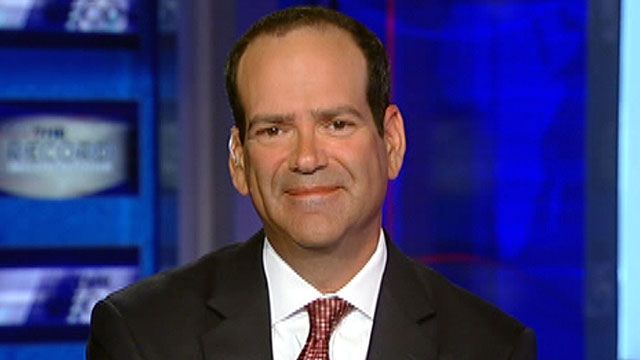
Ex-TARP Watchdog: 'We hit huge resistance from Day 1'

Details

  • Description

    Former inspector general for TARP details why failsafe for financial institutions has been abused and the opposition he faced in new book, 'Bailout'

  • Duration 7:33
  • Date

Clips

Also in this playlist...

Can't-Miss Interviews

Auto-advance: ON

Auto-advance

Transcript

This transcript is automatically generated

And there's no doubt about it our economy is on shaky ground at best and in October 2008 the federal government authorized tar.

It was supposed to stabilize our collapsing financial system providing critical help to businesses banks and homeowners.

But four years later taxpayers are still -- More than a hundred million dollars so is there any way out of this mess.

New Borowski is a former special inspector general for TARP and the author of the new book bailout he joins us.

Yeah I read your book and I was hoping you're gonna -- the inspector general system -- -- gonna protect us.

And that we shouldn't worry so much said help is on the way I read your book it looks like you came to Washington and -- scandalized.

By what you saw is that a good start.

Gag -- I was I was pretty shocked when I got down -- DC after eight years is federal prosecutor in Manhattan.

To see just how the degree of control a handful Wall Street banks and financial positions had over our economy and over our institutions.

And getting involved in the inspector general community.

And seeing that they're -- a lot like many other government agencies that that the priorities.

Of budget and appearances.

Really often times over the job of protecting the taxpayer which was of course my job.

When I read your book and I had realized it but did the inspector general office was created you're the first one to hold it -- the creation of -- And I act and just so struck by the fact that it seemed like every place you went isn't running your head into the -- That no one want to seem to cooperate that -- basically thinking was.

You know hey buddy don't know the way of Washington you know -- it almost seemed like the fix was in on the other side of him.

-- they threw up roadblocks everywhere we would every every time we turned around.

It took us three days just to get garbage cans and our offices.

They do not exactly roll out the red carpet and -- that was because of what our job was which was to shine a light and bring transparency.

In a lot of areas that that frankly the government and Wall Street wanted to keep dark.

-- basic concepts like where what happens the TARP money you know we just hit a huge huge resistance from day one.

I was and is considered that the discussion of the bank bailout in your book.

Is when you want to find out what the banks were doing with the money with the banks actually lending the money -- doing something else.

It's -- nobody want to get on the same page review and find out.

Now I mean all we -- -- -- sort of these these repetitions of these arguments are made by the banks of themselves that it couldn't be done it wasn't possible.

And as I push this casino I consulted some accountant -- some economists.

And it we've demonstrated that it could be done the push back was amazing I was I was told that I was stupid I was told that if I push this -- bring down the banking system.

I mean eventually I was confronted by secretary Geithner and then.

Expletive laced tirade when I suggested that not doing this -- not being transparent the American people was gonna harm the reputation of the government.

And put a big black mark on the legacy of him and and the president.

It was it was relentless the type of opposition that we -- At the end of the book you write you -- to the effects it's my own anger that compelled me to write this book.

Do you now feel having completed your Iran you're federal prosecutors -- noted for years and have a -- for a long history of being an aggressive prosecutor.

Do you now feel that we do walk -- from Washington thinking this is basically hopeless and this is a mass.

Or is there any light at the end of the tunnel in terms of figure out how to sort -- way out of the economy how to monitor where this money is going and getting paid back.

-- I thought it was hopeless I wouldn't of bothered to write the book.

But he -- -- a grim situation you know we we have a country right now on a regulatory system that does not operate to protect the American people.

I I was told point blank one time when I was down in Washington.

That because of my -- I had a harsh -- on Wall Street and on the government's that abiding change that was gonna do real harm to myself and my family and my ability to work again in the future.

But that if I changed my town was a little bit more upbeat you -- great things -- -- -- -- a judge -- or maybe a pot of gold at the end of the Wall Street Greenbelt.

And that's the same approach that's based by every inspector general and every regulator in Washington -- go along to get along.

I'm and we need to rethink our regulatory process so we can incentivize regulators do their jobs not protect the banks are or their own behind.

Have the Bankston game in the rules.

I mean since the beginning since there were rules banks have been taming the rules and part of the problem is.

Is that what we bailed them out we solidify this perception.

That they don't operate by the normal rules of capitalism that they're too big to fail and if they get in trouble or if they break the rules.

They're not gonna be held to the same standard.

Because of the -- that if we do hold them accountable if -- indict them or something like that we risk bringing them down and within the entire financial system.

And they know that and the regulators know that and that's why you see scandal after scandal after scandal.

I any heroes in this -- my name is certain what is it you were down hair washing its you know this person.

Really is doing something in this -- presumably knows what he's doing in his prison has the right motive.

You know I there there were some people who I was pretty impressed with I worked closely with Elizabeth Warren.

Who is the have a congressional oversight panel.

-- and I was really impressed with her ferocity in.

You know even when she was up for the job of the consumer protection bureau I thought she.

You know she went after and and really -- rated secretary Geithner at a hearing once at a time would have been easy for her to pull her punches.

So I I I really admired her and thought that she really put.

Her job above her own personal interest and -- is -- someone who impressed me.

At one point in the book you write -- the criminal justice system of which and I might notice that Marty noted -- -- along we -- federal prosecutor for a long time.

The criminal justice system has proven itself -- -- To address the deep fundamental problems at the heart of the financial crisis.

And I ask you about that and also -- and took the news tonight that DOJ has decided and the SEC.

That there will be no prosecution Goldman Sachs in connection with the financial.

-- -- -- -- -- -- Yeah I wish I could say I was shocked by this but I have to tell you I'm not -- part of my job at -- -- was we built a law enforcement agency.

That investigated and prosecuted those who tried to steal from the TARP program.

And I you -- almost a hundred people so far been criminally charged we have some great success.

The part of it is I had to deal a Department of Justice to get my case is charged.

And I consistently solid to mid eighty and a lack the sophistication.

Their rigs really they were gun shy and they're afraid to bring some of the tough cases.

There was remarkably frustrating -- -- some of the events and in the in the book and I think this this latest news on Goldman.

It's -- it's just a stark reminder that here we are.

And there hasn't been a single major case.

Against the financial executives -- an institution.

That that helped lead into this financial crisis.

And this he reaffirms that message that they're playing by different set of rules.

I isn't that the laws aren't there to prosecute them is it that they haven't done anything wrong and the prosecutors are not sophisticated.

Or nobody cares.

-- I think it might be a combination of all of those things and it is a lot of people they care.

But you know the combination -- we saw huge diversion of some of law enforcement resources away from white collar crime.

Over to counter terrorism understandably after 9/11.

And they're just -- an experience gap when it comes to complicated accounting frauds.

And you know I bang my head against the wall a number of times trying to get our case is charged.

I can't seem surprised -- And of course you IC I read all -- -- in the in the book bailouts are great book it's your eye opener but us a little shocking Neil thank you.