This transcript is automatically generated
Hunting.
Capturing.
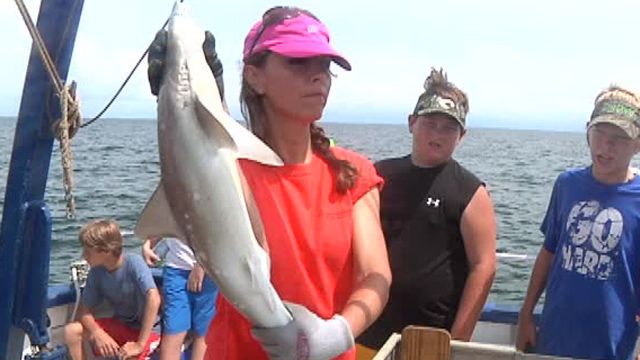
And holding the ocean's top predator with your bare hands and this isn't your typical summer camps for kids.
It's pretty intense and -- -- flopping around.
And there's does that fear that you might -- This real life short week for kids.
It's hosted by the -- Coast research laboratory in ocean springs Mississippi gives him a person close encounters with these prehistoric -- yeah.
It's in the name of science.
So it's not this particular cannot marries the idea of a fun at camp experience with active research that's going on at our facility.
So our students are actually getting to participate in an ongoing restart the job.
On board -- chase -- research vessels campers yet to pick out of this short break.
-- airlines.
And then -- fishing holes while they wait for sharks to bind women were no.
I have -- I'm wondering around.
When the sharks are coming in that's when the research begins.
After naming its gender and species they measure how big their -- she is how much you ways and then they -- Sitting here click on.
He got tagging allows researchers to track changes and shark populations over time by comparing data 123 let's get.
After the -- -- said.
Kids carefully grab on and toss their -- back into the water bill like.
You can conquer the world.
'cause like Carolyn the biggest creditor and the C.
Catching sharks is a dangerous thing for anyone so to make sure that these kids don't -- the giant -- -- that you see on TV shows.
These -- will typically stay in the more shallow waters where the sharks are usually no bigger than two or four feet long.
It doesn't really have to be a -- enormous shark to be a very -- sharks sharks are just cool he -- campers are trained how to safely handle a shark.
There's always at least poor veteran sharks wranglers on board to help out with each get.
In ocean springs Mississippi I'm here attending.
Foxnews.com.