You're watching...

Immigration-status check: Do cops face legal minefield?

Details

  • Description

    Judge paves way for Arizona provision to move forward

  • Duration 4:31
  • Date

Clips

Also in this playlist...

Latest News

Auto-advance: ON

Auto-advance

Transcript

This transcript is automatically generated

Welcome back a federal judge upholding Arizona's controversial show me your papers law this week some immigrants in the -- -- the law makes them afraid to be subjected to racial profiling must.

Just because you know.

People don't see families being separated does it mean signage that is the biggest shot of still it is indeed there graduating from high school in -- -- -- -- -- -- -- -- -- -- -- -- -- -- -- -- Why because again at least gave to me candidates that.

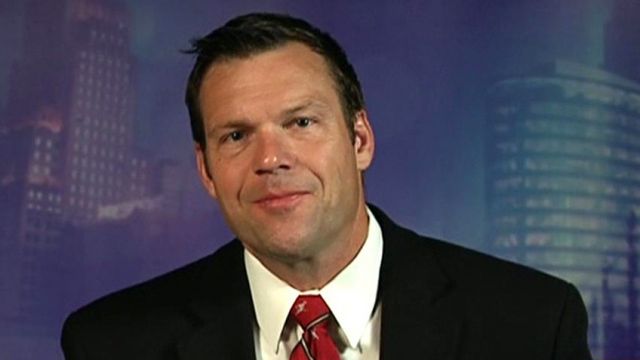
Critics also say enforcing all create more legal hurdles for police officers but our next guest disagrees he's the co author of Arizona's immigration law can't secretary of state.

-- back Chris nice to see this morning.

My pleasure.

So you know that you know the criticisms now that most of this law has been struck down of the controversial portion of course is being upheld.

That racial profiling will unfold as a result of this what do you say to that.

Well just to clarify one part only three provisions were struck down of the law has about ten provisions and -- -- only.

Only -- part of the law went to the Supreme Court but but your question about racial profiling.

There's a common misconception out there that this law creates some kind of new procedure.

All that this portion of the law does is make mandatory what was once discretionary it just says.

Where previously police officers had the discretion to decide whether they want to pick up the phone in their in their patrol car and call -- -- to do a status check -- particular person.

Now they know it's mandatory if they have reasonable suspicion.

And so to give you an idea how much this has already been going on every year -- been over a million of the status checks by federal state and local law enforcement officers.

And that's about 2700 -- -- day on average so if there were going to be racial profiling it would have already been happening for the past fifteen years but it hasn't been happening so.

That's why this is I think a very false and hollow argument.

Here is a little bit of information about how 1070 actually protects immigrants as it says officers cannot engage in racial profiling to determine.

Who they stop and ask for papers.

A person is to -- to have lawful status if they present a valid Arizona driver's license or similar ID vs civil rights cannot be violated.

Those are the provisions in this -- you know what the left says in some predicted that this.

Is already happening and they're saying that there's no way to really check this what are you say that.

Well a couple of things as you noted the law the Arizona law expressly prohibits racial profiling so if a police officer were engaging in racial profiling he'd be breaking the Arizona law.

And I think some of these critics.

They're just grasping at straws looking for some argument but really the argument they're making shows.

They don't trust the police officers and they don't believe that police officers can engage in their law enforcement activities without racially profiling and and I think that's a real.

Kind of a horrible argument to make a disservice to our our men and women in -- What he brought the police officers because the question has arisen now this portion of the law exists this provision.

Are they stepping into some sort of legal minefield -- they wonder how they can actually deal with people they have to pull over.

If they sense that that person is doing something illegal that have to worry about who they can call and check to make sure.

They can actually arrest this person.

Well it's a very easy question as to who making calls since the mid ninety's the federal government has set up what's called the law enforcement support center it's based -- -- in Vermont in any officer anywhere in America can pick up the phone and call and get an immediate answer or very quick answer.

On whether a particular person is legally in the country were illegally in the country.

And the courts have already sort of drawn of course through this minefield if you will the -- -- -- -- of the factors an officer can rely on if he's developing reasonable suspicion that a person's illegally in the country so things like.

The person has no identification with them whatsoever maybe he's traveling with the companion who admits that he's an illegal alien.

Maybe he's acting -- -- when the officer asked some questions those are things the courts have already acknowledged yes police officers can rely on these things.

So Chris just be clear you do not think that these officers are entering the legal minefield that -- fact they have -- standards and they can navigate this pretty easily right.

It exactly it's not I guess the wish it would but -- it's not a mightily to the courts have already.

Charted the roots of that they should take when they when they try to determine if someone is unlawfully present in the United States and great information this morning Chris we appreciate you joining us fiscal back of course is the co author the -- -- Arizona immigration law.

Which is currently facing this controversies we discuss it continually -- on FOX & Friends Chris thanks so much.

My -- that you keep.