This transcript is automatically generated
But it's not about schools right now and joining us -- -- is Bridget resolved until and I wouldn't -- -- -- -- -- She's from Nature Conservancy youth programs director.
Tell us personal what Nature Conservancy yes -- -- concerns is the world's largest conservation organization in the wild so we work to protect nature.
We protected over a 117 million acres of land over the past fifty years so our job is really protecting nature for people.
-- what are you doing to get involved with with schoolchildren these days I understand that you've got you've got a program it's called -- tell me what that's all about.
Apparently from -- leaders and environmental action for the future and it's really a partnership between -- -- -- high schools across the country to empower the next generation of green meters when you say environmental high schools what exactly does that mean.
These schools that are literally turning.
Traditional education inside out literally so there taking.
Education that is traditionally.
In the for a while the classroom and taking it outside so for instance one of our partner schools right here in New York -- the New York Harbor school which is training.
Students as young as fifteen years old have become certified in scuba diving.
And then there are literally take scuba diving into the Hudson River to restore oyster populations to.
To the river and natural system can you just clarify something for me because -- -- a lawyer.
-- -- -- -- -- -- -- -- -- -- -- -- -- -- -- -- -- -- -- -- -- -- -- -- -- -- -- -- -- -- -- -- -- -- -- -- -- -- -- -- -- -- -- -- -- -- -- -- -- -- -- -- -- -- -- -- It really -- fast and it it it does kind of clean itself up yeah and there has been a huge restoration effort in the Hudson over the past twenty years and one of the things that these schoolchildren are doing is -- oysters in the Hudson is -- natural filter -- So there actually working to.
Use the natural ecosystem to continue to and -- filter the water becomes cleaner but more New York are so essentially you provide you guys sort of provide the guidelines the curriculum for these schools to follow give -- -- little example -- -- got a child and it's in gonna go to high -- charters school and immediately charter schools retirement of charter and -- okay.
So we have a child it's gonna be going to one of these schools what in what will they be what would they be same -- their curriculum entail.
That -- -- well and tell anything from marine biology to urban ecology to sustainable agriculture.
Other cousins -- really didn't designed around environmental leadership -- -- the Nature Conservancy does actually -- that curriculum what we do as we partner with those schools.
And we supplement what kids are learning in the classroom weren't paid job that Nature -- -- in the summer.
That -- had any they're pretty highly competitive -- -- -- essentially absolutely there's only about a hundred students in the nation can accept -- -- these internships.
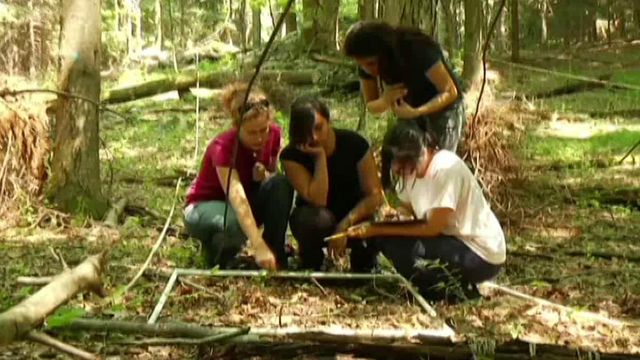
But what we're finding is that when you can combined classroom learning around and -- science -- the real world applications in the field that.
Young people are going down these career fields at a rate that is five times higher than others do we know that when President Obama spoke a few weeks ago he talked about what he would do when he was at the convention.
Talking about what he would do hiring more teachers math and science teachers.
Is this sort of -- that that that flows into what you're looking for here getting kids more involved absolutely turning heads on to these carrier -- the big focus.
Especially in the sciences and -- -- field.
I -- because these jobs are projected to grow demand for these jobs and what would health stems science technology engineering -- -- are are.
-- are growing at a rate of 30%.
-- -- but in the US were -- -- educating our young people on the field why is that.
-- combination of things one of them is there's a lack of scientific rigor in the education system as we know it today.
I'm the other is that in the US culturally.
-- -- aren't like the coolest careers for kids to go into is that we're really focusing on schools that are innovating around that and really focusing on science.
Particularly the environmental sciences because within stem fields the environmental careers are growing at a rate that is sometimes three times.
Faster -- an -- when you look at regular.
Public schools for instance like the one I want to Langley high school right outside of Washington DC Northern Virginia.
But it is like that not -- that's actually very it's considered a very good school who.
What are what are we lacking there what what are what are -- -- the typical school lacking when it comes to math.
And of sciences.
You know there are a lot of traditional schools that are doing a great job with math and science not what we're focused on has really kind of the environmental.
Peace within those -- fields and that's why I think a lot of traditional schools are lacking there's no mandate -- -- education.
Nationwide do you did you get it feeling that there are some some push back from parents to think you know.
You know this environmental stuff but environmental wackos pushing their you know their their ideas on our kids -- -- Haven't generally in out there are certain stereotype about what it means being -- -- and a leader you immediately think that you're gonna go out and I don't want to treat.
-- Laura's gonna show to every dinner that you're having right I didn't say.
The matter is that -- peripherals that are growing in their huge economic opportunity for students that go that go into the feels particularly at around sciences and give you ideas of some careers that that kids can and can't think about sure so and -- engineering is a huge one that's growing at.
Three times higher than all other engineering fields.
So.
And I'm on -- -- everything from sustainable transportation.
To thinking about how to design buildings of tomorrow's that the more energy efficient.
Climate science is also -- charging field.
And things like urban planners like thinking how to sustainably designed cities for the day.
How -- -- a footprint and that.
And more and more able to create sustainable futures for -- -- asked if you're a student and you're watching this right now he should be at school what's wrong with -- -- -- -- -- but if let's say you know that we do have kids who are suited to this and they're interested in this what did what they do what if they're -- a regular school -- like I you know heightened awareness was to get out of this was to get involved to.
Yeah actually there are a lot of specialized schools popping up across the country that are increasingly focus on science and math and using outdoor learning environments for the context.
I'm so there's about.
At least a 130 of these schools popping up across the country some -- and parents that -- -- -- that's.
Take a look at some of these specialized schools and think about.
You know transferring in -- are attending them and then if you traditional school I would advise folks to talk to -- trust -- science and math teacher because there's all kinds of way.
To become.
Turned on and -- in -- science and field and not necessarily have to go and when my high school to do that.
So so just talk -- -- educators and figure out what kind of career pops out there what kind of education is required to reach those.
Those provide to the future for more information you can log on to nature dot -- you have many information you would -- -- -- -- Twitter -- -- stuff that you have a handle on Twitter yeah well we do have a handle on what about even -- and all those things by going to visit our website an -- about a -- -- for enter information on the elite program at the age of our last week.
LEA half project breslaw thanks very much for joining us today thanks so much appreciate -- I -- to take a quick break we'll be right.