You're watching...

Plant workers lose jobs to federal inmates

Details

  • Description

    Elizabeth Prann reports from Atlanta

  • Duration 2:01
  • Date

Clips

Also in this playlist...

Editor's Picks

Auto-advance: ON

Auto-advance

Transcript

This transcript is automatically generated

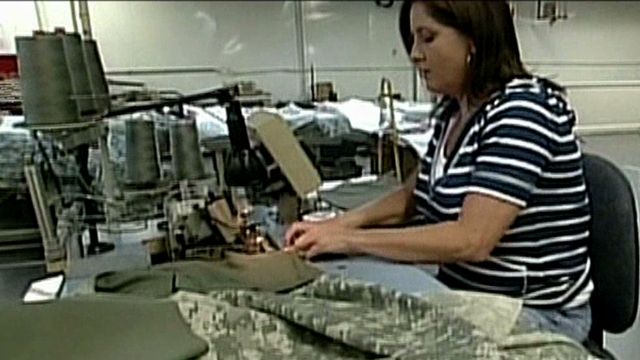
Well as we have been bringing you the news hundreds of workers -- used to stitch together uniform for our military now find themselves out of a job.

The work is still there are only now is being done by inmates in federal prison was that -- is joining us now -- more Elizabeth.

Hi -- a little small manufacturers are trying to stay afloat in a tough economy and now they have to compete.

With cheap prison labor and that's translating did job loss in the private sector to companies in particular.

American Apparel an American power source both manufacture army uniforms.

They have laid off hundreds of workers between the two companies just this year alone.

The uniforms -- states are now being made by federal inmates in a role.

In the Federal Prison Industries which is a government sponsored program that gives them Biden -- the first right of refusal to these types of contracts.

It -- -- between 23 cents and a dollar an hour.

The way the lie is Federal Prison Industries its first did -- contracts.

To a certain percentage before they have to compete against us.

Now look this company -- is five dollars less a uniform but says because the FBI is -- FPI is guaranteed a certain percentage of the market he can't sustain his workforce with a lagging demand and that's the layoffs.

His story as well the number of others across the country has now caught the attention.

-- from Washington lawmakers who are pushing legislation to stop it.

That being said we did get a statement from the FPI and it reads it is important to note that the FBI -- is only 7%.

Of the textile garment.

Purchased ID LA.

The other 93%.

Are produced by other entities FBI percentage has remained fairly consistent over the past decade.

With slight declines now the locks as remain unchanged since the 1930s but because we're facing this very high unemployment.

We're hearing from these small manufacturers you're saying.

That this is unjust competition.

The month aren't to thank you very much.