You're watching...
The power of literature in modern day
Details
-
Description
DT Max discusses how author David Foster Wallace changed the way we perceive literature today
- Duration 12:29
- Date Sep 21, 2012
You're watching...
DT Max discusses how author David Foster Wallace changed the way we perceive literature today
Also in this playlist...
Auto-advance: ON
Auto-advanceThis transcript is automatically generated
Welcome back to the foxhole I'm still James Rosen were still in Washington and we are still sequestered in facilities other than our usual studio location.
We appreciate your patience with us.
And we're glad -- rejoined us and we also hope that -- chat with us -- live and send us your questions you can do that by logging -- on -- live -- just -- me on your screen just use your Twitter or FaceBook account to -- -- and send us your questions.
Now we're gonna take a look at some highbrow stuff.
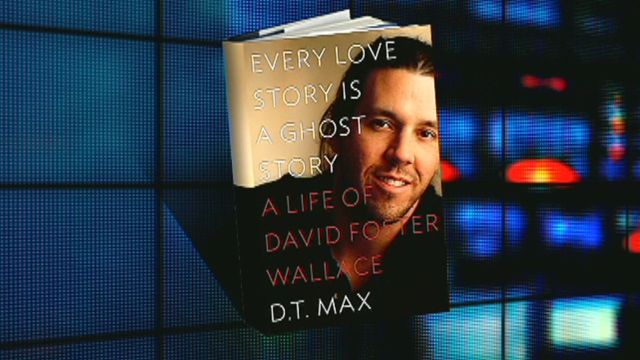
We're gonna look at a book called every race -- story is a ghost story every love story is a ghost story.
It is a biography of the late American novelist.
David Foster Wallace and we are joined by the author of this brand new book.
Staff writer for The New Yorker DT -- DT joins us from San Francisco thanks so much for visiting the fox hole DT.
And I wonder if we can ask you to begin simply by telling us who was David Foster Wallace and why should people care about.
-- you know David was a writer contemporary of mine born in nineteen.
62.
Who.
Really wrote the most important novel of of of our day you're novel called infinite -- in nineteen anything -- ordinary piece of writing.
And the other thing I'm forcing you need to know about David that he committed suicide in 2008 almost.
Was exactly four years ago.
But he changed the course American literature.
How many novels did he publish.
Well he -- he wrote two novels to collections of stories and some very enjoyable -- but the book is really known for is this book.
Infinite jest which you published in 1996 in which I really think you know.
When you look at all the fiction being published remains absolutely that the top novel.
Of our day -- a book aptly -- -- Now what made it's so unique and so special.
You know I mean it can get a little bit complicated but basically David David with a guy who understood that.
That what's interesting about -- -- it were sort of saturated with media saturated with pleasure.
You know we're saturated with all the things that that you can have -- you've always wanted in the novels really an attempt sort of -- what's the life that we have what -- internal.
Who are we inside it all right outside players -- -- this way.
We're gonna read a little passage from infinite jest as you point out it was published in 1996.
By David Foster Wallace and he wrote at that time.
It'll start in the ER at the intake desk or in the green tiled room after the room with a human face of digital machines.
Or given this special -- supplied ambulance.
Maybe on the ride itself some blue John -- -- to an antiseptic blow with his name -- -- -- on his white -- breast pocket -- -- quality desks at Penn.
Wanting Gurney side QNA ideology in diagnosis buster credit method ordered in point by point.
There are by the -- we.
It will be someone blue collar and unlicensed though.
Inevitably nurse's aide with a quick quick bit nails hospital security guy a tired Cuban orderly who addresses me as -- Who will looking down in the middle of some kind of bustle task catch what he sees as my -- and ask so -- Then man what's your story.
Is this representative of his writing.
You know if it's some of it I mean they'll only have to -- about there is is that is the sort of beauty of those descriptions the the quick -- -- and that last line where you know is basically saying here is that this person the last person you expected to wanted to reach out you.
You know it's not just really -- about this is actually -- and guys being taken into psychiatric ward and it could be anyone anywhere.
In America.
And the -- that there are people who reach out you at the last at the last.
The last person you think is a person's going to change your life.
DT I recently read the memoir by Alexandra Styron called reading my father about her late -- father.
They -- novelist William Styron.
And who was one of the first celebrities to go public with his clinical depression and to write about it.
And who helped a lot of people by doing that and one of the key questions that Alexandra Styron returns to again and again in this book.
Is whether or not some despair at the writing desk if you will.
Eventually.
Brought on this depression.
Or whether in fact it was depression that was creating problems for him at the writing desk do you.
Do you go into that sort of dynamic with David Foster Wallace and if so what conclusion did you reach.
I did I mean a lot of you know one of the things about every love story the ghost story is that the hardest thing to find out about.
People ordinarily is you know is is is their mental health but.
But but after David -- his his father in particular was very brave and said that David suffered from a lifelong depression.
And that one of the reasons that he had in the -- committed suicide as you've got off of the anti depressant taken successfully for years and years.
And you know been unable to stabilize again.
And one of the things I learned in in in doing the research on the book was that really the major reason that that David Foster Wallace had to go off -- anti depressant.
It than just building couldn't write successfully on it anymore -- -- this amazing all called infinite jest in 1996 and and after that.
Four for ten years he's struggling create another novel called the pale king is ultimately published after his death but he never satisfied and so.
He's struggling and he's happy in his life.
But he's miserable in his writing and in the end he chooses the -- You mentioned his father.
David Foster Wallace grew up in Illinois and I wanna read a little bit from your book -- -- three describe.
I'm mr.
Walsh is.
His upbringing in his roots Wallace and his sister grew up alongside others like themselves and houses were learning was highly valued.
But mid western virtues of normality kindness and community also dominated showing off was discouraged friendliness important.
The -- tells was modest in size and looked out -- other modest sized houses.
You're always near your neighbors in kids in the neighborhood live much of their lives a friend remembers on their bikes in -- every other kid in that era it seemed was named David.
How I guess it's it's it's an axiom that everyone's upbringing is central to.
-- later work -- their choices in life but how would you describe that connection in his case.
You know I mean I I think I was just listening to it to your reading.
And -- -- it reminded me about about my own work on the biography is that David's life you know he was one year younger.
And I am and David -- bringing this this kind of Ernest midwestern life living his life on bicycles everyone called David you know actually I grew up in Manhattan in my life whether that difference so.
I think -- -- -- that passage in a -- troop call up the quality of growing up.
In the late sixties and early seventies and I mean David's case was absolutely central he.
Whenever he was distressed -- would go back to the midwest -- Foster Wallace found his strength.
In the midwest any sort of dissipated his energies on on either coast that the midwest was where he grew to be a writer in the midwest is where he went back to get to get -- The courage to to go along.
-- were David Foster Wallace's literary heroes.
But his biggest literary hero was certainly when he began writing Tomas -- pension offer author of -- -- rainbow.
And another -- was done below.
-- underworld.
But in a lot of ways -- so interesting about David and although there are his heroes he quickly surpasses them as a writer and finds his own really quite remarkable starting.
A lot of what you read on the web today that sort of blog a language a lot of it's owing to David that's the real thing is that David is vastly gone beyond being mean when reasonable pursuing grossing.
So -- to -- -- previous version of right -- he's really gone way beyond being an author he's really become a kind of cultural figure.
And when when you see that is sort of everybody from the age of twenty to 25 on the web rights so they can not exactly -- active.
-- I'm the author myself of a biography -- a machine to tell you took me seventeen years to research and write -- the only.
The only caveat I can add there is that it was always a part time gig.
But I'm familiar with the struggles associated with and so I ask you as a biographer.
What method logically was the hardest for you what in.
Either research cents or organizational sense what what was the hardest thing about -- in this book free.
Well I'm a -- I think -- you need to point out had a day job.
And I don't think so -- with this was all I did but.
Really the hardest thing about -- was either reporting you know in the land of grief -- -- -- only died when I started the original article was in the New York -- work.
He only died a few months before and even reported on the book all the work on the book was really done in the deep terrain of grief and his wife was -- -- and -- it was in grief.
You know his fans and not to compare us to hand but we we too were angry and so everything had to be done it in a way that's just totally different from ordinary.
Reporting you know where where -- -- has to be respected me.
David Foster Wallace when he died tore a hole in people's hearts and and that was the central reality of the reporting.
One biographer who wrote several books about other people -- -- her own autobiography.
Shoot the widow.
-- identified that is think the very first most urgent task that faces any biographer.
Because it's the widow who will inevitably control access to other people and documents and so forth and inevitably poses an obstacle to the biographer.
Was -- David Foster Wallace married.
When he died.
Yes yes he is married he was -- an absolutely wonderful visual artist named Karen green and you know I know that -- through the -- but I actually think that that's.
You know.
Being kind of the widow and and being respectful of the -- beef is probably a better way to.
The right to write about your faith.
Because virtually collaborate if you.
Did -- while they waited.
-- especially his sister Amy was it -- it was enormously helpful.
On the book and gave me her thoughts and and entered her you know many many of many of the family.
-- -- -- -- -- -- -- -- -- -- -- -- -- -- -- -- -- -- -- -- -- -- -- -- -- -- -- -- -- -- -- -- -- -- -- -- Then Illinois you're really -- -- had -- -- you know when you deal with something delicate and this isn't political reporting it's just different I mean I've done political reporting -- you you're just you have to respect -- David I think teaches us this in his -- -- -- One of the nice things about every -- -- ago stories that the act of writing the book in some ways would not unlike.
The active reading David I was learning always learning about David wasn't what he wanted for us now.
David's great great sort of movement the reason that he's so.
Looked after by by younger readers is not justice writing it's also.
That he had on the joke if you think -- the idea that he had a moral stance in the world and he's teaching us how to be more moral.
Beating so you can understand like James of the with -- weight on your shoulders you write a book you know you have you have to be you have to be as good as he wants you to be.
You know he he's present for you a minute and -- and about your own work but for me if if the subject of my biographies not present I'm not writing the right biography.
Tell me.
-- do it shouldn't shouldn't fans of David Foster -- expect any further posthumous releases of his writings.
I was gonna give her finish the thought of that when you write about view I mean you have you have to love the subject of your -- I feel is very strongly mean.
You on some level level I have always loved David as many things I've learned about him that surprised me in some animated where the nicest things -- and -- in every love story is a ghost story but down.
You know in the end I emerge from it was really more more feeling what a remarkable.
Man David Foster Wallace was in terms of what's coming next now and next month actually a collection of of Wallace's and collected nonfiction.
Is coming out I don't think you're gonna find another large and -- hole.
In a trunk anywhere at this point I mean you may find.
Scattered short stories but really David's reputation as a writer I think is pretty much going to be made or or or or lost on what we now have in our hands.
DT -- staff writer for The New Yorker and -- -- of the late David Foster Wallace author of every love story is a ghost story.
We thank you for joining us from San Francisco.