You're watching...

Iran hostage crisis: 33 years later

Details

  • Description

    Former hostage Don Cooke weighs in

  • Duration 7:30
  • Date

Clips

Also in this playlist...

Editor's Picks

Auto-advance: ON

Auto-advance

Transcript

This transcript is automatically generated

That's movie.

And -- -- clip from -- to dramatization of the rescue six diplomats during the Iran hostage crisis but some fifty other diplomats not so lucky that day.

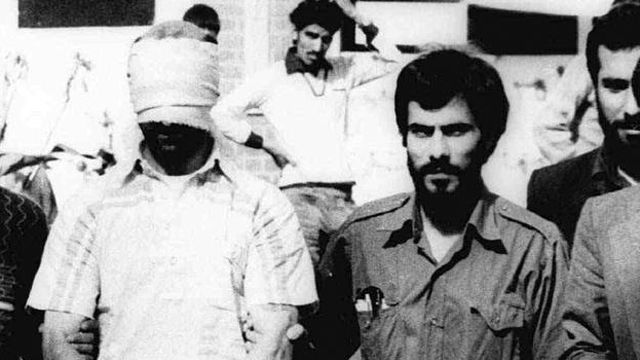
-- standoff that began 33 years ago to the day as ironic militants holding them captive -- more than fifty Americans 52 of them for more than a year.

Terror and fear.

Filling his 444.

Days.

And joining us now Don cook a former Iran hostage -- recently retired from the State Department as a senior policy advisor for Iran.

After more than three decades in foreign service and what a career Don thank you for your service in this country.

Thank you for having me -- you're very welcome.

You -- -- -- four years old that day.

Tell us about that's right I was the youngest -- live officers there of the foreign service officers there.

There were number the Marines and -- enlisted who were a little younger that I was.

And so what happened.

Well we were notified that there were going to be demonstrations that day and demonstrations were not uncommon in Iran.

But at this point our national police guards disappeared.

And it looked like it was going to be much more significant.

So I was in the end the back -- -- -- compound and a different building in the consulate the same building that those six people were who escaped with the Canadians in.

The -- Margo.

So we locked up the doors and watched as the demonstrators came then and had surrounded the main embassy building.

After several hours we were given the go ahead to try to leave through a backdoor.

One that open on the street where there were no demonstrators.

Now my colleagues made it out ahead of me and they actually got to safety but I was with a group of people that made it about two blocks away.

And we were turned back by an armed Iran -- Revolutionary Guards many actually stock.

-- three automatic rifle above our heads and fired off a couple around them and they took us back what -- the next 440 for days like.

-- combination of -- Real -- some boredom.

Punctuated by stark terror and while -- mean most of it was the boredom part.

The the stark -- part of is the part that you really remember do you think about it every day.

Not really have put it in the past to a large extent and I went on with my career in the foreign service and served in a number other.

Exciting places.

And so I -- call it occasionally but it's not something -- live with every day.

You know I was looking at some video out of Iran on Friday there were some big demonstrations in the streets again and burning of the American flag in celebration.

This event.

In -- me on behalf the country there celebrating the fact that this happened.

I'm curious your thoughts after working with the state department for so long what do you think of our relationship and where it stands with Iran today how different or how similar is and to where -- stood in 1979.

I think it's really misguided -- -- to celebrate this break the United States and Iran had a long history of friendship.

And it really has been a tragedy that we've then.

In these kinds of broken relations for the last 33 years.

Now I would say that at the time.

Of the hostage crisis.

The Carter administration was demonstrating.

A whole week foreign policy had an ambivalent foreign policy.

And it was really the election of Ronald Reagan.

Which led to our being released -- -- and finally realized that the American people and the American government was serious.

Now we -- today and we see that the Iranians are violating their commitments under the nuclear non proliferation treaty.

They have centrifuges.

Which are enriching uranium to a point you can only believe is going to lead to them building a nuclear weapon.

And at this point they see ambivalence in the US foreign policy.

And they don't see any particular reason to stop.

We have tightened the sanction -- based on what was done in congress and the administration.

And those are starting to bite but I wish we'd gone to sanctions these kinds of very punishing thank -- factions a bit earlier maybe we might see results by now.

Don I'm gonna take a quick commercial break but I'm gonna bring -- back after that break.

Because I'd like to ask your thoughts about what happened in being Ghazi because some have suggested that history is repeating itself 1979.

-- 2000 -- twelve.

And both ears we saw an ambassador murdered I'd like to get your thoughts and that could commercial break and we'll be right back.

Now John Cook a former Iran hostage she was 24 years old in 1979 net accounts -- officer.

When he -- it's taking captive by militants that.

Ran over that that embassy there Don -- -- -- also -- the year.

Where we had an ambassador killed murdered in Afghanistan now we have that also happening in 2012.

In -- Ghazi.

As you want says story in being -- unfold what goes through your mind what are your thoughts.

It was really very disappointing because one of the first things that I heard was that the security.

And -- Ghazi.

Was limited because -- -- of considerations.

For foreign policy we didn't want it -- -- like an armed camp.

We wanted to regular -- our relationship.

And these were the same sorts of things that I heard in Tehran when we were talking about why our security profile was so low key there.

And the reality is is that we should've learned a -- in most cases we have.

In 99% of our missions overseas security is provided by the host government and they provide good and solid adequate security.

In the 1% of cases where they can't then we have to provide the security on our own and we do that.

In Iraq in Afghanistan and from other places overseas.

And in those places where the government can't provide the security and we can't provide the security there's no reason to have a mission -- mission needs to close.

So that.

I think Leslie then it died when we see when you watch what's happening or what had happened in Cairo an -- embassy there -- recently in -- -- in our consulate.

And -- add them Friday that other embassy locations around the world around September 11.

How do you respond -- keep last is history repeating itself is ninety in this 1979.

All over again.

Well we song Cairo that after a day or two the Egyptian government absolutely stepped in.

And provided the kind of security that we needed so -- it's a slightly different case.

But in -- -- we see that the government there is just not capable of providing.

The security that we needed there.

And fell.

You have a tragedy which was in some -- avoidable but also goes beyond the death of these four very brave Americans.

It really is a foreign policy failure and so.

You need to tie -- the issue of adequate security for the compound for the larger issue of what our foreign policy is and -- are far foreign policy -- overseas.

And let's have that discussion with you in the future Don is a big discussion is when that.

We want to have it's great to have in the program thank you so much for sharing your thoughts or memories today and we look forward have you back.

Thank you for having.

--