You're watching...

Congressional leaders call initial talks 'constructive'

Details

  • Description

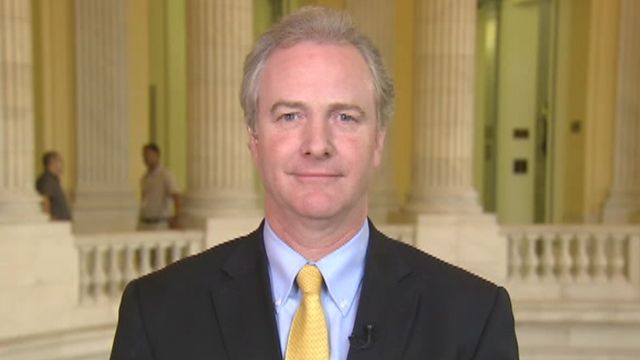
    Maryland Congressman Chris Van Hollen weighs in

  • Duration 6:47
  • Date

Clips

Also in this playlist...

Latest News

Auto-advance: ON

Auto-advance

Transcript

This transcript is automatically generated

Dallas that's a democratic congress Senate Budget Committee member very powerful Democrat Chris van Holland congress and good to have you.

We are great to be with -- optimistic a deal can be reached -- night.

Well I think a deal can be reached the sentiment was good they did have constructive talks at the White House today but as you indicate -- -- -- -- instructed you know that's I knew I was just getting into the fact that that was constructive in the sense that.

All parties understood the importance of trying to prevent us from going over the fiscal -- but I was gonna quickly add.

As you indicated in the lead and the devil's in the details in other words.

We've had those sentiments before and they have not produced a result so what if this is going to be some very tough.

Negotiating.

It is obviously better that the mood is constructive.

Than otherwise but at the end of the day very tough -- compromises are going to have to be hammered out.

Nancy Pelosi is said that not not to touch.

Entitlements I think she was talking generally about Medicare Medicaid.

Some security there's a letter circulating the -- revenue -- three or where senators Harkin and Rockefeller.

Of the same sentiment.

Do you agree with.

Well we have very different approaches -- on how we save money.

In Medicare for example.

If you save money the way we did -- Affordable Care Act.

By focusing on ways to reduce cost but not simply transfer rising health care cost.

On -- the backs of seniors.

That's the approach that we put forward that's the approach we support -- -- You're not in the -- -- -- that says.

Don't even look at these this letter that it certainly in the senate goes even further don't even look at them.

Well I haven't seen the letter -- but those same senators voted for the Affordable Care Act where they agreed that.

We needed to change them the incentives and health care system I think that that is that might just be -- negotiating to.

When none of us know what I'm saying there I think what what what we've said is that we will look at ways to bring down health care cost.

Overall.

Moving away from the strict fee for service system in Medicare we've already begun -- -- that we can build on that.

But we will not take a system like the voucher systems that have been proposed that simply transfer.

The risks and cost.

Of health care onto the backs of seniors on Medicare which is what a lot of these.

Somewhat it is Republican proposals would do we will not do that so I know I don't I Nazis and negotiate point -- center.

I think those senators have also supported the idea of trying to.

Change some the incentives and Medicare focus more on the quality of care and quantity of care what they're saying is we so that we should not simply off load.

The cost.

Of rising health care onto the backs of of seniors.

-- -- to talk about that also load load on the state so we can argue about that for a while but because I do wanna get your take on what chains among Democrats after the election.

To double the revenue -- by that I mean we were looking last night at 800 billion.

In tax increases as part of the deal now the president and and others want one point six -- talk that you won't accept anything less.

Then a a rate hike but for wealthier taxpayers.

Do you concurrent with the rate hike idea that anything short of that just doesn't cut it whether you're from closing their deductions loopholes that sort of.

Where you raised two issues that they are related one is the amount of revenue you raise the second is how you raise with respect to the amount of revenue.

What the president proposed.

More than a year ago now was a four trillion dollar plan that included.

One point six trillion dollars in revenue a lot of that revenue about a trillion dollars would come from having the the top rate on high income murders go back to where was -- Clinton -- levels.

The other was -- president approach the part of that proposal the president had to reduce the value of deductions.

For high income murders one of these tax reform proposals.

That achieved about one point six trillion dollars in revenue which I should say is the last.

Than the total amount of revenue that Simpson Bowles have in their deficit reduction.

You wanna tell -- if you had your druthers you'd do involves not only your -- -- but also limit deductions of the well.

Well I think the important thing is to get -- a balanced deficit reduction plan so.

And the key to that is to have the revenue combined with the cuts and again we did a trillion dollars in cuts are -- we should look for additional.

I cuts -- reforms -- we may have differences -- how we sent a letter responded that they're saying it's disproportionately on the revenue side.

That'd -- well what do you make of them.

Why here's the thing a week we did a trillion dollars in cuts that was a 100%.

Cuts.

What I said as we should except essential framework of the Simpson Bowles in terms of the total amount of revenue they have in their deficit reduction numbers.

Plus the cuts I think that.

That is a bipartisan product.

It's the result a bipartisan negotiations.

I think our aim should be to have a plan and has that -- much come out of total revenue.

And those spending cuts but I should be clear that Simpson Bowles numbers.

Their starting point assumes the revenue you would get from raising the -- -- the rates and higher in front right I propose to do it that way but that's revenue and I just want a date comes I just wanna be players are saying that's the balance so -- two issues one is having a balanced plan that has enough revenue I get us to.

Four trillion dollars and -- -- reduction.

It's hard to do that with just a trillion dollars and.

I understand we're going to get to the portrait and we could sort of the details on the other components are there but it seems sounds to me like.

Central to the democratic.

Negotiations.

Here will be.

That you look at a rate hike -- the -- you're in other words do you -- -- the the rates -- -- the rich go back to Clinton Era levels and limit their -- It's well in terms of that the the rates that it's a question of math Neil what -- why I think the president has kind of -- is such a speaker Boehner is.

Look -- that the -- the mood.

Is good but let's see your plan because their president has had his plan on the table I mean there's not been a secret.

What we're saying the speaker Boehner is here here's what we think we need in revenue as part of a balanced plan -- and we think you get thereby raising the rates the Clinton Era levels.

We think that's what the math shows you've you've got to do.

If you've got an alternative way you know what we'll look at it I mean we're not are shutting the door -- but.

But we think the way to do it is to have the rate return for high income earners to Clinton Era okay -- levels congressman thank you very much -- a safe weekend.

Thank you you -- have happy Thanksgiving you as well well as all the.