You're watching...

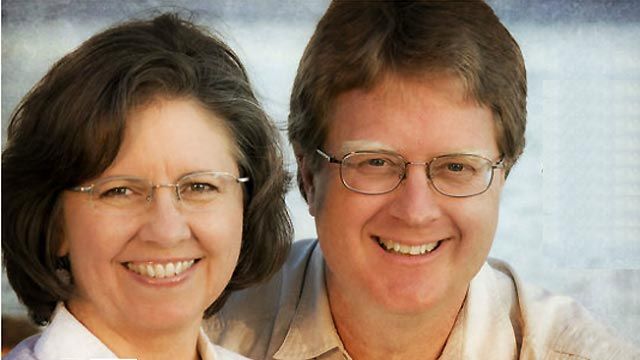
Missionary family brave tsunami to help community

Details

  • Description

    Nystrom family’s mission after destruction in Papua New Guinea

  • Duration 6:36
  • Date

Clips

Also in this playlist...

Editor's Picks

Auto-advance: ON

Auto-advance

Transcript

This transcript is automatically generated

And welcome back to spirited debate while they traveled to Papua New Guinea as missionaries to translate the Bible into the native language.

But us -- not only change their course they became part of the village and the country's.

Long road to recovery John and -- nice -- chronicled their harrowing experiences in their book sleeping with coconuts.

And they join me now from Tampa Florida.

With more of us is John -- welcome.

But he Lauren thank you thank you for having me today.

This is an interesting title because I keep saying sleeping with -- that's -- sleeping coconuts.

And first thought we got to explain.

What sleeping coconuts actually means and it's very disturbing when you actually understand what it actually means.

The right.

Well we worked on the north coast of Papua new beginning to -- in the Bible into the are applying which along with some.

Native speakers of the -- -- language in 1998.

The tsunami completely wiped out their village killed a third of the people who speak that language.

In the end immediate aftermath of -- tsunami my wife Bonnie and I were trying to find out what had happened.

We were finally able to talk to a pilot who had flown over the village.

And I was asking him questions about what was there what wasn't there and he said John stop asking questions there's nothing there -- sleeping coconuts.

And by that he meant he was using a hybrid pigeon and English phrase that meant nothing but coconut trees lying flat on the ground.

While the -- -- -- show how bad it was one of the things that.

I read is that the one of them saying -- at the schools aren't open because the children are all dead.

This one was very very.

Devastating.

Yes it was it you if you can imagine a third of the people that you know and love.

Dying in one night that's how devastating it was to that community.

How did you help them rebuild how to did start to rebuild.

And what was your role.

Well in the immediate aftermath.

We and our organization flew in.

Relief supplies and flew out people who.

Were injured so they could get to a bigger hospital farther away from their home area.

But as soon after this tsunami we started rebuilding when they rebuilt in land.

And we started helping them with literacy and -- or water project.

They -- literacy because people wanted to have a chance to write their stories of what they experienced in the tsunami people that they saw -- their own experiences.

One of those was our friend pastor Peter -- Kiki who wrote his own experience of this that night of the tsunami.

His own family trying to survive trying to find his children in the pitch black darkness of that flood.

Trying to help other people survive and his story became the first chapter of our book.

What things that's above us tonight because he -- -- -- -- in the other area everyone knew about because it was like a 10200000.

People gone.

This -- in a New -- really didn't get that much press as I remember it ends with one of the problems is.

In the area that it's in but.

How many people actually did lose their lives.

Well the -- -- had a population of about 2400.

People who speak that language 843.

Died that night.

And in the area another 2000 people or so died in other language communities in the area there.

So when you go to translate Bible what make people dumb it really know it is with cliff actually sends missionaries to an area to learn a language first.

And then translate.

The Bible into that language is that how -- That's exactly what we were doing when we were there and just -- sent us there we were -- the Bible into the are up language along with.

Native speakers of the are up language but after the tsunami.

We started thinking about the other languages that -- in the -- in the neighborhood there could we find a way to help them.

Traditionally we've always done Bible translation one language at a time.

But after the tsunami we started wondering if there was something we can do to help those other people in the area.

When that many people die in your neighborhood as a way of challenging your assumptions.

So what we did was we expanded the Bible translation project -- -- to include eleven languages instead of just one.

And along the way we discovered that having pastors from multiple languages multiple denominations.

Working together translating the same scripture at the same place at the same time -- a great way to do Bible translation and and more effective than what we were doing before.

But if it hadn't been for this and I mean we never would have thought of working in that way.

How did you help then.

Then repair that after this is not a tsunami mean you probably couldn't do the translation right away after some -- -- how did you actually help them.

Recover from the tsunami itself.

Well we had raised some funds -- -- -- for the for them for their aftermath of the tsunami it.

And when the other relief organizations have left we knew we were going to be there for years to come.

So we asked them what do you want done with this money that we had raised and they said we want two things.

We want clean water and we want literacy.

And so we were planning on doing literacy anyway so we built a literacy building.

That had a very big growth that we can catch a lot of rain water on and that was that building is still serving people today.

That's our Bible translation center it's our literacy center and people are getting clean water from that building now.

So and the future now where you go from here because obviously you've written the book but there's more to be done.

Yes there is there's still 300 more languages in Papua New Guinea that have no scripture at all.

We're still working with these eleven languages were publishing -- enact some this year.

In nine of those languages and we're gonna continue to work with them.

But -- this project isn't just -- these eleven languages it's also about training these local.

Translators local pastors who are -- translate -- -- went to their own languages.

To be able to help other people in other languages in the future and in fact they're already doing that.

So we're multiplying the number of people who are doing Bible translation in Papua New Guinea.

And so that's the future of Bible translation in Papua New -- really are our primary strategy in the future is going to be working in multiple languages like this.

Well wonderful on the book is called sleeping coconuts.

John and I -- thank you so much for being here.

Is there a website that people can go to to.

Find out more about home with the Bible translators and as well as the book.

Yes don't go to sleeping coconuts dot com that's the best place to find a -- -- to find the book there's up.

A one minute video trailer about the book there and -- cliff you can always find out more with -- dot org.

All right thank you very much Jon Lester thanks you very much for being here and that was pleasure talking with him.

Thank you for having me it's -- my pleasure thanks.