You're watching...
Tax calculations to avoid 'fiscal cliff'
Details
-
Description
Raise rates or eliminate deductions?
- Duration 3:38
- Date Nov 21, 2012
You're watching...
Raise rates or eliminate deductions?
Also in this playlist...
Auto-advance: ON
Auto-advanceThis transcript is automatically generated
Hey you know -- certain tax deduction stop America from falling off the fiscal cliff Republicans say it's worth a shot the President Obama seems.
Reluctant.
It's very difficult to see how you make up.
That trillion dollars if we're serious about deficit reduction just by closing loopholes and deductions -- the Matt tends not to work.
When it comes to taxes.
Republicans and Democrats agree that the current federal tax code is broken.
And both sides recognize the importance of closing egregious.
Tax loopholes that pick winners and losers.
Tax reform that eliminates wasteful tax preferences.
To generate revenue.
Will help bring fairness and efficiency to our tax system.
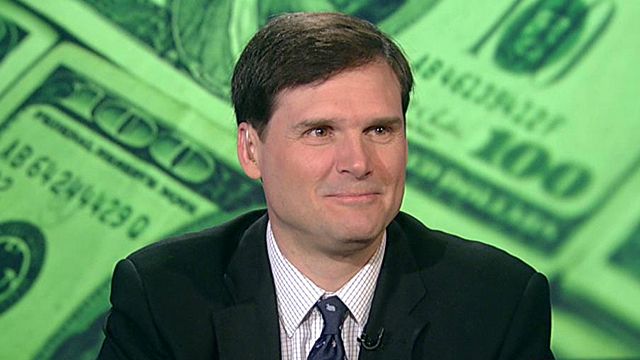
Try to who's got the right approach James Freeman of the wall street journal editorial board joins us like right now James are coming up to I like deadlines this fiscal -- it makes us come up with the businesses remind yeah so let's file let's find a cure the president wants to raise upper tax rates from 35 to 39%.
And Republicans essentially say hey why don't we just cap deductions what's better.
Right well and poorly if you -- does simplify the tax code get rid of some deductions without.
Raising rates on investment in particular that's that's the least economically destructive -- for the government to get more money so if you cap deductions at 50000 so.
You make two million dollars the deductions you can write -- that the -- you choose the ones you wanna write off but to cap it.
You get close to a trillion dollars in savings over ten years that went.
When the president said they're the math doesn't work about does work very analysts right left and senator looked at this that said you didn't get a lot of money -- limiting deductions on tax policy center on the left.
Tax foundation on the senator so -- about the president's idea 35 to 39% you can save eighty billion U.
-- -- this has become kind of a religion for Democrats that you have to increase tax rates on the wealthy and and now it's a -- bizarre scenario where the Republicans are saying -- raise taxes.
We're gonna give you all the money you want but just collected in the different way that doesn't harm the economy and he still -- holding out on this so it's.
It's bizarre but I think what they've got to do is talk about spending cuts -- is the part of that always gets forgotten Republicans are saying.
Will allow the government gets more money if you didn't restrain the spending and you wanting nothing from ordered out and you and you write that you Vijay got to change behavior in this -- -- no -- talking about changing behavior which is talking about.
Short term answers over the course of ten years which not gonna really touched the sixteen trillion nada I think to to bring some concessions out of Barack Obama -- the Republicans are gonna have to do is say.
This sequester we've heard about all -- spending cuts and no one wants to happen and -- thirteen say -- what's happened.
Bring on the defense cuts bring on the social program cuts.
And then you tell us -- about what you're willing to do to prevent that from happening before January 1 right.
So you know put the pressure back on -- White House I think that's their only leverage point to get concessions out of the president is -- because I think they're gonna find.
He does not want to cut.
Discretionary spending 500 billion dollars this year and James would you want to tell everybody to is the key to this whole thing is to preserve investment rates yeah -- -- if it stays -- 15%.
That's where should be well I think that's what mister Boehner is aiming for here is -- if dividends go from fifteen into the forties cap gains fifteen to twenty buried.
Huge disincentive to investors seek out right and that few people see it's you -- not gonna invest as it's always a risk James Freeman the Wall Street Journal.
Thanks so much thanks -- -- back is gonna find an answer within next three weeks right right we hope so but I.