You're watching...

Reporter Exposes Origin of Afghanistan War Tragedy

Details

  • Description

    White House correspondent and author Jake Tapper tells Alan about the tragic story of Combat Outpost Keating in Afghanistan.

  • Duration 11:28
  • Date

Clips

Also in this playlist...

Editor's Picks

Auto-advance: ON

Auto-advance

Transcript

This transcript is automatically generated

And -- comes want to welcome Jake Tapper he is author of the new -- the outpost and untold story of American valor.

He is the ABC White House correspondent.

You see regularly Good Morning America and Nightline and world news with Diane Sawyer and also on ABC's this week where -- a frequent.

Substitute.

And -- has a great blog called political -- Jake thank you coming on tonight out of my pleasure aren't that good what tell -- what what inspired you to write this particular.

Slice of the Afghanistan -- to actually talks about the hold the -- awarded -- purpose but what made you focus on this.

Why is it's actually kind of -- it's serendipity I was in the hospital room -- with my newborn son Jack Tom on October 3 2009.

Check with the details and and it looked up and of course my parents -- this report this news report on TV.

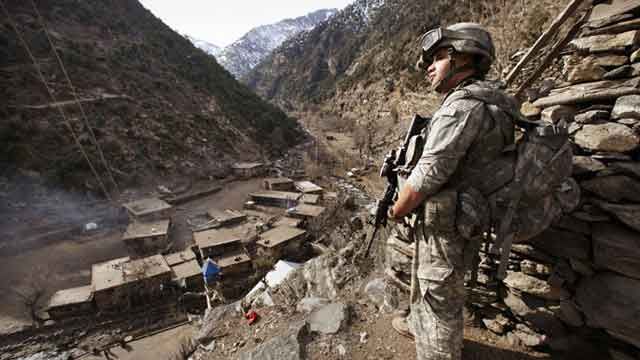
Abound this -- post combat outpost Keating.

That have been.

Brown belts at the bottom of three's steep mountains fourteen miles from the Pakistan border and that -- it has been overrun.

By about 400 Taliban facing -- -- -- -- is that fifty US troops -- 400 Taliban and it was his -- -- -- I was sitting there in the safe hospital room with my son.

Hearing about four other silence taken from the world for Americans died that day and they were killed by Taliban and was the deadliest day for US troops and I and I just I just wanted to know more.

I wanted to know more about why anybody would put an outpost there and that horribly vulnerable position it became something of a mystery but I also just wanted to know about.

What it's like four.

You know a twenty year old -- 22 year old to be facing such insurmountable odds and I just started.

I waited frankly for -- the story coming out and it never did and I just started.

Reporting it myself -- that eventually became this book.

And measure that into -- you discovered that this outpost really was and it.

Was an indication of how the the leadership in DC.

It was a reckless in terms what the commanders were having.

-- where they were positioning people so that that really be speaks a lot about the war itself does.

Yeah you're one of the reasons why the output was put where one is from there are a lot of reasons oil that was put -- that and that vulnerable place but one of the reasons was because they -- to -- it needed to be next to the road.

They're not alone lot of roads in this very mountainous part of Afghanistan and that's very obscure corner corner stand province.

Where the man who would be king took place -- the Rudyard Kipling short stories and and had to be near the road for one real reason -- a couple really one was they wanted to be monitoring.

Insurgents were -- to be coming in from Pakistan with bushels of weapons but -- also it needed to be near the road because all the helicopters were in Iraq.

And so resupply need to be done.

By convoy by trucks and humvees and that gives you an idea of -- -- what the actual effect is when you send troops to the war and you don't send them with all -- Materials and and manpower that they need.

And when Obama was that so much of the resources.

Were diverted to Iraq correct and this war -- you put it -- foot was fought on the cheap.

Yeah I mean this is the part in a prevalent view of the generals and the colonels at the time in in Afghanistan there was -- saying.

If you you know if you want something in Iraq.

You request -- if you want to bring in Afghanistan.

You learn to live without.

And and that was the perspective of the commanders there aren't and yet they have a job to do and so.

Troops were put an -- very vulnerable positions because obviously you don't want to be putting.

And -- but the bottom of three -- mountains but.

The that this story is that that I keen to -- now while researching these this -- were just very inspiring.

-- sometimes tragic sometimes heroic.

But mostly just stories that we have not been hearing enough -- As this war enters its twelfth the year it's just we have turned away as a nation and these stories are really they're they're quite inspiring and a lot of.

-- 53 troops face 400 Taliban fighters.

And survive another did not survive but relatively percentage wise -- -- they managed to do that.

Very very well first of all all eight of the guys who died.

Died and -- her role player or another either trying to return fire or trying to go help one of their Brothers people either by returning.

-- area providing ammunition -- -- try and to go on a rescue commissioner.

Trying to help somebody who was pinned down.

And a guard post every one of them died trying to save their Brothers about it that's very and it's tragic obviously but also inspiring.

They they -- they were.

I mean it looked as though the camp -- first of -- at one point over Iran there were -- there were Taliban inside the camps.

And one of the one of the sergeants yelled out enemy in the wire which is -- means is that there's.

Enemy soldier inside the -- from the perimeter to perimeter of the camp and you know that's the last thing anybody wants to hear but anybody who had been stationed there for the previous screen and skiers knew -- -- it could happen.

And then ultimately.

Through just ferocious.

Courage.

And then also air support.

-- -- -- -- Apache helicopters and some very brave Apache pilots they were able to beat the Taliban back.

I never quite been able to understand.

Why we stay in Afghanistan so long why even after the incursion in Iraq the war in Iraq.

We continue -- stay in Afghanistan were still there will be there at least 22014101000.

Troops at least remain after combat troops go away.

Have you gotten an understanding of what this mission is about -- if you ask the average American they would be able -- with the -- Well the goal right now is to -- -- to train the Afghan troops comes so that they can -- in 2014.

Although we'll of course be leaving behind.

Some special forces troops to do counterterrorism.

Missions.

I think one of the reasons why this war is.

Continues at its -- -- first of all the the military.

Speaker rated the -- -- yet we will do this we might pick -- -- time and we wanted or more manpower more assets but -- we can do this we can do it.

Sometimes that's that's one of the reasons why we love the military to -- it's also sometimes.

One of the reasons why places like combat outpost Keating.

Staying in a vulnerable place even long after they've served their purpose or becomes clear that they should be moved.

I think -- -- a lot of troops in general and officers who -- who don't want.

Many -- more than 2000 US troops have been killed in that country to have been for naught.

They don't want that you know to just pull out before.

They are confident that the Afghans can take over.

With security.

And and you know but that's one of the reasons I mean -- obviously that's a country where.

Al-Qaeda plotted to attack the US and so there's we have a little bit.

-- they're not really there much anymore than our end and we've also you also -- in the book and how Karzai and it pretends to be an ally has always acted that way into Pakistan.

Has not always behaved in a way that would make us feel.

-- that we're really and into in sync with.

Now exactly right now I mean what's very interesting assists.

-- -- -- Booker DeWitt with you know that this outpost has fourteen miles from the Pakistan border that you.

Oppenheim is almost never mentions in the book rather than -- brilliant related to it to 9/11 it's.

It's Pakistan and -- the enemy threats from Pakistan and the insurgents there and the fact that that the Pakistan.

Government during the lifespan of the -- there's so little if anything.

-- -- to do anything about these insurgents making their way.

Into Afghanistan from Pakistan.

To kill Americans and to kill.

Afghan government officials.

He also a pretty hard on the Bush Administration you talk about.

Paul Monti whose son was killed in Afghanistan and -- the troops had been -- short changed by the Bush Administration.

And he said -- Help the man who made this decision.

When we lose another soldier all I can say is I'm sorry for what we're putting you through I'll be home one day to know what else is hiring on the market.

I -- a few guys here who would make outstanding Bush Administration protesters.

For a -- actually that's one soldier you quote.

Who's their friends back home.

Were devastated by the policy that that was in place.

-- what and Paul Monti Jared Monti.

What the specialists.

He was -- when he was on my mission.

With a bunch of snipers and what happened was.

Remember this is a -- in -- in 2006 there's about.

20000 US troops in a country -- politicize the taxes and it's not enough and they're not they don't.

And I have -- man to do dimensions.

-- so they're doing they're watching over this one insurgents panels.

In eastern Afghanistan.

And the rest.

A couple other companies -- spoke to push and go to this panel.

And in Jared Monti and his team.

Are waiting.

For the rest of the -- becoming an important and I -- one of the sergeants -- supposed to lead lead the group and I get hit by an IED he's ultimately fine but that.

Wool and delays the nation.

A day or two.

Because of that the last day.

They need to go resupply.

Jared Monti and his team with food because they re supply the food the enemy knows that they're up there in the mountains because the enemy knows.

They attack and they kill Jared Monti pat fiber and ultimately to other American stuff -- So Jared Monti was so -- he was posthumously awarded the medal potter which is very -- Award given to our troops in his father Paul.

Got so it just it was -- man because his -- here has devoted his life to disservice.

And he fell in 2000 sex.

That President Bush and secretary Rumsfeld were not.

Doing what they needed to do to help -- like it's time and it's a whole mission could be delayed.

An incentive and that kills because one wolf one man wounded would -- everything.

Then he thought it was just criminal and it -- feelings are very very -- Ultimately they destroyed that -- right.

It's -- -- they went after about khaki pants after they beat the Taliban back.

Days ultimately left and then they bombed it and did it does not exist anymore and when I went to Afghanistan on one of my two trips there -- And I got as close as I could nobody would even take -- over it -- -- -- and a helicopter because that area was too dangerous.

Do real mama left here but does -- take over the way -- -- you expect to see big cabinet changes in the -- Susan Rice who think be the nominee.

For state.

Did she came to the front runner right now absolutely a lot of people close to the president think think that even a president has not made a decision and the race is likely to be that the nominee and that.

Secretary.

Defense could go to John Kerry Senator Kerry who really wants the state position but the president -- -- that to him.

And -- season of the year probably tell you at least a year or so the president doesn't want all of his all the big posts leaving at the same time he also.

Treasury Secretary Tim Geithner -- let the door so.

We live in holder would be it too much too soon ethics.

Thanks so much -- appreciate your work is always in -- -- the book is called out pose an untold story of American valor.

Jake -- really appreciate your time tonight thank you -- --