You're watching...

What are Democrats looking for in 'fiscal cliff' talks?

Details

  • Description

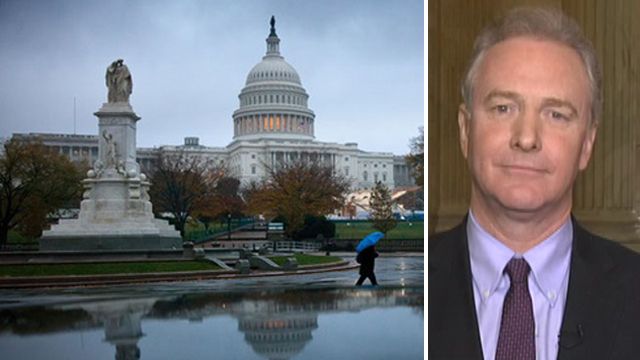
    Rep. Chris Van Hollen breaks down the math

  • Duration 8:29
  • Date

Clips

Also in this playlist...

Editor's Picks

Auto-advance: ON

Auto-advance

Transcript

This transcript is automatically generated

So a growing number of Republicans have now signaled that they would be willing to compromise.

On revenue -- -- on the revenue side taxes.

To avoid going over this fiscal class that is looming in front of all -- but an exchange they say they want Democrats.

To get serious about giving -- and I entitlements.

President Obama himself even admitting a couple of years ago that he believes that these programs as they are are simply not sustainable.

-- The major driver of our long term liabilities.

Everybody here knows.

Is Medicare Medicaid -- health -- spent nothing comes -- Now that's a problem there's the president couple years ago Maryland Democrat Chris van Holland is ranking member of the House Budget Committee congressman good to have you here this morning good morning.

Good to be with you Martha good morning to you so why did to the issue of Medicare in just a -- but I wanna start with with what's being seen as some concessions on the Republican side.

In terms of what they're willing to deal and here's my question for you if we're looking at a dollar figure that we want to bring in in terms of revenue.

Right does it matter if it comes from.

Eliminating loopholes and doing tax reform or whether comes from taxing the rich does it matter how you get there in revenue.

What what.

Matters some Martha is the mathematics of this and if you look get.

-- kind of revenue that was raised in totality from Simpson Bowles it's very difficult to achieve that revenue if -- starting point.

For tax reform is the current tax rate as opposed to moving to the Clinton Era tax rates for high income individuals which is what the presence.

A proposed so the president's plan has about one point six trillion dollars.

In revenue which is actually less total revenue.

That in Simpson Bowles but the Republican plans have been put on the table fall far short.

Of that number and it's very.

No one has shown any way of getting to those revenue numbers.

Through the through just the elimination of deductions and.

All right well there's one point two trillion in loopholes in the tax cut.

So -- if if you could be shown a model if you could be show on the numbers that I am asking whether or not.

You know it's politically that you have to get the tax cuts from the tax increases for the wealthy.

From the bush tax cuts or whether what you're really looking for is revenue if you could get the revenues seek does it matter to you know which way to get it well -- -- The -- -- -- have -- the math is the most important thing in that -- shows is you can't is that what the match shows as you can't do.

What you just said you sit there one point two trillion dollars.

In so called total tax expenditures.

But that number the one point two -- is based on the value of tax expenditures out there.

On 839 point 6% top tax rate in other words that one trillion plus number of -- ventures is derived.

Based on their value relative to these higher tax rates so that's exactly the point that we've made we should talk about tax reform.

But we should do it beginning at the tap tax rates from the Clinton Era for high income earners and if you look at the Simpson Bowles actual deficit numbers.

They presume that additional our revenue is it.

Part of their kids play is that your understanding that the concessions that are being made by some Republicans Lindsey Graham and others right now wanted to say that they'll break with -- with the -- our quest.

Pledged is it your understanding that that they are willing to get -- by raising tax rates or that they're willing to get -- by raising revenue through real tax reform.

No my understanding is those that hit for example senator -- and others who have talked about this have said that they would put revenue on the table.

By eliminating certain deductions -- capping itemized deductions.

And what I'm saying is if you look at the Simpson -- -- plans in terms the total revenue that they generate.

And if you look at the president's plan as part of a balanced approach that includes cuts and revenues.

You can't get to those revenue numbers.

Simply by capping an itemized deductions which is why the president's plan actually has both.

The president has a plan that both would.

Raise that that the the top rate for high a commerce take it back to clean -- levels and the president's -- would eliminate what would reduce the value of deductions -- and.

That's what was he worried at that I want to switch over -- to the -- -- -- sad because we we just got new numbers this morning.

That -- Ryan brought us we now know that 42 trillion dollars in unfunded liability.

Is the number for Medicare right now.

Are you willing to change the model for Medicare over the long term.

In order to they had to get there in these numbers are you willing to do that in entitlement reform in these negotiation.

Well Martha we've always ahead that we will look at Medicare reform and modernization and we actually took a first step toward between that.

As part of the Affordable Care Act and the Congressional Budget Office has been very.

Not clear on that the difference here is that when Republicans talk about reform.

They don't talk about looking for ways to reduce costs in Medicare they're talking about ways to simply transfer.

Rising health care cost onto the backs of beneficiaries on the backs of seniors who.

In my mom let me ask -- is that a sinner and here and I -- -- if if you're if you're open to the idea of raising the age for Medicare.

And for social security and it wouldn't affect anybody who is currently the receiving.

Those benefits but if you look at people under the age of 55 if they come -- and say look and we go to 67 on Medicare.

For example can we go to sixteen you know -- was in that same area 6769.

On Social Security down the road would you be willing to do something like that.

Well let me look at look at Medicare what you what you're doing by moving it from 65 to 67 is again.

Not reducing cost and Medicare is not really reforming the Medicare system you're just transferring those costs and risks.

On to people who maybe six years.

Here's what I Medicare system because it's gonna go out -- gonna go bust in several donors but so lucky if you put a lot of programming you make it the -- later people are living longer.

-- isn't that answered about loaded and into that a good thing to address long term interns and there are a lot better ways of doing that and then had -- -- and -- you're not willing to change the age that's and now.

I -- now because there -- more and better ways of dealing with Medicare -- -- why wouldn't people say.

Let's look at ways where we can reduce the cost of Medicare -- -- simply transferring rising health care costs.

We began to do that -- the Affordable Care Act or another thing other things you can accelerate to do exactly that so.

If you have two choices why not take the choice that actually reduce overall cost rather than transferring rising.

Hello we're seeing now is people are losing services because what's happening is doctors are no longer taking Medicare patients they need to find.

You know a different way to get at the problem because they're losing those services as a result of that anyway.

Action actually Martha every survey that's been taken shows that patient satisfaction in the Medicare program is much higher.

In patient satisfaction in the private health insurance market.

That's been the result of numerous surveys that have been done over the last am I here at indicted you know injuries -- actors who would say otherwise it was say that there -- no longer taking Medicare patients because of -- as a result -- -- but.

That -- there -- a lot of personal desires in very high cost markets who we're doing that.

Let me ask one question -- laid -- do you believe that a deal can and will be reached before this fiscal class.

I do believe it a deal can be reached and the basis of that agreement has to be.

Revenues and cots and we've already done as you know Chilean dollars in cuts as part of the budget control act the president has additional cuts in the proposal he's presenting he's got.

More health care cuts than Simpson Bowles proposed he doesn't do it I -- Garnett -- they're a sponsor of the seniors do you expect the president will sit down with leadership this week to discuss this and that we if you will take a leadership role in this in this fight.

Well that the president is taking a leadership role in this fight I think that people need to sit down as they have.

Look for ways to find find progress as you know the president already have the congressional leaders to the White House.

A little while back.

People are pursuing different ideas right now to try to make -- to try to prevent us from going over.

The fiscal cliff and the president has laid out a very clear may happen.

Roadmap for how we do that time we lack right up to it in the grand bargain and then we -- in it didn't happen so we all hope that.

You all be successful in your work this time around thank you very much for being with us tonight a conversation you have -- -- -- -- much.