You're watching...

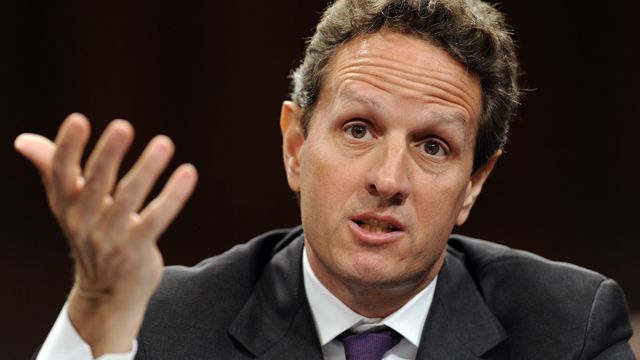
Geithner: White House offered 'very detailed plan'

Details

  • Description

    Treasury secretary on 'fiscal cliff' negotiations

  • Duration 12:11
  • Date

Clips

Also in this playlist...

Editor's Picks

Auto-advance: ON

Auto-advance

Transcript

This transcript is automatically generated

And hello again from Fox News in Washington.

Well we had quite a day around here Friday with talks to avoid the fiscal -- deadlocked and everyone sang the other sides to blame.

Treasury Secretary Geithner has scheduled a round of interview.

But down Friday afternoon speaker Boehner -- office called a site he wanted to come on FOX News Sunday to tell his side of the story.

You'll hear from -- in a few minutes but first here's my conversation with Tim Geithner.

About the lack of progress in steering away from that flat.

Secretary -- welcome back to FOX News Sunday proceed.

I spoke with a house speaker Boehner just before I came over here he says that when you presented your plan to him on Thursday he said you can't be serious.

And Mitch McConnell the senate Republican leader says he burst.

Into laughter.

We have Chris there and has become a tough position now and is going to be the -- -- a little hard for them now and they're trying to figure out where they go next.

And we many communal time affair with the masks but -- we did is I think we expect from us as we laid out a very detailed.

Carefully designed -- spending savings.

And tax changes that helped put us back on the path of fiscal responsibility protect taxes taxes from my for 90% of Americans and provide -- from from investments in things we -- like infrastructure.

And we think that's a very good set of proposals we think that's what's good for the economy.

If they've got some different suggestions -- wanna go further in some -- nation that they so listless what do you say there are no hard spot what do you mean.

Because they're trying to figure out.

How to find a way.

To support things that they know they're gonna have to do is going to be very hard for them again you you've heard them.

For the first time I think in two decades now acknowledge that they're willing to have revenues grew up as part of balanced plan.

That's a good first step but -- to tell us.

What they're willing to do rates and revenues that's going to be very hard for Republicans we understand that but there's no way through this without that and they have to tell us -- the spending side and if they -- -- go beyond what we are doing differently and if you tell us what makes sense of them what we can't do Chris is trying to figure out.

What works for them.

The president campaign for reelection on the idea of a quote balanced approach and quote to deficit reduction of mixture of tax increases.

And spending -- Here's the plan.

-- -- -- -- -- -- -- -- -- -- -- -- -- -- -- -- -- -- -- -- -- -- -- -- -- -- -- -- -- -- -- -- -- -- -- -- -- -- -- -- -- -- -- -- -- -- -- Well I'd like to ask you about these this part of it and then I think I leave out you can tell one point six trillion dollars in tax increases.

More than eighty billion dollars in new stimulus spending next year.

An unspecified.

Non guaranteed spending cops could question is that your idea of balancing.

-- and only -- what's in this plan that they didn't report to you and they didn't explain to people which is.

We proposed alongside the trillion dollars in -- in in spending cuts we agreed with the Republicans last year.

On defense in a conference range of other government programs -- proposed 600 billion dollars.

To our health care and other government programs.

That's 600 million dollars in fact.

The health care savings and have planned our larger than the plans we've seen Republicans in the past misconduct as -- in the budget.

That's -- these -- are being we propose these things last fall and in the president's budget they're very detailed now.

But that that was a budget that was -- down 99 to nothing in the senate -- -- -- that this is a lot of politics have in this town -- this is a very carefully designed -- the reforms and if Republicans.

Would like to go beyond these reforms -- they wanna do it differently they should tell us how they wanna do it again what we can do is it what if they -- to propose.

The Republican budget that they passed is that they passed.

The last two years there's no -- -- gonna do an actress well but wouldn't it be as serious as you proposing your budget no but they've had them from the American people -- -- -- Could have taken a long time -- careful hard look at that plan.

And they found no merit in it so -- problems -- gonna propose and again just like the senate voted 99 to nothing against your book.

-- the senate has already proposed and enacted and a middle class act extension protects 90% Americans from their taxes going up and we proposed.

Very substantial additional spending reforms alongside what we did last year which is a trillion dollars.

To make us get to a broader fiscal balance now again Chris you you referred to.

Things they'll make the economy stronger in the short term and the mystery -- why we vote propose that.

We're what we're suggesting is we work to rebuild the country's infrastructure running just putting that off doesn't say money just to put off.

To extend unemployment insurance benefits to help make Americans eat you for Americans to refinance or mortgages.

Take advantage of lower interest rates we propose some tax incentives for business investment.

And we propose how to do that in a fiscally responsible way that we can afford to pay for so we we match those proposals.

With spending savings that to -- -- as part of this plan get us down to the point where we stabilizer that and that is the critical test let me.

Rolled down into just the spending part of this equation here -- the increases spending increases your proposal.

A 150 billion dollars in stimulus public works projects over several years.

A thirty billion dollar extension of unemployment insurance for one year extension of payroll tax cuts mortgage relief -- soul.

Of automatic cuts for doctors in Medicare.

Here -- the spending costs unspecified savings from non entitlement programs.

Next year -- let me let me just finish and -- -- And the promise.

Of 400 billion dollars in savings from entitlement programs to be worked up next year with no guarantees speaker Boehner assess.

Even if you get all of that it's a net increase in spending not a net cut.

It's not true and -- -- -- again those investments in infrastructure.

-- -- -- benefits those are very important things and they're very good things and we can afford those they have very modest costs and we propose how to pay for them.

Now what we -- is in contrast we just said is we propose 600 billion dollars.

And reforms to mandatory programs.

Over ten years and we are prepared.

To do a substantial portion those upfront in ways that are measurable so that we could replace the much more damaging cuts and sequester.

So when Republicans say to us.

That we want to see spending savings locked in up -- we say we really deal and we're prepared to do that.

-- you have to you have to you have to give us some sense.

Of what you think we should do upfront wish you and a second station waiting to hear that from them and you know again it if they need a little more trying to figure out what they can do what they wanna do.

That's okay we don't have that much time now and what they have to do is to make sure they're committing to all Americans to do not collect taxes go up for 90% of American.

I just -- -- more question on spending that I wanna move to taxes to Bowles Simpson debt commission proposed three dollars in spending cuts for one dollar -- tax increases.

In -- four trillion dollar plan what's your ratio rough -- -- to tax and greater question.

Roughly two to one now the Bowles Simpson commission -- also proposed.

About two and a half trillion dollars in revenues over ten years relative to current policy.

So we propose a more modest increase in revenues alongside very substantial spending savings to.

Again the ratio is relatively near to -- -- one point six trillion and tax increases is a modest proposal -- get hit it is and relative to 2.5 trillion from in this Simpson Bowles commission remember Chris -- interest rate of one.

And nobody will know again -- -- it's true or we're not three when we're roughly 21.

And we think that's a better way to do it and again what we're trying to do is to make sure.

We're strengthening Medicare not shifting cost to seniors and we're pretty some -- to invest in things that are very important to how we grow in the future.

Let's talk about taxes the president has made it very clear and made it clear during the campaign he will not extend the bush tax cuts on the top earners.

That does he insist on raising the top -- from 35% of all the way up to the Clinton rate of 39 point 6%.

Or what he -- compromise on some of the lower like thirty something present is that negotiate.

We're not gonna extend an extension of the tax rates for the top 2%.

We think they should go back -- need to go back to new levels and explain why we believe that but so but I just did my question is that -- what you're saying.

Non negotiable 39 point 6% again we think that's a way to do it -- explain why -- if you don't do that.

It cost a trillion dollars roughly a trillion dollars over ten -- not a team went to 37%.

-- an event that you're you're you're well that's one of the ideas -- -- -- are not just mechanism should lots of ideas out there and then again what we're we're proposing to let those rates go back to Clinton levels member that was it that was a time over remarkably.

Good economic growth in this country very strong private investment strong job growth strong broad -- his -- growth and incomes.

It was a good time for the American economy makes a lot of sense but in addition to that.

We proposed to limit deductions for the top 2% of Americans as well -- willing to work with a met with with Republicans.

On tax reform to create a more simple more fair system.

But only as part of an agreement.

It has those -- go back up.

At the at -- -- right we think that's a way to do it 39 point six -- again to reason why is because Aniston were -- -- -- if you if you can if you if you don't do that.

Get to ask yourself.

Where are whose taxes or -- race where you gonna find the money.

As to bring a balanced plan in place -- reduces our long term -- how disastrous for the economy if we go over the clippers the Treasury Secretary.

For the American economy yes it's very damaging to -- the average American be very damaging is no reason you should happen again the only reason why would happen.

Is if a group of members of congress decide they're gonna block an agreement because they want to extend tax rates for the rich that we can afford that's the only reason that will happen.

And the reason I don't say because you're not willing to cut spending and another -- but that's not true Guinness they wanna do more on the spending side in the 600 billion we propose on top of the train already enacted.

In top of the savings from the wars and they can tell us how they -- -- savings and the wars that we were never gonna fight.

No that's not true -- -- is you know we're.

Winding down two wars I understand that they are speculating savings that nobody thought that you're ever gonna spend that money anyway it's a it's a budget -- there know that that's separate -- -- -- -- say this way.

Those were expensive -- not just an American lives but in terms the -- resources and when you and then as the president is doing.

They reduce our long term deficits and like in the Republican budget proposals.

The world should reflect and recognize what that doesn't savings and we proposed to use those savings to reduce the deficits and help invest in rebuilding America we think that makes a lot of sense.

It was money that wasn't going to be spent anyway.

And it is those wars going on it would suspend but the wind that you're not saving you're not ending the war -- for budget purposes during the wars because of the foreign policy -- the -- weren't going to be fought to not really saving money.

Chris we all of academic but -- money never don't know.

Not a budget given unless you were in the -- and Republicans proposes a budget and it.

Chuck -- and then I was telling you should invest up to -- what it does is it -- -- causing it to you look at it again it's just a basic challenge we face -- is is the challenge we face which is how to bring.

The deficits down overtime -- it's gonna require spending savings it's gonna require -- an increase in rates and revenues.

We think we can do that we're gonna work very hard and do that and I think we are very good chance to do and there's no reason we can't do it last question.

Can you promise that we will not go over the place.

No I can't promise that that that's a this is -- lies in the hands of the Republicans.

That are now opposing increases in tax rates if they recognize the reality.

That we can't afford to extend this tax rates than we have the basis for an agreement to be very good for the American -- the president bears no responsibility it's all up to the Republicans.

Chris ask yourself this question.

Why does it make sense for the country.

To force tax increases on all Americans.

Because a small group broke on -- one extend tax rates for 2% of Americans why does that make any sense there's no reason why that should happen.

We can't afford those tax rates that's that's like the deep tragic lesson of the last decade we can't afford them.

So we're not gonna get through it we're not getting into the end now without a recognition Republicans of that basic reality and that's going to be the responsible thing to do and and Mike my judgment is.

They're going to do it because there's no alternative that.

The secretary thank you always a pleasure to talk with you good to see it.