You're watching...

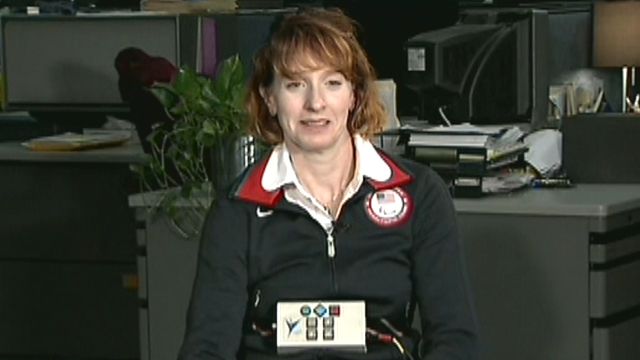
Paralympian able to stand with new technology

Details

  • Description

    Dr. Hunter Peckham and Jennifer French explain her remarkable journey

  • Duration 9:58
  • Date

Clips

Also in this playlist...

FoxNews.com LIVE

Auto-advance: ON

Auto-advance

Transcript

This transcript is automatically generated

I get a welcome back to fox highlights on foxnews.com.

Happy Monday to you -- thank you so much for joining us here today.

We have been the two were going to be traveling around the world bringing you great stories.

We just heard from somebody in Cambodia.

Now we have two guests joining us from Florida and Ohio a little closer to home.

We want to start off by introducing you first -- -- French.

A silver medalist at 2012 paralympic games an executive director of Euro tech net -- tech network.

Example Florida -- thank you so much for being with us here today.

Thanks -- the president he had been a pleasure to have you and doctor hunter -- professor of biomedical engineering at Case Western Reserve University joining us.

In Cleveland Ohio welcome to your life.

Afternoon good afternoon so -- we want to start off by talking to -- first.

As for if anybody doesn't know her story while snowboarding in 1998 Jennings suffered a severe spinal cord injury.

-- -- -- quadriplegic and the following year we understand you received muscle stimulation technology implants.

From the Cleveland functional electrical stimulation.

Center so we want to ask you first set the stage for us what caused your severe spinal cord injury.

Exactly share.

At that Dow is vibrant young.

Woman it was snowboarding.

Hit a patch of ice went down a forty foot embankment.

Hit several trees and came out as a quadriplegic and in reality it going from being a very athletic person to basically in mobile so is a very life changing experience.

How devastating what was the initial prognosis what do doctors say.

Do you well you guys you were starting to recover.

He had the initial prognosis was that it it is -- -- -- incomplete injury but it's very motor complete which means that.

I.

I have -- -- didn't sever the spine so I will have some sensation recovery but no motor movement below.

My point of injury which is basically at the base of the neck.

And how is FEC FES center technology impacted your daily life explained as I understand.

You're wearing something you can kind of point -- and show us -- talk to us about how it is changed your life.

That was so really it was -- a part of an exploration if you will understand that there isn't currently is not a cure for spinal cord injuries started to look for other ways to.

-- function and to be able to keep myself healthy until there is one so I was implanted with that device that has electrodes implanted in tonight paralyzed.

-- in the -- muscles and the external control device in a way around my waist is the external control unit and that's how I control the system.

It allows me to stand it allows me -- give a function trunk function.

But it allows now only be able to make transfers that I'm not able to but also to be able to keep myself healthy.

For a lot of the medical complications that come along with spinal cord injury.

Wow that is incredible we want to have you stand by for just a moment -- and asked doctor Pacman to come in.

Ask you what procedures.

As Jenny I have through Cleveland's FBS senator and how have these procedures enabled her to experience mobility.

That otherwise wouldn't be possible I mean this sounds incredible.

Yes that the two procedures that Janice had.

Were actually years apart.

Early on when our technology was -- to number 28.

Electrodes.

She had those implanted in her.

In her -- extent -- her hips and her back and that enabled her to step to to -- -- And do some rudimentary Terry walk -- About eighteen months ago I believe -- can correct this she had a more advanced simulators that we've developed which had.

Sixteenths.

Electrodes on it.

And we implanted more more muscles and and got them stronger used.

Used to electrodes that were able to strengthen more of the muscle and that's the device that -- is using now so she has a total of -- eight plus sixteen or 24.

Electrodes that are used to control her trunk and her like muscles.

It really is amazing and and listening to you -- I wanna know doctor Pat -- how many other.

Procedures have been performed like this that the FTC -- -- -- center.

Yes what we do this.

For control of hand function in -- it by itself.

Words to starting a clinical trial for bladder and bowel control.

For cough so overall there have been about 500 procedures of this type that -- -- -- done.

Around the world there -- about forty people.

That it had the procedure like -- That does great and Jen -- how is this -- technology helped you prepare.

But paralympics topic is about that.

Yet did I say is that a lot quite frequently exudes a two year campaign.

To bring us to the paralympic games and I used a lot for our physical conditioning.

Radically different Terrence because -- -- and Silva racing that was my sport and that's when he twelve paralympic games.

Where competing four to five hours today so he really had to build up fearing Terrence.

I also used for -- they have a I have a wheelchair propulsion pattern.

Too we.

A mile -- a -- we'll miles each day to and from the living facility to the actual.

Sailing venue and I use that as well so it really helped in terms of the conditioning.

Physical conditioning if you will for it for the paralympic games.

I guess knowing you know that really shows your atlantis' and and going from snowboarding to being sailor which is is very -- difficult work.

I'll tell you what we talked just quickly Jan about how you found co found a New York tech network and what you looked into without.

-- -- network our focus is on education an abacus data access.

These types of -- technology devices for a variety of neurological conditions.

And really what we started -- it's a search when I was implanted with my first surgery.

Is that there's a lot of other people like me around that I have that your users of these types of systems but they really had to hunt -- and there was really no source.

For consumers like myself to go and find out about these types of technology so we started NAVTEQ network with that type of focus and we target on people with.

With physical.

Our our our our sensory disabilities and their caregivers in the front -- medical commit.

Professionals that care for them.

And help them educate on these types of devices -- -- a lot of these devices are developed out of our university system here in the US.

And they translate to small businesses that really don't have the big budget to the big marketing budget so.

This was of way -- -- venue for people to be able to learn about these types of technologies and -- might be available.

But also the tell the stories along the way -- how.

These people -- -- -- -- that technology in their lives and for instance.

Which -- published a book on my feet again which really tells my personal story of how it went from injury.

To winning a silver medal at the 2012 paralympic games.

Is it is incredible journey that -- -- we've been showing the website.

Euro tech network dot com or dot org and doctor Pacman quickly before we let you both go.

-- you know what is on the horizon for the use of neuro stimulation technology.

For -- spinal cord injuries and other disabilities because it sounds like there is a lot more to -- -- you guys have obviously had great success.

There's a lot there's a lot more to go -- of the most exciting thing.

That we believe is that we have now developed.

A new technology.

Which is fully implantable -- Jen showed to the device on her on her waist and but if John was talking to she'd say I don't want that device on the outside of my.

My waist I -- it fully implanted so we have a technology that we're now reviewing with the FDA.

Which will be fully implantable and supplying many of the functions I mentioned that.

That people have hand grasp and trunk control and you know it's -- but most of the people will want to have all of those functions restored so the technology that we have that we're going to be introducing.

Will supply.

All of those with a single device.

OK I want to ask you both quickly before we let you go final thoughts what doctor -- first what do you hope people will take away from learning about this technology today.

We will people woman will understand and move forward.

I thinking about what this.

Yeah that's that's very good question I I hope that people will realize that they have options justice -- discovered that she has options and and then look to setup -- -- -- network to let people now.

I hope that that people will understand that there are options even at the at this stage of development.

-- these devastating devices and -- there are these options are becoming available.

And with the deal due diligence of moving -- all the way from the universities in -- they.

You know the commercial sector to make them available that's where the rubber meets the road.

Nice -- and Jennifer -- as well what do you hope people take away from this today.

I hope they one is to learn about technologies as doctor -- consent but I think it's more of understanding that if you're faced with some type of neurological condition or some type of neurological disorder.

There are options and for people to be advocates for themselves to learn as much as possible to understand that.

That a devastating -- -- chronic.

Conditions such as a spinal cord injury doesn't really and your life that you can you can move on and and enjoyed a lot of different ways but also seek out these exciting technologies that I really think can move forward.

To help impact people on their daily lives and also at the end of the day help our economy because -- -- trillion he's turned into small businesses I think it really helps them as well.

Great point inspirational story I want to thank you both for being here with us.

And we encourage people to find you both on the web.

Jan French of course you can find her would it with a paralympic games an executive director of -- tech network.

And doctor hunter Pacman professor of biomedical engineering case western university.

Reserve university in Cleveland Ohio thank you both so much for being here today.

You're welcome all right we -- only laugh thank you so much a great story and.